with the collaboration of Iranian Scientific Association for Landscape (ISAL)


The Journal of Horticultural Science is published by Ferdowsi University of Mashhad in cooperation with Iranian Scientific Association for Landscape (ISAL). This journal is published quarterly (4 Issues/year) since 2007. The aims of Journal: Scientific ability of graduate members, Researchers, students and those interested in Agriculture Issues quantitatively and qualitatively stand points. Original scientific and research works results in the field of growing vegetables, medicinal plants, ornamental plants, pomology and breeding and biotechnology of plants are published after peer review.

Articles in this journal can be submitted in three types of formats: Research, Short and Review.


Last site Update: 2025-10-07

Research Article Medicinal Plants

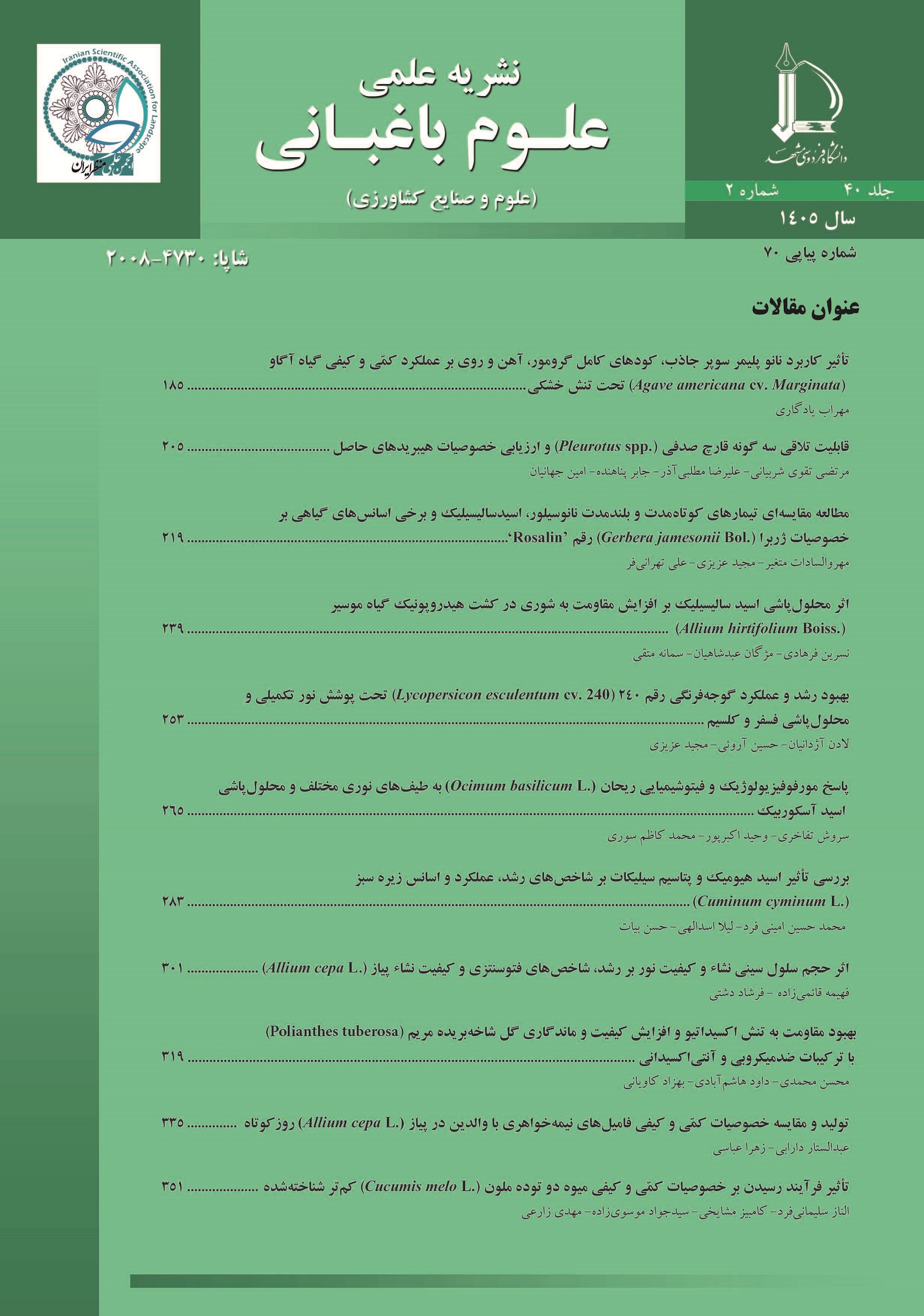
Utilization Effect of Superabsorbent Nano-Polymer, Grow-More, Iron and Zinc Fertilizers on the Functional Quality and Quantity of Agave (Agave americana cv. Marginata) under Drought Stress

Pages 203-183

https://doi.org/10.22067/jhs.2024.90365.1384

M. Yadegari

Abstract Introduction Agave americana cv. Marginata from the Agavaceae family is an important plant with many uses in various medicinal and food industries. Among environmental stresses, water deficit stress plays an important role in the biosynthesis of secondary metabolites in medicinal plants in arid and semi-arid regions like Iran. Drought stress has detrimental effects on growth and yield and can disrupt the balance between the antioxidant defense system and free radicals by triggering a cascade of biochemical reactions in which free radicals cause cell damage. In sustainable production systems of medicinal and aromatic plants, stable quantitative and qualitative functions can be achieved under conditions of environmental stress and it is possible to improve the production of secondary metabolites in these plants under adverse environmental conditions. Therefore, this study was done to evaluate some of the important macro-micro nutrients on the morpho-physiological and phytochemical properties of Agave americana cv. Marginata to determine and introduce the best combinations of fertilizers with use of superabsorbent nano-polymer under water stress conditions.   Materials and Methods This research used a randomized complete block design (RCBD) in a split-split plot layout with three replications. Irrigation regimes (D1-D3: Field Capacity, 50% and 75% evaporation from basin class A) in main plots, superabsorbent nano-polymer application (S1-S2: use and not use) in sub plots and treatments of fertilizers [F1-F15: grow-more 1 (F1), grow-more 2 (F2), grow-more 3 (F3), iron chelate (F4), zinc chelate (F5), grow-more 1 + iron chelate (F6), grow-more 1 + zinc chelate (F7), grow-more 2 + iron chelate (F8), grow-more 2 + zinc chelate (F9), grow-more 3 + iron chelate (F10), grow-more 3 + zinc chelate (F11), grow-more 1 + iron chelate + zinc chelate (F12), grow-more 2 + iron chelate + zinc chelate (F13), grow-more 3 + iron chelate + zinc chelate (F14) and control (F15)] in sub-sub plots were done. This research was performed in greenhouse conditions of Islamic Azad University Branch of Shahrekord (latitude: 32°20′ N, longitude: 50°51′ E, altitude: 2061 m) in 2023-2024. In each year, fertilizer treatments were applied in foliar application after stage of V8 (plants had 8 leaves) in 6 stage by 14 days interval and harvesting was done one month after the final application of fertilizers. The fertilizers Grow-More (NPK), iron and zinc in 4 gr.l-1 concentration by the production company certification were used in V8 stage in plants and the effects were compared with control plants. Weed control was done manually during the entire experiment. During the experiment, no systemic pesticide or herbicide was used. The harvested shoots were transferred to the laboratory for measurement of various characteristics. Morphological characters such as leaf length, leaf diameter and dry/fresh root/leaf weight; physiological characters such as total chlorophyll and zinc, iron and nitrogen content in root/leaf and phytochemical characters such as contents of hecogenin, saponin, and protein in leaf and root were measured. For assessment of the total chlorophyll content of A.americana, the leaves were extracted with 80% acetone. The absorbance of the extraction was read at 470, 648, and 664 nm, and the content of total chlorophyll was calculated as mg per g leaf fresh weight. For the measurement of hecogenin, saponin, total protein in the leaf and root and the nitrogen content in leaf and root use the protocols of Hackman et al., 2006, Sidana et al., 2016, Bradford, 1976; Álvarez-Chávez et al., 2021; were followed respectively.   Results and Discussion Over two consecutive years, the obtained results showed that the use of treatments increased the characters and showed significant effectiveness. The highest mean values for leaf dry weight (30.11 g.plant-1), leaf fresh weight (207.33 g.plant-1), root dry weight (3.82 g.plant-1), root fresh weight (18.79 g.plant-1), length of leaf (64.55 cm), leaf diameter (0.41 Cm), total chlorophyll (2.82 mg.g-1 fresh weight), hecogenin (35.48 mg.kg-1 fresh weight), saponin (66164.8 mg.kg-1 fresh weight), nitrogen of leaf (1.39 mg.g-1 dry weight), nitrogen of root (1.23 mg.g-1 dry weight), protein of leaf (25.34 mg.g-1 dry weight), protein of root (16.99 mg.g-1 dry weight), zinc of leaf (68.99 µg.g-1 dry weight), zinc of root (44.84 µg.g-1 dry weight), iron of leaf (81.01 µg.g-1 dry weight) and iron of root (49.84 µg.g-1 dry weight) made in grow-more fertilizers specially grow-more 1 (20-20-20) in combination with Fe/Zn Libfer. However the superabsorbent nano-polymer application had an aggressive effect on the amounts of characters especially in hardness of water stress. The lowest values for morpho-physiological and phytochemical characters such as leaf dry weight (12.81 g.plant-1), leaf fresh weight (89.54 g.plant-1), root dry weight (1.62 g.plant-1), root fresh weight (8.18 g.plant-1), length of leaf (41.12 cm), leaf diameter (0.24 cm), total chlorophyll (1.95 mg.g-1 fresh weight), hecogenin (21.88 mg.kg-1 fresh weight), saponin (22134.3 mg.kg-1 fresh weight), nitrogen of leaf (0.29 mg.g-1 dry weight), nitrogen of root (0.77 mg.g-1 dry weight), protein of leaf (10.11 mg.g-1 dry weight), protein of root (6.47 mg.g-1 dry weight), zinc of leaf (34.34 µg.g-1 dry weight), zinc of root (20.36 µg.g-1 dry weight), iron of leaf (43.77 µg.g-1 dry weight) and iron of root (27.73 µg.g-1 dry weight) made in control plants. In most of the measured characters the treatments of D1S1F12, D3S1F14 and D2S1F14 were the best and control plants had the least of the characters.   Conclusion Generally the application of Grow-More fertilizer 1 (20-20-20) with the consumption of zinc and iron fertilizers can be a good strategy to improve the morpho-physiological and phytochemical characters of Agave americana cv. Marginata especially the hecogenin and saponin amounts in water stress conditions. However the use of superabsorbent nano-polymer in strenuous drought stress (75%) is more effective than other water stress levels.  

Research Article Growing vegetables

Cross Compatibility of Three Oyster Mushroom Species (Pleurotus sp.) and Evaluation of the Characteristics of the Resulting Hybrids

Pages 216-203

https://doi.org/10.22067/jhs.2025.91744.1406

M. Taghavi Sharabiani, A. Motallebi-Azar, jaber panahandeh, A. Jahanian

Abstract Introduction Mushrooms are a very large group of organisms. The number of species of mushrooms is estimated at 1.5 million, of which about 300 are edible, only 30 have been domesticated, and finally 10 species are cultivated commercially. Oyster mushrooms (Pleurotus spp.) of the genus Pleurotus are the most important cultivated edible mushrooms in the world after button mushrooms. Edible mushrooms are now considered one of the most important food sources in the world, and their cultivation is constantly increasing with population growth. For this reason, the importance of cultivating edible mushrooms is increasing day by day. In edible mushrooms, the mycelium that emerges from a single spore is sterile and requires hybridization between compatible monokaryotic mycelia to complete the sexual cycle. The oyster mushroom P. eryngii has also been given the name of king oyster mushroom due to its large edible organ. The mushrooms grow in small groups. The spores of this mushroom are white, and its mycelium has a connecting arch. The king oyster mushroom has a firm texture and short radial blades. Materials and Methods In this study, three species of oyster mushrooms (Pleurotus ostratus var florida, P. eryngii, P. corncopia) were crossed with each other in order to benefit from the special characteristics of each species and their aggregation into one species. Monokaryons of each species were prepared. Then, monokaryons of the two species were placed 5 mm from each other. For the cultivation of hybrid spawn and parents, three beds containing wheat straw (weighing 6.8 kg) were prepared for each and sterilized. After spawning, the beds were placed in a suitable environment and then the humidity of the environment was increased to 85-90% until the hybrids started to produce primary nodes and then pin and turn into mature heads. The heads at this stage were tested for spore production. Results and Discussion The results showed that from 300 crosses, only in 4 crosses did the Florida and eryngii monokaryons grow together and form a clamp connection, producing dikaryons, and four hybrids named H1, H40, H11, and H32 were obtained. While from among 300 crosses between Florida monokaryons and yellow fungus and 100 crosses between eryngii monokaryons and yellow fungus, no dikaryons were produced due to interspecific incompatibility. Spawns of the produced hybrids were prepared with Florida and eryngii and then cultivated in sterile media in a completely randomized design with three replications. The average base diameter of eryngii was significantly greater than that of Florida. The average base diameter of eryngii was not significantly different from that of the H11 hybrid, while the average base diameter of eryngii was greater than that of the H32 and H11 hybrids and less than that of the H1 hybrid. There was also a significant difference in the average base diameter among the hybrids. Among the hybrids, H1 had a larger average base diameter than that of the H40, H32, and H11 hybrids. eryngii had the highest fresh weight of edible organs with an average fresh weight of 120.5 grams. The average fresh weight of edible organs of eryngii was not significantly different from that of hybrid H40. In terms of yield (fresh and dry weight), the hybrids H11, H1 and H32 were very similar and were placed in a single cluster. On the other hand, the hybrid H40 was similar to eryngii. In general, the hybrids and eryngii were placed in the same group in terms of yield. This is while Florida occupied a separate group. The result is that in terms of yield, the hybrids were similar to eryngii and the high yield traits from Florida were not transferred to the hybrids. Conclusion There was a significant difference between genotypes in terms of spawn running, and the hybrids were similar to eryngii and spawn running for a longer period than Florida. Hybrids H40 and H32 were earlier than their parents and other hybrids because they had shorter days to first pin emergence and ultimately shorter planting period. Hybrid H40 is considered a suitable hybrid with similar edible organ fresh weight to eryngii. Hybrid H40 had higher yield (fresh weight) and biomass than other hybrids and was similar to eryngii. The least sporulation (spore germination) was observed in hybrids H1 and H11, which was even lower than eryngii. Hybrid H40, although it seems to be a desirable hybrid in some traits, had high spore germination and was similar to Florida.

Research Article Postharvest physiology

Comparative Study of Pulse and Permanent Treatments of Nanosilver, Salicylic Acid and Some Essential Oils on Gerbera (Gerbera jamesonii Bol.) ‘Rosalin’ Traits

Pages 236-217

https://doi.org/10.22067/jhs.2021.60101.0

M. S. Motaghayer, M. Azizi, A. Tehranifar

Abstract Introduction Gerbera (Gerbera jamesonii Bolus, Asteraceae) commonly known as Transvaal Daisy, is one of the ten most popular and important commercial cut flowers. Gerbera is a perennial, tropical, herbaceous plant with colorful and attractive flowers that are widely used as a decorative garden plant or cut flowers. The most important problem of the gerbera cut flowers is short vase life. The end of vase life of cut gerbera flowers is often due to bending of the scape. The aim of this study was to screen the effects of nanosilver and salicylic acid as pulse treatment and sucrose and thyme, clove and peppermint essential oils as permanent treatment on vase life and some physiological and biochemical traits of gerbera ‘Rosalin’ cut flowers. Materials and Methods This study was conducted as a factorial experiment based on completely randomized block design with three replications. The first factor was pulse treatments using nanosilver (NS) 5 and 10 mg.L-1 (Nanocid Company, Iran), salicylic acid (SA) 50 and 100 mg.L-1 (Merck Company) and distilled water as control, and the second factor was permanent treatments applying distilled water, sucrose 4% (Merck Company), peppermint (100 mg.L-1), thyme (100 mg.L-1) and clove (300 mg.L-1) essential oils (EO) (Zardband Company, Iran). Pulse treatments were applied for 24 h. Treated stems were then stood into vases containing permanent treatments. Vase solutions were freshly prepared at the beginning of the experiment and not renewed during of the study. The measured traits were: flower vase life, flower water content (WC), relative fresh weight (RFW), water loss (WL), water uptake (WU), total soluble solid (TSS), superoxide dismutase (SOD) enzyme activity and malondialdehyde (MDA) amount (Biovision Colorimetric Assay Kit, USA). The experiment was conducted in the laboratory at 20-22°C, 40-50% RH, and 15 µmol.m-2.s-1 light intensity (cool white florescent tubes) under a daily light period of 12 hours. The obtained data were analyzed using MSTAT-C program and mean comparison was done using LSD range test. Results and Discussion The results showed that NS 10 mg.L-1 with thyme EO 100 mg.L-1 (14.25 days) and NS 10 mg.L-1 followed by peppermint EO 100 mg.L-1 (14 days) had the best effect on longevity and maintaining the water content of gerbera cv. ‘Rosalin’ cut flower, compared to other treatments. Flower WC was high (about 90%) except in 4% sucrose permanent treatment flowers which had negative effect and decreased more rapidly during the vase life period. Despite antimicrobial preservative application, RFW, WU, WL and TSS generally had a decreasing trend during the experiment. However, it was observed that flowers treated by NS 10 mg.L-1 (0.86 g.g-1), thyme (0.77 g.g-1) and peppermint (0.72 g.g-1) EOs had the highest RFW on the eighth day of the experiment, but 4% sucrose (0.59 g.g-1) permanent treatment reduced RFW during cut flower vase life. The highest WU was observed in SA 100 mg/L (67.28 g), NS 5 (61.31 g) and 10 mg/L (60.35 g) on the second day. According to the results of this research, pulsing by NS 5 and 10 mg.L-1 and SA 100 mg.L-1 resulted in the most WL on day two (64.24, 57.85 and 64.95 g respectively). TSS of the cut flowers decreased with time, however reduction rates were delayed in SA and NS treated flowers. On the eighth day of experiment, long-term treatment showed the greatest effect on TSS amount. Flowers treated by NS 10 mg.L-1 followed by 4% sucrose and peppermint EO treatment had the highest TSS amount, respectively 3.50 and 3.17 Bx. As time passed, the activities of SOD enzyme increased, however, treated flowers showed significantly higher SOD activity compared to the control. Especially NS 10 mg.L-1 pulse treatment, followed by thyme and peppermint EOs, indicated the highest amounts (241.43% and 233.94%) of SOD activity on the seventh day of the experiment. During the experiment, MDA increased in the flowers, so that the highest amount of MDA was detected in the control (67.30%) on the seventh day and the lowest was produced in NS 10 mg/L treated flowers followed by thyme (14.88%) and peppermint (19.44%) EOs. Due to the fact that these treatments had the best effects on flower vase life, these results are logical. Conclusion Based on the results of this study, new antimicrobial agents such as NS, thyme and peppermint EOs had a positive effect on flower vase life, WC, RFW and WU and reduced the rate of WL and TSS reduction in flowers. It might be due to this fact that these are very effective antimicrobial agents, inhibited the microbial growth and prevented bacterial plugging in conducting tissues. NS particles enter to cell, tissue and organs, so they can inhibit the respiration and electron transfer system and material transfer in microbial cell membrane. The application of natural phenolic compound like EOs reduced the accumulation of MDA and enhanced SOD enzyme activity. Therefore, due to the undesirable results of chemical preservative on human and environmental health, EOs can be very good substitutes for preserving cut flowers postharvest life.

Research Article Growing vegetables

The Effect of Foliar Application of Salicylic Acid on Induced Salinity Tolerance in Hydroponic Culture of Shallot (Allium hirtifolium Boiss.)

Pages 250-237

https://doi.org/10.22067/jhs.2025.92108.1412

N. Farhadi, M. Abdeshahian, S. Mottagi

Abstract Introduction Currently, salinity stress is one of the most important challenges in the agriculture and is the main growth limiting factor of many plant species. Saline stress adversely affects the plant's physiological and biochemical process which leads to a considerable reduction of plant growth and yield. Shallot (Allium hirtifolium Boiss.) is a perennial plant from the Alliaceae family, which is one of the native and valuable plants of Iran and wildly grows in the slopes of the Zagros Mountain range. The nutritional and medicinal value of shallots is due to the presence of sulfur compounds, especially allicin in the bulbs. Materials and Methods The present study was conducted to investigate the effect of foliar application of salicylic acid on the changes in growth, physiological and biochemical traits of shallot under different levels of salinity stress in a factorial design based on a completely randomized design with three replications. The investigated treatments were four levels of salinity (0, 30, 60 and 90 mM NaCl) and four levels of salicylic acid (0, 1, 1.5 and 2 mM). Distilled water (control) and salicylic acid (1, 1.5 and 2 mM) were foliar sprayed on the whole plants at 4, 6 and 8 weeks after sowing date. At the end of the growing season (beginning of yellowing of the leaves of the plants), growth, physiological and biochemical traits were evaluated. Evaluation of lipid peroxidation, osmolality compounds and activity of antioxidant enzymes was carried out in the leaves of treated plants and the amount of pyruvate and allicin was measured in harvested shallot bulbs. Results and Discussion Various abiotic stresses restrict plant productivity, and many efforts have been made to reduce plant growth inhibition by alleviating the disorders effects of these stresses. Exogenous application of plant growth regulators has been reported as an economic procedure to improve plant resistance to environmental stresses. It has been previously reported that salicylic acid as a signaling molecule alleviated the adverse effects of different stress conditions. In this experiment, shallot resistance to saline conditions was enhanced by the foliar spray of salicylic acid. The results showed a significant link between salicylic acid treatment and improvement of bulb biomass under saline conditions. Lipid peroxidation regards to accumulation of malondialdehyde and hydrogen peroxide increased with increasing salinity intensity. Also, saline stress significantly enhanced the proline and glycine betaine content in stressed plants of shallot. The plant antioxidant activity induced under stress conditions increased the total phenol content as well as the activity of catalase, peroxidase, ascorbate peroxidase and superoxide dismutase enzymes. The pyruvate and allicin content of the shallot bulb increased with increasing salinity stress. The decreased in the photosynthetic pigments (total chlorophyll and carotenoids) led to a decrease in plant growth with the intensification of stress level. So that the lowest leaf area, fresh and dry weight of bulbs were obtained in severely salinity-stressed plants (90 mM NaCl). Foliar application of salicylic acid increased the antioxidant compounds (total phenol, pyruvate and allicin) and the activity of antioxidant enzymes (CAT, POX, APX and SOD) limited the accumulation of hydrogen peroxide and lipid peroxidation. The accumulated osmolyte compounds proline and glycine betaine were decreased in treated plant with salicylic acid. The treatment of salicylic acid considerably improved the chlorophyll and carotenoid content especially in salinity-stressed plants. Thus the application of salicylic acid, especially at a concentration of 2 mM, reduced the harmful effects of salinity stress on plant growth and bulb yield by increasing the photosynthetic pigments and consequently photosynthetic efficiency. Also increased growth in the treated plants with salicylic acid has been attributed to changes in the concentration of plant hormones, especially auxins and cytokinin’s (the most important plant growth-stimulating hormones). Nevertheless, the growth reactions of treated plants to salicylic acid are different depending on the used concentration, the plant species and the growth stage at the treatment time. Conclusion In several studies, the effects of salicylic acid on plant growth enhancement under unfavorable environmental condition attributed to salicylic acid-induced changes in plant biochemical and physiological processes. Based on the obtained results, the salinity resistance of the shallot plant in response to salicylic acid is related to the increased antioxidant capacity of the stressed plants, which leads to the improvement of the photosynthetic pigments, and consequently plant growth and bulb biomass under saline condition. Although the present study was performed in the glass greenhouse, the obtained findings showed that salicylic acid application could also be a promising treatment for improving salinity tolerance of A. hirtifolium under field conditions.

Research Article Growing vegetables

Improving the Growth and Yield of Tomato (Lycopersicon esculentum Cv. 240) under the Cover of Supplementary Light and Dissolved Phosphorus and Calcium

Pages 262-251

https://doi.org/10.22067/jhs.2021.60433.0

L. Ajdanian, H. Arouei, M. Azizi

Abstract Introduction As an artificial light source, LED bulbs can help to grow better and faster greenhouse products. Meanwhile, blue and red light are important for plant growth. The quality of light in terms of color and wavelength can affect the morphological structure of the plants. Therefore, the use of additional lights in winter, when light exposure is less than normal, can improve plant growth and flowering. It is also advisable to change the quality of light by using artificial light sources in controlled environments such as greenhouses in order to change the quantity and quality of agricultural products, especially fruits. Materials and Methods In this research, the effect of complementary light and nutrition (commercial Calfomyth solution containing high calcium phosphorus and calcium elements along with micronutrient elements) as a pot experiment under non-soil culture conditions in the greenhouse, in the form of split-based plots experiment A completely randomized design with 3 light treatments including: natural light (control), 60% red light + 40% light blue and 90% red light + 10% blue light, and 2 nutritional treatments including: non-spraying with commercial fertilizer, Calfomyth and spraying A concentration of 2,000 in 3 replicates was established and implemented. The traits that were studied in this experiment are: 1- leaf number (count of leaves), 2- plant height by meter, with accuracy 0.01 m, 3- diameter with caliber with accuracy 0.01 mm, 4- Number of flowers (counting), 5- Time of flowering until the product reaches (counting the number of days), 6- Performance: Whole and red ripe fruits were planted and weighed separately from the total fruit weight Per plant was obtained in grams per plant. Statistical analysis was performed using JMP8 software and comparison of means was done using LSD test at 1% and 5% probability levels. Results and Discussion The results showed that the application of additional light on fruit yield, stem diameter and plant height, yield time and leaf number (p≤0.05) were significant. Spraying with Calfomyth could have a significant effect on stem diameter and number of leaves. In the traits such as fruit yield, number of flowers and leaves, the interaction effect of feeding and supplementary light was also significant. The highest elevation was observed for 60% red + 40% blue (25.38 m) and the lowest for light control treatment (20.72 m). Also, the shortest arrival time was 90% red + 10% water treatment in 29 days and the maximum time to reach the product was 45 days. The highest number of leaves belonged to 60% red + 40% blue treatment, as well as spraying with Calfomyth (118), the highest number of flowers (50) was related to 90% red + 10% blue and Calfomyth treatment, and the smallest number ( 15) was related to control treatment. Also, the highest yield (3553 g of fruit per plant) was obtained in Calfomyth treatment with 90% red + 10% blue treatment and the lowest yield (434 g fruit per plant) The control was light and non-foliar treatment. Although light is an important source of photosynthesis, photosynthesis can also be related to a series of optical regulators and optical sensors. Blue and red light cause different optical sensors and expression of genes, each of which can have a positive or negative effect on plant growth and development. Therefore, it can be concluded that the presence of both wavelengths (blue and red) is necessary for conducting, and for this reason, more research is now focused on achieving an appropriate optical composition. Conclusion In this research, all of the morphological traits examined in the tomato (Lycopersicon esculentum) plant were subjected to additional exposure by LED bulbs, each of which had a special effect on their receptors in the plant. Maximize growth and yield in the plant. As expected, blue light on vegetative traits and red light were more effective on reproductive traits. It can be said that the existence of both wavelengths (blue and red) is essential for the better and complete growth of the plant. In addition to the positive effect of wavelengths, the positive effect of leaf spraying can also be observed, which, along with the neodymium, could improve growth. The results of this study showed that the performance and growth under the cover of LED light (red and blue combination) were superior to natural conditions. Therefore, it could be suggested that the use of these lamps, as well as spraying with Calfomyth commercial fertilizer, could be feasible for better production in controlled conditions (greenhouse). It seems that application of complementary lights with proper nutrition can improve the performance and growth of tomato plants in greenhouse conditions.

Research Article Medicinal Plants

Morphophysiological and Phytochemical Responses of Basil (Ocimum basilicum) to Light Spectra and Foliar Ascorbic Acid Application

Pages 280-263

https://doi.org/10.22067/jhs.2025.93634.1431

S. Tafakhori, V. Akbarpour, M. K. Souri

Abstract Introduction Basil (Ocimum basilicum L.), a warm-season herbaceous plant from the Lamiaceae family, is a valuable medicinal and culinary herb widely used in pharmaceutical, cosmetic, and food industries. Its aromatic leaves and mucilaginous seeds, beneficial for soothing sore throats, make it a significant crop in West Asia and the Middle East. As global populations grow, greenhouse and urban farming, such as vertical farming systems, have gained prominence to ensure year-round production (Massa, 2006). However, basil’s growth and productivity are often limited during low-light conditions, particularly in colder seasons. To address this, artificial lighting, particularly light-emitting diodes (LEDs), has emerged as a powerful tool due to their ability to deliver specific wavelengths, high photoelectric conversion efficiency, and optimal photosynthetically active radiation (PAR) efficiency (80–100%) (Darko et al., 2014). LEDs allow precise control over light quality and intensity, enhancing plant biomass and secondary metabolite production. Additionally, ascorbic acid, a potent antioxidant, plays a critical role in detoxifying reactive oxygen species (ROS) and improving plant growth under stress conditions (Shigeoka et al., 2002). Previous studies have shown that specific light spectra, particularly red and blue combinations, enhance terpenoid and phenolic content in basil (Rihan et al., 2020; Rafiei et al., 2023). Similarly, foliar application of ascorbic acid has been reported to improve growth and mitigate environmental stresses in various plants (Yadollahi et al., 2016; Esmailpour et al., 2023). This study investigates the combined effects of LED light spectra and ascorbic acid foliar application on the morphophysiological and phytochemical traits of basil under controlled conditions, aiming to optimize its production in low-light environments. Materials and Methods The experiment was conducted in the summer of 2024 at the Horticulture Laboratory of the University of Agricultural Sciences and Natural Resources, Sari, Iran. A split-plot design based on a randomized complete block with three replications was employed. The main factor consisted of four LED light treatments: three blue-to-red ratios (75:25 [BBBR], 50:50 [BBRR], 25:75 [BRRR]) and full-spectrum white light (FFFF). Red light was set at 660 nm, and blue light at 440 nm, with a photoperiod of 16 hours light and 8 hours darkness daily. The sub-factor included two levels of ascorbic acid foliar application (0.5 g.L-1 weekly and no application). Basil seeds were sown in plastic pots filled with a 1:1 mixture of perlite and cocopeat and fertilized using Hoagland’s solution via fertigation. Morphophysiological traits, including stem diameter, number of lateral branches, leaf count, fresh and dry shoot weight, root fresh and dry weight, and root volume, were measured. Phytochemical traits, such as antioxidant activity (DPPH method, measured at 517 nm), total phenolic content (Folin-Ciocalteu method, measured at 765 nm), and flavonoid content (aluminum chloride method, measured at 415 nm), were assessed using a spectrophotometer (UV-1800PC, Shimadzu, Japan). Data were analyzed using analysis of variance (ANOVA), and means were compared using appropriate statistical tests. Results and Discussion The results demonstrated that the red-blue (75:25) light treatment significantly enhanced several morphophysiological traits compared to full-spectrum light, increasing stem diameter by 8%, lateral branches by 26%, leaf count by 15%, fresh leaf weight by 39%, and dry shoot weight by 25%. Foliar application of ascorbic acid further amplified these traits, with increases of 23%, 21%, 20%, 44%, and 31%, respectively. The combination of red-blue (75:25) light and ascorbic acid resulted in the highest stem height, root dry weight, and root volume, indicating a synergistic effect. These findings align with previous research showing that red light promotes stem elongation and biomass accumulation through gibberellin synthesis, while blue light regulates cellular expansion via cryptochromes (Hosseini et al., 2019; Kaiser et al., 2019). Ascorbic acid likely enhanced growth by acting as a coenzyme in photosynthesis and hormone biosynthesis, increasing carbohydrate production and nutrient uptake (Barkosky and Einhellig, 2003). For phytochemical traits, the red-blue (50:50) light without ascorbic acid yielded the highest antioxidant activity, suggesting that balanced light spectra stimulate defense mechanisms. The red-blue (75:25) light increased phenolic content by 12% and flavonoid content by 28% compared to full-spectrum light, consistent with studies showing that blue light enhances phenylpropanoid biosynthesis via phenylalanine ammonia-lyase (PAL) activation (Rafiei et al., 2023). However, ascorbic acid did not significantly increase flavonoid content, possibly due to metabolic saturation or suppression of defense responses at high antioxidant levels (Azoz et al., 2016). These results highlight the importance of tailored light spectra and nutritional interventions for optimizing basil’s growth and secondary metabolite production. Conclusion This study confirms that LED light spectra, particularly the red-blue (75:25) combination, significantly improve basil’s morphophysiological traits, including stem diameter, leaf count, and biomass, under low-light conditions. Foliar application of ascorbic acid enhances these effects, promoting root development and overall plant growth. While specific light spectra alone can boost antioxidant activity and phenolic content, ascorbic acid’s influence is more pronounced on growth than on flavonoid accumulation. These findings provide a practical framework for optimizing basil production in controlled environments, such as greenhouses and vertical farms, by integrating light quality management with ascorbic acid supplementation. This approach offers a cost-effective strategy to enhance both the quantity and quality of basil, supporting sustainable agricultural practices.

Research Article Medicinal Plants

Investigating the Effect of Humic Acid and Potassium Silicate Fertilizers on Growth Indicators, Yield and Essential Oil of Cumin (Cuminum cyminum L.)

Pages 296-281

https://doi.org/10.22067/jhs.2025.93814.1433

M. H. Aminifard, L. Asdollaei, H. Bayat

Abstract Introduction Cumin (Cuminum cyminum L.) is one of the most important domestic herbs in Iran and is one of the earliest spices used by humans. Due to its characteristics such as short growing season, low water requirement, non-interruption of growth season with other agricultural products as well as high economic justification for other crops and export, it has found a special place in arid and semi-arid areas. Organic and chemical fertilizers are necessary for each other and both types of fertilizers are needed to create favorable conditions to improve quantitative and qualitative traits. Overuse of chemical fertilizers has caused several problems in agriculture including changes in the soil structure, contamination of underground waters, and heavy metal toxicity. Agricultural scientists suggest replacing chemical fertilizers with organic products to reduce negative effects on the environment and soil properties. In recent years, neglecting the importance of organic matters to improve soil fertility has led to an increase in chemical fertilizer use in Iran. Organic matter, due to its positive effects on soil, is identified as one of the important pillars of soil productivity. However, more than 60 percent of agricultural soils in Iran contain less than one percent of organic matter. Therefore, the objective of this study was to investigate the influence of humic acid and potassium silicate on morphology parameters and the essential oil yield of cumin. Materials and Methods In order to investigate the effect of humic acid and potassium silicate on the growth and yield of Birjand cumin, a factorial experiment was conducted in a randomized complete block design with replication in the research field of the Faculty of Agriculture, Birjand University in 2023. The first factor included humic acid at three levels (0, 5, and 10 kg.ha-1) and the second factor was potassium silicate at three levels (0, 2, and 4 per thousand). Humic acid fertilizer was applied with irrigation water at the three-leaf stage, tillering and after fruit formation of cumin. Potassium silicate fertilizer was applied as a foliar spray at the three-leaf stage, tillering and after fruit formation of cumin. After the crop ripened, the plant height, number of lateral shoots per plant, number of umbels per plant, number of umbels per umbel, number of seeds per umbel, 1000-seed weight, seed yield, percentage and yield of essential oil were measured. Results and Discussion The results of variance analysis showed that the use of potassium silicate and humic acid had a significant effect on the vegetative (plant height, number of lateral shoots), reproductive (number of umbels per plant, number of umbels per umbel, number of seeds per umbel, 1000 weight seed and seed yield) and essential oil characteristics of cumin, such that the highest plant height (15.27 cm) and the number of lateral shoots (3.77) were obtained from the use of 2 per thousand potassium silicate and the highest fresh and dry plant weight was obtained from the use of 4 per thousand potassium silicate. The results of the interaction of treatments showed that the highest 1000-seed weight, seed yield and essential oil yield were obtained from the use of 4 per thousand potassium silicate and 10 kg.ha-1 humic acid, and the highest plant height, number of umbels and number of seeds per umbel were obtained from the use of 2 per thousand potassium silicate and 5 kg.ha-1 humic acid. Conclusion In general, the results indicated a positive effect of potassium silicate and humic acid on cumin yield and yield components. Therefore, according to the findings of this study, it seems that simultaneous use of potassium silicate (4 per thousand) and humic acid (10 kg.ha-1) can be used to improve the seed yield and essential oil of cumin.

Research Article Growing vegetables

Effect of Seedling Tray Cell Volume and Light Quality on Growth, Photosynthetic Parameters and Quality of Onion (Allium cepa L.) Seedling

Pages 316-297

https://doi.org/10.22067/jhs.2025.93976.1435

F. Ghaemizadeh, F. Dashti

Abstract Introduction Onion (Allium cepa L.) is a vegetable with great nutritional value. In recent years, the cultivation of onion seedlings has expanded due to the rising production costs and limited water resources. The growth of high-quality seedlings is crucial for achieving optimal and high crop yield. Light quality is a significant factor influencing seedling quality, as it markedly affects the morphological and photosynthetic responses of plants. Currently, LED lights are employed in growth chambers to enhance seedling development. Another important factor influencing seedling growth is the cell volume of the seedling tray. Larger cells offer a more suitable environment for the optimal growth of seedlings; however, increasing the volume of the seedling tray may impose spatial constraints for producers. The aim of this study is to evaluate the effect of various tray cell volumes in combination with different light conditions to improve the growth and quality characteristics of onion (Allium cepa L.) seedlings. Materials and Methods To this end, an experiment was conducted in a factorial design comprising two levels of cell volume (28 cc and 18 cc) and three levels of light composition (75% red: 25% blue, 50% red: 50% blue and 25% red: 75% blue), with three replications, using the Azar Shahr onion cultivar (red and long-day onion). Seed were cultured in the growing substrates (2 coco peat: 4 perlite). After the emergence of the first true leaf (with a leaf length of approximately 5 centimeters), the plants were transferred to a growth chamber equipped with LED lamps and subjected to light treatments for a duration of 45 days. Ultimately, after the seedlings were removed from the growth chamber, various growth parameters were measured, including seedling height, length of the longest true leaf, root length, Pesodostem diameter and length, fresh and dry weight, photosynthetic pigments (chlorophyll a, chlorophyll b, total chlorophyll, carotenoid), Fv/Fm, photosynthesis rate, stomatal conductance, sub-stomatal CO2 concentration, transpiration rate, total carbohydrate content and total phenolic content. At the end of the experiment, data analysis was performed using SAS software (version: 9.1). Results and Discussion According to the results, in the 18 cc cell compared to the 28 cc cell and at all light treatment, seedling length, length of the longest leaf and Pseudostem length increased and root length, fresh and dry weight decreased. However, in the 18cc cell, using a 75% red: 25% blue light treatment resulted in the highest quality seedlings with a length of 25.5 cm, Pseudostem diameter (2.13 mm), Pseudostem length (3.4 mm) and dry weight (34 mg). At all light levels, cell volume reduction resulted in a decrease in photosynthetic pigments (amount of chlorophyll a, chlorophyll b, total chlorophyll, carotenoid), Fv/Fm, a decrease in substomatal carbon dioxide, photosynthetic rate, soluble carbohydrates and phenol content. However, the highest levels of these parameters were observed in the small cell, in the 75% red: 25% blue light treatment. At all it seems that, using a smaller cell volume reduces the root's access to oxygen, water and nutrients, leading to reduced root growth and some seedling quality parameters. Also, reducing the cell volume increases the number of plants per tray. This increased density reduces the seedling's access to the appropriate light treatment. However, using an appropriate light treatment can improve growth and physiological parameters. Overall, in the smaller cell with high planting density, the use of the 75% red: 25% blue light combination can lead to improved growth and increased seedling quality. Under red light treatment, plants have smaller stomata and can more effectively control the process of stomatal opening and closing. In this light, in addition to the entry of carbon dioxide, a smaller amount of water is lost, which also increases water consumption efficiency. Therefore, combining red and blue light can offset the negative effects of red and blue light and increase the rate of photosynthesis. However, the response of different plant species to different ratios of red to blue light may vary. Conclusion In conclusion, our findings indicate that utilizing trays with smaller cell volumes (which allows for higher planting densities) can be economically beneficial and space-efficient. However, to ensure optimal onion seedling quality, it is crucial to implement a light composition of 75% red and 25% blue during the growth period.

Research Article Postharvest physiology

Improving the Resistance to Oxidative Stress and Enhancing Quality and Vase Life of Cut Tuberose (Polianthes tuberosa) Flowers using Antimicrobial and Antioxidant Compounds

Pages 332-317

https://doi.org/10.22067/jhs.2025.94068.1439

M. Mohammadi, D. Hashemabadi, B. Kaviani

Abstract Introduction
Cut tuberose flowers face challenges such as reduced vase life and postharvest quality deterioration. This problem is mainly caused by various factors such as dehydration, vascular blockage due to bacterial growth, ethylene accumulation and oxidative stress, which lead to a reduction in the postharvest lifespan of flowers. To address these challenges, the use of chemical and natural compounds has been considered an effective method to extend postharvest longevity and maintain the quality of cut flowers. Aluminum sulfate helps to preserve the freshness of cut flowers by reducing microbial growth, improving water uptake and preventing vascular blockage. The use of aluminum sulfate in vase solutions has shown to increase of the postharvest lifespan in certain cut flowers, such as roses, gardenias and lisianthus. Plant essential oils (containing phenol), possess antioxidant, antibacterial and antifungal properties. They can inhibit microbial growth in vase solutions and prevent cellular damage caused by reactive oxygen species (ROS) or free radicals. The positive effects of certain essential oils on extending the vase life of some cut flowers, including gerberas, roses and alstroemerias, have been reported. Cobalt chloride prevents vascular blockage caused by bacterial agents in stems and maintains a high-water flow rate, leading to improved water uptake by cut flowers. This salt can also extend vase life by inhibiting ethylene production, preventing its accumulation and reducing respiration. The beneficial effect of cobalt chloride on increasing the vase life of some ornamental cut flowers, including roses, carnations, tuberoses, gladiolus and chrysanthemums, has been reported. 8-Hydroxyquinoline sulfate (8-HQS) is an inhibitor of ethylene production and reduces respiration rate. In cut flowers such as dendrobium, gerbera and gladiolus, 8-HQS extended the vase life by preventing microbial growth, reducing respiration rate and enhancing water absorption. This study aimed to investigate the effects of aluminum sulfate, Eryngium spp. essential oil, cobalt chloride and 8-HQS on the postharvest longevity of cut tuberose flowers (Polianthes tuberosa).

Materials and Methods
Cut tuberose (Polianthes tuberosa) flowers were obtained from a commercial producer in Tehran Province. To standardize the stem length, all flowers were recut at a 60 cm distance under water and immediately transported to the postharvest laboratory at the Faculty of Agriculture, Islamic Azad University, Rasht Branch, to prevent dehydration. Upon arrival, the flowers were placed in distilled water to maintain hydration. For the experiment, five cut flowers were placed in each 2-liter plastic vase and then treated with specific concentrations of the experimental factors. The study was conducted based on a completely randomized block design with three replications. The effects of different concentrations of aluminum sulfate (50, 100 and 150 mg.L-1), Eryngium essential oil (10, 20 and 40%), cobalt chloride (200, 300 and 400 mg.L-1) and 8-HQS (100, 200 and 400 mg.L-1) on cut flowers parameters such as vase life, water uptake, fresh weight loss, chlorophyll content, malondialdehyde (MDA) as an indicator of lipid peroxidation, bacterial colony count and antioxidant enzyme activity were evaluated. Thus, the present experiment consisted of 12 treatments, 3 replications and 5 flower stems per replication, totaling 36 experimental units (plots). Treatments were applied permanently, with each treatment prepared based on a 500 mL volume in the plastic vase. Data were subjected to analysis of variance (ANOVA) and means were compared by the LSD at P < 0.05 using the SAS ver. 9.2 software.

Results and Discussion
The results showed that treatment with aluminum sulfate significantly increased vase life and prevented fresh weight loss. Aluminum sulfate improved water uptake and preserved chlorophyll content, thereby enhancing the longevity of the flowers. Eryngium essential oil also had a positive effect on maintaining flower quality due to its antimicrobial and antioxidant properties. Results of the variance analysis showed that treatments with aluminum sulfate, Eryngium essential oil, cobalt chloride and 8-HQS significantly increased the vase life of tuberose cut flowers (P < 0.01). The effect of treatments was significant for most traits. The longest vase life (12 and 11.50 days) was observed in aluminum sulfate at 100 and 50 mg.L-1, respectively, while the control treatment had a vase life of only 8 days. The highest water uptake was observed in treatments with aluminum sulfate (100 mg.L-1), 8-HQS (200 mg.L-1) and Eryngium essential oil (10 mg.L-1). The control treatment had the highest bacterial population at the stem base (33 CFU.mL-1) and vase solution (73 CFU.mL-1). 8-HQS (400 mg.L-1) showed the lowest bacterial population at the stem base (4 CFU.mL-1). Just some treatments were selected for measurement of enzymes activity. Among the selected treatments, Eryngium essential oil (20 mg.L-1) exhibited the highest peroxidase (POD) enzyme activity, while the control treatment (0.07 µmol.g-1 fresh weight) had the lowest. The control treatment (9.47 µmol.g-1 fresh weight/min) showed the highest catalase (CAT) enzyme activity, while cobalt chloride (300 mg.L-1, 1.84 µmol/g fresh weight.min-1) had the lowest. Aluminum sulfate can partially reduce ethylene production and respiration rate in cut flowers. It primarily acts as an antimicrobial agent, indirectly extending vase life. Some studies suggest aluminum may moderately reduce lipid peroxidation in cell membranes. The aluminum ion may interact with cell walls, enhancing tissue rigidity and delaying wilting. Studies on roses, peonies and gladiolus confirmed that aluminum sulfate delays senescence by inhibiting microbial growth, preventing bacterial blockage and improving water uptake. Plant essential oils (e.g., in tuberose, chrysanthemum, gerbera, gladiolus and carnation) extend postharvest life due to their antimicrobial and antioxidant properties, reducing microbial load in vase solutions and ethylene production. 8-HQS, as a disinfectant, extended vase life in peonies, dendrobium and gladiolus by inhibiting bacteria, enhancing water uptake, delaying senescence, suppressing ethylene and reducing respiration rate. Increased POD activity in treated flowers indicates enhanced antioxidant defense, crucial for neutralizing free radicals and mitigating oxidative stress. Reduced CAT activity in treated tuberose flowers may result from lower ROS production, direct inhibition of enzyme activity, hormonal/metabolic signaling changes and delayed oxidative stress and senescence.

Conclusion
These findings suggest that the use of these compounds particularly aluminum sulfate at the concentration of 100 and 50 mg.L-1 can be an effective method to improve the postharvest longevity and quality of cut tuberose flowers.

Research Article Growing vegetables

Producing and Comparing Qualitative and Quantitative Traits of Half-Sib Families with Parents in Short-Day Onions (Allium cepa L.)

Pages 348-333

https://doi.org/10.22067/jhs.2025.94114.1440

A. Darabi, Z. Abbasi

Abstract Introduction Onion (Allium cepa L.) is one of the most important vegetables in Iran and is cultivated in 51.499 hectares. The cultivated area of this crop in the short-day southern regions is 25.964 hectares, which is equivalent to more than 50% of the cultivated onion area in Iran. Commercial short-day onion cultivars are cultivated in most of these regions, so a large amount of currency is spent to import short-day onion seed. In addition, the increase in the currency rate in recent years has increased the cost of onion production in short-day southern regions. Therefore, it is very important to produce and introduce short-day onion cultivars. This research was conducted to produce half-sib families through open pollination among nine superior onion cultivars. The best half-sib families were selected in terms of bulb yield and storability. Materials and Methods This project was carried out in Isfahan and Khuzestan during three crop years (2020-2023). During two crop years of 2020-2022, a polycross genetic design was carried out among nine short-day onion cultivars (Sahar, Paliz, Saba, Savanasweet, Goldeneye, Duster, Impriaterize, Primavera, and Texas Early Grano) in the Isfahan location (Dastgerd Agriculture Research Station), and half-sib families were produced. The progenies of half-sib families along with their parents were evaluated in a randomized complete block design (RCBD) with 18 treatments and three replications in Khuzestan location (Behbahan Agriculture Research Station) during the crop year of 2022-2023. Seeds were sown in the nursery in early October, and seedlings were transplanted (at the two- or three-leaf stage) in late September. The earliest bulb time was estimated using the bulb ratio and statistical technique of cusums. The studied traits included leaf number and height, bolting percentage, bulb yield, days to maturity, mean bulb weight, mean bulb diameter and height, skin number, total soluble solids, dry matter, and bulb storage losses. Bulbs were harvested when 50-80% of the foliage top had fallen and collapsed. To calculate dry matter content of the bulb, 10 bulbs were randomly selected from each plot and their weight was determined. After drying complete samples in the oven (65 ̊C) and fixing weights (about 72 h), samples were weighed again, and dry matter was calculated. After harvesting and curing, bulbs were stored under uncontrolled storage conditions (no heating, cooling, or ventilation systems), and after 3 months, postharvest bulb storage losses were determined. The results were analyzed using SPSS v.26. software. Means of significant differences among treatments were determined at the 0.05 probability level using Duncan’s test. Correlation coefficients among traits were calculated using the Pearson method. Results and Discussion Bulbing occurred in the studied genotypes in a photoperiod of less than 13 h; therefore, all progenies and their parents were short-day genotypes. Palize cultivar produced the highest yield. The difference in bulb yield among this cultivar and Sahar, Saba, Savana sweet, and Goldeneye cultivars and Saba and Texas Early Grano half-sib families was not significant. The doubling bulb was not observed in the studied genotypes. The highest bulb dry matter percentage was found in Texas Early Grano cultivar. The decrease in the percentage of bulb dry matter in the Saba cultivar and Savanasweet half-sib families was not significant compared with the Texas Early Grano cultivar. The highest skin number was recorded in the Texas Early Grano cultivar. The decrease in the number of skins in Sahar, Primavera, and Saba cultivars was not significant as compared with that in Texas Early Grano cultivar. The lowest bulb storage losses were observed in Sahar cultivar. The differences in this trait among Paliz, Primavera, and Texas Early Grano cultivars and Paliz, Savanasweet, Duster, Primavera, and Texas Early Grano half-sib families were not significant in comparison to Sahar cultivar. The correlation coefficients among bulb yield with leaf number and height, mean bulb weight and diameter were positive and significant at 1% probability level. Differences in days to maturity were not significant in all genotypes; therefore, final progeny selection was made with emphasis on bulb yield and storage losses. According to these results and comparison of days to maturity, yield and bulb storage losses in progenies half -sib with maternal parent and parents' mean the half-sib, progenies of Saba, Daster, and Texas Early Grano were selected. Conclusion The results showed that Texas Early Grano, Saba, and Duster half-sib families with high bulb yields (from 65.18 to 68.29 t.ha-1) and good storability (storage bulb losses from 11.79% to 15.41%) are promising genotypes for introducing as short-day indigenous onion cultivars.

Research Article Growing vegetables

Influence of Ripening Process on Quantitative and Qualitative Fruit Characteristics of Two Lesser-Known Melon (Cucumis melo L.) Accessions

Pages 366-349

https://doi.org/10.22067/jhs.2025.94365.1445

E. SoleimanyFard, K. Mashayekhi, S. J. Mousavizadeh, M. Zarei

Abstract Introduction Melon (Cucumis melo L., Cucurbitaceae family) is an important commercial fruit crop that is extensively grown throughout the world due to its generally very good adaptation to climate and soil. The quality of melon fruits represents a combination of a wide range of physical characteristics (fruit size, shape, texture, firmness, etc.) and chemical compositions (acidity, sugars, vitamins, phenolic compounds, etc.), which are very important for consumer acceptability and marketability. On the other side, high-quality fruit must be achieved in the field because after harvesting time all fruit attributes can only be preserved, not improved. Hence, harvesting time plays an essential role in determining quality and marketability as well as storage life of melon fruits. Moreover, the accurate determination of harvesting time and ripening stages of melon fruit have widespread application to improve its management. Despite the increasing consumption and the cultivation of various melon accessions in different regions of Iran, the physical characteristics and chemical compositions of some fruit melon accessions (particularly lesser-known accessions) during fruit ripening have not yet been evaluated in detail. With this background, the specific objectives of the study were, primarily, to monitor and compare the changes of physicochemical traits, total phenolics and antioxidant activity of two Iranian melon accessions (‘Chaghercheh’ and ‘Zamcheh’) during the ripening process and, secondly, to determine the optimal harvesting time to achieve maximum fruit quality and marketability. Materials and Methods In order to evaluate the influence of ripening process on quantitative and qualitative fruit properties of two lesser-known melon accessions (‘Chaghercheh’ and ‘Zamcheh’) have grown in Gonbad Kavous, the experiment was conducted according to a factorial design based on a completely randomized design with 4 replicates (five fruits per replication) during two years (2023-2024). The developing fruits were hand-harvested at five different developing stages from 10 days after fruit set up to fruit ripening (namely, 10, 20, 30, 40, and 50 days after fruit set) during June and July. Data from two years were combined and analyzed by Statistical Analysis System (SAS) software using analysis of variance and differences among means were determined for significance at P 0.05 using Tukey’s test. Pearson correlation analysis was performed to identify the relationship between the different physical and chemical characteristics. Results and Discussion The findings of this experiment confirmed that there were significant differences among the different harvest times in all measured factors for both accessions. The fresh weight and dimensions of fruit, thickness and percentage of pulp increased throughout fruit ripening and reached to the maximum values at last harvesting stage, while fruit firmness, peel thickness, percentages of peel and seed showed a descending trend in the same period. At full maturation stage, the both melon accessions exhibited the highest total soluble solids and pH, along with the lowest titratable acidity, resulting in the highest maturity index. As the ripening proceeded, levels of ascorbic acid, total phenolics, and antioxidant activity incremented, and reaching the peaks on 30th day after fruit set, but afterward mentioned factors reduced dramatically until the end of the harvesting period. Also, significant differences of all measured parameters were statistically detected among two melon accessions. At full maturation stage, the fruit fresh weight, fruit firmness, total soluble solids, titratable acidity, ascorbic acid, total phenolics, and antioxidant activity were varied from 2438.12 (‘Zamcheh’) to 2941.17 g (‘Chaghercheh’), 14.02 (‘Zamcheh’) to 20.66 N (‘Chaghercheh’), 13.17 (‘Chaghercheh’) to 15.23 °Brix (‘Zamcheh’), 0.59 (‘Zamcheh’) to 0.79 mg.100 g-1 FW (‘Chaghercheh’), 17.80 (‘Zamcheh’) to 19.47 mg.100 g-1 FW (‘Chaghercheh’), 21.34 (‘Zamcheh’) to 22.48 mg.100 g-1 FW (‘Chaghercheh’), and 22.26 (‘Zamcheh’) to 24.08% (‘Chaghercheh’), respectively. Also, the antioxidant activity was positively correlated with total phenolics (r = 0.936) and ascorbic acid (r = 0.869). Conclusion Overall, the data of this study revealed the degree of maturity and the variety are main parameters controlling the quantitative and qualitative characteristics of melon fruit. The both accessions showed identical evolution trends throughout their growth and development. The period between 40 and 50 days after fruit set seemed to be the most active time of fruit ripening in both accessions, which growers can maximize marketability, nutritional value and quality of melon fruit by choosing the ideal harvest. In general, the both accessions are potential source of bioactive compounds and antioxidant activity that can be regarded as an important nutrient for dietary and health of human. Acknowledgements The authors would like to acknowledge the Agricultural Sciences and Natural Resources University of Gorgan and Gonbad Kavous University for their cooperation.

Research Article Medicinal Plants

Effect of temperature and sulfuric acid on improvement seed germination of three populations of medicinal plant Allium (Allium hirtifolium) and evaluation of micromorphology characteristics using scanning electron microscopy (SEM)

Articles in Press, Accepted Manuscript, Available Online from 02 March 2024

https://doi.org/10.22067/jhs.2024.84817.1295

Hoda Sajedimehr, Mahya Sajedimehr, Majid Azizi

Abstract Introduction

Medicinal plants with a high level of antioxidant activity are of great importance due to their effect on a wide range of diseases such as diabetes, inflammatory diseases, Parkinson's, Alzheimer's, cardiovascular diseases, blood pressure and other diseases caused by oxidative stress. Therefore, studying medicinal plants and extracting and identifying chemical properties and effective compounds in medicinal plants emphasizes the necessity of learning and using medicinal plants. Iranian shallot plant with the scientific name Allium hirtifolium is a species of the onion family (Alliaceae) and is one of the largest genera of the monocot group. Shallot plant is an important horticultural product that has been known and used as a vegetable, spice and medicinal plant since ancient times due to its useful properties. In this genus, there are economically important species such as: onions, garlic, shallots, chives and leeks. Germination and sprouting are one of the most important phenological stages (life cycle) of the plant. Having enough information about the phenological cycle of the plant leads to better management of the different stages of this cycle, which determines the degree of success of agricultural systems. Seedling germination and growth in the early stages are strongly influenced and controlled by environmental factors, especially temperature, soil moisture and seed quality (germination and seedling strength) and internal factors (growth regulators) such as Gibberellin and Abscisic acid hormones.

In order to speed up the germination of seeds and eliminate seed dormancy so that germination can happen faster, there are different methods. One of these methods is mechanical or chemical scratching. The aim of this research is to present a precise and scientific description for the failure of Iranian shallot medicinal plant seed dormancy (Allium hirtifolium) and improvement in the acceleration of germination, considering the different characteristics in three populations of Iranian shallot seeds. Also, to increase the quality and accuracy in this research, a scanning electron microscope was also used to accurately determine the surface changes of the seeds before the acid-washing treatment with sulfuric acid and after the acid-washing treatment with sulfuric acid. In the previous research that has been carried out on Iranian shallot seeds, the simultaneous examination of different temperatures and different times of acid washing by sulfuric acid in a precise manner and with several populations that have different genotypes, as well as the use of Scanning Electron Microscopy (SEM) has not been done.

Materials and methods

The study was done to investigate the effect of different degrees of temperature, and different times of sulfuric acid for acid washing on the improvement of germination of three populations of Iranian shallot seeds (Allium hirtifolium). The effect of four different temperatures (5, 10, 15 and 20 degrees Celsius) inside the Germinator device and four different times of acid washing with sulfuric acid (0, 5, 10, 15 minutes) on germination and micromorphological characteristics of three populations of shallot plant (Feridon Shahr, Tiran and Khansar) was investigated. On the other hand, a scanning electron microscope (SEM) with different degrees of magnification was used for the effect of sulfuric acid treatment on the surface of the seed coat. The experiment was conducted as a factorial, in the form of a completely randomized design with four replications. At the end of the experiment, traits such as germination percentage, average germination time, germination speed, root length and shoot length were evaluated. Also, traits such as diameter, length, volume and weight of seeds in three populations of shallot were also analyzed statistically.


Conclusion and discussion

The results of electron microscopy showed that in all three populations of Iranian shallot seeds, the seed coat, after using the acid washing treatment with sulfuric acid for 15 minutes, underwent noticeable and significant changes compared to the control seeds. The surface of the seed is destroyed by sulfuric acid and the surface of the seed does not have its natural ornamentation and protrusions compared to the control. Also, the effect of temperature, duration of acid washing and seed population on germination percentage, germination speed, average germination duration, seedling root length and seedling length was significant at the 1% probability level (p≤0.01). The population of Fereydoun Shahr has the highest germination percentage (69.16 percent), germination speed 3.7 (number of seeds per day) and average duration of germination 9.64 (number of seeds per day) at a temperature of 5 degrees Celsius and acid washing time of 15 minutes. The maximum shoot length and root length were 19.7 and 8.81 (mm) in the Tiran population with a temperature of 20 degrees Celsius and a 15-minute acid washing time, and in the Khansar population with a temperature of 20 degrees Celsius and time of 5 minutes acid washing respectively. The results show that, according to the dormancy of the seeds and their need for cold, the best temperature for shallot seed germination is 5 degrees Celsius with 15 minutes of acid washing by sulfuric acid. Diversity in shallot plant populations has a significant effect on the performance of this plant in improving seed germination.


Acknowledge

We thank Ferdowsi University of Mashhad and the Isfahan University of Technology.


Keywords: shallot diversity (seed morphology), stratification, seed scarification, germination, scanning electron microscope (SEM)

Short Article Growing vegetables

Investigation the quality characteristics of some commercial lettuce cultivars and lines

Articles in Press, Accepted Manuscript, Available Online from 27 October 2025

https://doi.org/10.22067/jhs.2025.94326.1443

Seyyed Hasan Mousavi, Nasrin Farhadi

Abstract Introduction
Lettuce, with the scientific name Lactuca sativa L., is an annual, self-pollinating, cool-season vegetable belonging to the Asteraceae family. Its leaves are rich in antioxidant compounds, vitamins, and essential nutrients beneficial to human health. The genus Lactuca comprises over 100 species, of which 20 belong to lettuce (Lactuca sativa). Numerous researchers have reported extensive diversity in morphological, biochemical, and genetic traits among different lettuce genotypes (Kumar et al., 2016; Dahal et al., 2021; Volpe et al., 2021; Asadi et al., 2022). According to FAO statistics, the production of various lettuce cultivars and lines has experienced a 118% growth over the past two decades, placing lettuce as the fifth most widely cultivated crop globally after corn, rice, potatoes, and tomatoes in terms of cultivated area (FAO, 2023). In Iran, lettuce is one of the most common leafy vegetables cultivated across various regions of the country. Alongside increasing market demand and the economic viability of lettuce production, diverse genotypes of different types—including leaf, stem, romaine, and iceberg—have been developed. Although romaine-type lettuces account for the majority of cultivated areas in Iran, in recent years, several well-adapted genotypes suitable for different regions in the north and south of the country have been introduced or are under development, receiving widespread acceptance. Evaluating and introducing suitable and adapted lettuce genotypes with desirable quantitative and qualitative traits, alongside indigenous Iranian lettuces, is of great importance (Mousavi et al., 2024). Accordingly, in the present study, several commercial lettuce genotypes of stem and leaf types were investigated under field conditions to identify superior cultivars and lines based on qualitative characteristics.
Materials and methods
The present study was conducted in both field and laboratory settings at the Greenhouse and Controlled Environment Research Institute, using a randomized complete block design with three replications. Seeds of lettuce cultivars including Batavia, Mignonette, Prize Head, Bull Red, Tango, French Red, Ice Green, Lines 4, 7 and 20 Roman were sown in 6×12-cell seedling trays containing a cocopeat : perlite (4:1) growing medium for seedling production. Seedlings at the 3-4 leaf stage were transplanted to the main cultivation beds in the field. Each cultivar was planted in 25-meter-long rows with 50 cm bed width, maintaining 50 cm spacing between plants within rows. Uniform cultivation practices including temperature control, humidity management, irrigation, and weed removal were applied to all plants. The drip irrigation system operated for one hour every two days. Following harvest, qualitative traits including pH, titratable acidity, total soluble solids, chlorophylls, carotenoids, total phenolic compounds, anthocyanin and antioxidant capacity were measured in the collected cultivars and lines. Statistical analysis was performed using SPSS software (version 21), with mean comparisons conducted using Duncan's test at the 5% probability level. Graphs were generated using Microsoft Excel (2013 version).
Results and discussion
According to the results of analysis variance, the qualitative traits studied were significantly influenced by lettuce cultivar type. The highest titratable acidity (1.52%), pH (5.38), and soluble solids content (6.83 Brix) were measured in Bull Red, Ice Green, and Line 20 Roman, respectively. The maximum chlorophyll a (13.36 mg g-1 fresh weight) and b (7.57 mg g-1 fresh weight) content were recorded in Mignonette and French Red cultivars, respectively. Line 20 Roman showed the highest carotenoid content, while Line 7 Roman exhibited the lowest value. Significant differences were observed among lettuce genotypes regarding total phenol and anthocyanin content. The highest total phenol content was recorded in Bull Red (616.17 mg g-1 fresh weight), followed by French Red (553.95 mg g-1 fresh weight). Bull Red and Mignonette cultivars contained the highest anthocyanin levels (3.768 and 1.823 mmol g-1 fresh weight, respectively). Regarding antioxidant capacity, Bull Red (97.75%), Line 20 Roman (93.41%), and Mignonette (92.74%) demonstrated the highest antioxidant activity. Variations in qualitative characteristics among different lettuce cultivars and lines are primarily influenced by genetic traits that determine flavor and taste differences among genotypes. The diversity in qualitative leaf traits (e.g., color and flavor) among lettuce cultivars has been attributed to underlying genetic differences (Volpe et al., 2021). Biosynthetic pathways and enzymes involved in the metabolism of various compounds—such as carotenoids and phenolic—vary significantly. Furthermore, their synthesis mechanisms, transporters, and metabolic pathways are genetically regulated (Dahal et al., 2021; Asadi et al., 2022).
Conclusion
Based on the assayed quality traits, Bull Red, Mignonette, French Red, and Line 20 Roman cultivars with desirable qualitative characteristics are recommended for lettuce cultivation and production.

Research Article Postharvest physiology

Improving the quality and shelf life of cherry tomato fruit 'Azar' using nanoemulsion containing Plantago psyllium mucilage and marjoram essential oil

Articles in Press, Accepted Manuscript, Available Online from 18 November 2025

https://doi.org/10.22067/jhs.2025.95093.1454

ُSomayeh Beigi, Hossein Arouiee, Majid Azizi, Mahboobeh Naseri

Abstract Cherry tomato (Solanum lycopersicum cultivar Azar) is one of the most popular tomato varieties, highly valued for its small size, sweet taste, and versatile use in salads, dishes, and food garnishes. This fruit is not only visually appealing but also nutritionally rich, containing essential compounds such as vitamin C, which contribute to its high nutritional value. However, cherry tomatoes have a short postharvest life due to their susceptibility to microbial spoilage. Therefore, developing effective methods to preserve quality and extend the shelf life of this product is of great importance. In this context, the use of edible coatings, natural antimicrobial compounds, and nanoemulsion technology can be considered as promising approaches. This study aimed to investigate the effects of Plantago psyllium mucilage, marjoram essential oil, and their nanoemulsion combination on the physicochemical, microbial, and sensory characteristics of 'Azar' cherry tomatoes during 28 days of storage at 4°C. The results showed that the nanoemulsion containing Plantago psyllium mucilage and marjoram essential oil, with a particle size of 219.3 nm, zeta potential of -40.5 mV, and polydispersity index (PDI) of 0.184, formed the most stable system. This treatment significantly minimized weight loss (78.3%), retained the highest juice content (76%), and exhibited the lowest juice density (77.6%) compared to the control. It also effectively maintained vitamin C content (4.13 mg/g), titratable acidity (0.61 g/mL), and firmness. Additionally, the lowest electrolyte leakage and microbial load were observed in this treatment. The major components of marjoram essential oil were γ-terpinene (24.2%), o-cymene (20.1%), and carvacrol (16.9%), which played a key role in its antimicrobial and antioxidant activities. Sensory evaluation confirmed that the nanoemulsion preserved visual quality and flavor while preventing the damage caused by free essential oil. In conclusion, the use of *Plantago psyllium* mucilage nanoemulsion containing marjoram essential oil is proposed as an innovative and effective method to enhance the shelf life and maintain the quality of cherry tomatoes. This approach demonstrates significant potential for postharvest preservation while leveraging natural and sustainable technologies
Keywords: Electrolyte leakage, Nanoencapsulation, Perishability, Post-harvest quality, Shelf life

Extended Abstract
Introduction:
Cherry tomato is one of the most popular tomato varieties, widely appreciated for its small size, sweet flavor, and versatile use in salads, dishes, and as a food garnish. However, cherry tomatoes are highly perishable due to their high respiration rate and susceptibility to microbial and physical spoilage after harvest, leading to rapid quality deterioration. Therefore, developing effective methods to preserve quality and extend the storage life of this product is of great importance. In this regard, the use of edible coatings, natural antimicrobial compounds, and nanoemulsion technology can be considered as promising approaches. Recent advancements in nanotechnology have opened new possibilities for enhancing the efficacy of natural preservatives, particularly through improved stability and controlled release mechanisms.
Materials and Methods:
This study aimed to investigate the effects of Plantago psyllium mucilage, marjoram essential oil, and their nanoemulsion combination on the physicochemical, microbial, and sensory characteristics of cherry tomatoes during 28 days of storage at 4°C. Fruits were harvested at the physiological maturity stage. Following visual inspection and removal of defective specimens, uniformly sized and colored healthy fruits were selected based on strict criteria including absence of physical damage and uniform ripening stage. The fruits were washed with distilled water and surface-sanitized by immersion in sodium hypochlorite solution (2%) for one minute to eliminate surface microorganisms. For fungal inoculation, the tomatoes were immersed for one minute in a fungal spore suspension (10⁵ conidia/mL) of the most common postharvest pathogens, then left at room temperature for 1-2 hours to allow fungal establishment. Subsequently, the fruits were treated by immersion in respective treatment solutions for 90 seconds with gentle agitation to ensure complete coverage. Finally, the treated fruits were arranged in sterile plastic containers with proper ventilation and stored for 28 days in refrigerated conditions at 90% relative humidity, with periodic evaluations of their physicochemical properties at predetermined intervals (0, 7, 14, 21 and 28 days) using standardized analytical methods.
Results:
The results demonstrated that the simple effects of treatments, storage time, and their interaction had significant effects (at 1% and 5% probability levels) on most qualitative indices, including weight loss, juice density, firmness, titratable acidity, vitamin C content, electrolyte leakage, microbial load, and sensory evaluation. The Plantago psyllium mucilage nanoemulsion containing marjoram essential oil, with a particle size of 219.3 nm, zeta potential of -40.5 mV, and polydispersity index (PDI) of 0.184, formed the most stable system. This treatment significantly minimized weight loss (78.3%), retained the highest juice content (76%), and exhibited the lowest juice density (77.6%) compared to the control, indicating superior moisture retention properties. It also effectively maintained fruit firmness (85% higher than control), vitamin C content (4.13 mg/g), and titratable acidity (0.61 g/mL), suggesting slowed metabolic activity. Additionally, the lowest electrolyte leakage (67.2%) and microbial load (1.83 log CFU/g) were observed in this treatment, demonstrating membrane integrity preservation and antimicrobial efficacy. The major components of marjoram essential oil were γ-terpinene (24.2%), o-cymene (20.1%), and carvacrol (16.9%), which played a key role in its antimicrobial and antioxidant activities as confirmed by GC-MS analysis and in vitro assays. Sensory evaluation by a trained panel confirmed that the nanoemulsion preserved visual quality and flavor while preventing the damage caused by free essential oil, with significantly higher acceptability scores (p<0.05) for appearance, texture, and overall quality throughout the storage period.
Conclusion:
This study showed that using a nanoemulsion containing Plantago psyllium mucilage and marjoram essential oil significantly improved the quality and shelf-life of 'Azar' cherry tomatoes stored at 4°C. Nanoemulsion systems effectively protect active compounds and enhance targeted delivery, offering a sustainable alternative to traditional postharvest preservation methods. This approach helps reduce waste and maintain nutritional quality without synthetic additives. Future research should explore its application to other fruits, evaluate economic and production feasibility, and assess safety and regulatory issues. Overall, the findings highlight the potential of nanoemulsion technology to improve food preservation and support more sustainable agricultural practices.

Research Article Postharvest physiology

Investigation of the effect of growth stimulating bacteria Pseudomonas putida and Curtobacterium spp and amino acid L-glutamic acid on morphophysiological and biochemical traits of chrysanthemum (Chrysanthemum morifolium) plant under salinity conditi

Articles in Press, Accepted Manuscript, Available Online from 19 January 2026

https://doi.org/10.22067/jhs.2026.95591.1466

Fariba bagheri barma, Abdolhossein Rezaei Nejad, Mostafa Alifar, Hossein Mirzaei najafgholi

Abstract Introduction
Climate change is causing soil salinization, resulting in crop losses throughout the world. Among plant responses to salinity, mechanisms that control ion uptake, transport, and balance—as well as water potential, photosynthesis, cell division, osmotic adjustment, enzymatic activities, polyamine regulation, stress signaling, and formation of root apoplastic barriers— play critical roles in salinity tolerance. To enhance plant tolerance to salinity stress, elicitors are employed as a short-term and viable solution to mitigate the adverse effects of stress. Pseudomonas putida, Curtobacterium spp., and L-glutamic acid play a vital role in maintaining normal plant growth and metabolism by influencing photosynthesis and respiration processes. These beneficial microorganisms and compounds serve as cofactors for enzymes such as catalase and ascorbate peroxidase, actively contributing to the removal of reactive oxygen species (ROS). Chrysanthemum morifolium is globally recognized as one of the most important ornamental plants, valued for both its medicinal and edible uses. Its remarkable diversity in flower types, colors, and plant architecture has secured its prominent position in the floriculture industry. Known as the "Queen of the East," this cut flower belongs to the Asteraceae family. Given the ornamental and medicinal importance of chrysanthemum and the prevalence of salinity stress, this study aims to explore the impact of Pseudomonas putida, Curtobacterium spp., and L-glutamic acid spray. Specifically, it investigates how these treatments the effects of salinity stress on the morphophysiological and biochemical characteristics of chrysanthemum."
Materials and Methods
A factorial experiment was conducted using a completely randomized design with three replications in the research greenhouses of Lorestan University's Faculty of Agriculture. The experimental conditions included daytime temperatures ranging from 20 to 28 °C, nighttime temperatures from 15 to 20 °C, relative humidity maintained at 60-70%, and a light intensity of 400-500 µmol·m⁻²·s⁻¹. The first factor involved salinity levels at concentrations of 0 (control), 30, 60, and 90 mg·L⁻¹, while the second factor included five levels: control, L-glutamic acid at 300 and 600  mg·L⁻¹, and growth-promoting bacteria (Pseudomonas putida and Curtobacterium spp). four-leaf seedlings were obtained from standard greenhouse in Pakdasht and planted in 1.5-liter pots, with each pot containing one plant. The growth-promoting bacteria were applied twice: first by root immersion at planting, and then by foliar spraying eight days after planting. L-glutamic acid was applied three times: the first application occurred two weeks after planting, followed by two additional applications at 20-day intervals. All treatments were administered through irrigation every three days at a level corresponding to 90% of the field capacity. The soil mixture comprised an equal ratio of agricultural soil, sheep manure, and sand, maintaining a clay-sand loam texture. Following 128 days of applying salt stress and 45 irrigations, a comprehensive assessment of morphophysiological characteristics was carried out. This included the measurement of plant height, stem diameter and length, leaf area, fresh and dry weights of stem, root, leaf and cluster, root volume, diameter and length, root/shoot ratio, stress tolerance index, relative water content (RWC), electrolyte leakage, malondialdehyde content, photosynthetic pigments, as well as the activity of peroxidase and ascorbate peroxidase.

Results and Discussion
The results indicated that salinity stress had a detrimental impact on various aspects of plant growth, including a decrease in plant height, stem diameter and length, leaf area, fresh and dry weights of stem, root leaf and cluster, root volume, diameter and length, root/shoot ratio, stress tolerance index, relative water content (RWC), electrolyte leakage, malondialdehyde content, photosynthetic pigments. Additionally, salinity stress led to increased levels of electrolyte leakage, malondialdehyde content, and enhanced activity of antioxidant enzymes, namely catalase and ascorbate peroxidase, highlighting its adverse effects on plant development. The decline in plant growth under salinity stress can be attributed to several physiological disruptions, including diminished cell division, ionic imbalance, reduced water uptake, impaired absorption of essential nutrients, and the toxic effects of ions—particularly sodium and chloride. Other contributing factors include impaired absorption and metabolism of nitrogen and protein, as well as stomatal closure, all of which collectively reduce photosynthetic efficiency. Salinity stress also decreases soil water potential and increases the osmotic pressure of the soil solution. As a result, the plant must expend more energy to absorb water, leading to elevated respiration rates and hormonal imbalances in plant tissues. These physiological disruptions ultimately result in reduced growth and overall negative impacts on plant health. The results demonstrated that the application of both categories of growth promoters not only exerted positive effects on plant growth indices, but also significantly reduced oxidative stress—as evidenced by decreased electrolyte leakage and malondialdehyde content—while enhancing the activity of the plant's antioxidant enzyme system. Notably, L-glutamic acid acted as an effective physiological regulator at differential concentrations (600 and 300 mg·L⁻¹ under moderate and severe stress conditions, respectively). Pseudomonas putida, Curtobacterium spp., and L-glutamic acid collectively improved plant performance under salinity stress by modulating cellular antioxidant levels and hormonal balance within plant tissues.

Conclusions
The findings of this study indicated that increased salinity stress led to higher electrolyte leakage and malondialdehyde content, along with a reduction in RWC and photosynthetic pigments. These changes caused a decline in the morpho-physiological characteristics of chrysanthemum. However, salinity stress also increased the activity of catalase and ascorbate peroxidase enzymes. Foliar application of Pseudomonas putida, Curtobacterium spp ., and L-glutamic acid under these conditions had beneficial effects on the plants. Notably, L-glutamic acid demonstrated significant ameliorative effects at concentrations of 600 mg·L⁻¹ under moderate stress and 300 mg·L⁻¹ under severe stress. These improvements were associated with increased antioxidant enzyme activity, higher RWC, and elevated levels of photosynthetic pigments.

Research Article Pomology

Evaluation of flowering biology, pollination, and fruit set in several jujube (Ziziphus jujuba Mill.) genotypes and introducing suitable maternal parents for hybridization

Articles in Press, Accepted Manuscript, Available Online from 16 February 2026

https://doi.org/10.22067/jhs.2026.95120.1459

Seyyed Ali Moosavi Nezhad, MohammadReza Fattahi Moghadam, Zabih-o-Allah Zamamni, Hadi Zeraatgar

Abstract Abstract
Jujube (Ziziphus jujuba Mill.) is an economically important crop in South Khorasan Province of Iran, making breeding research essential for its improvement. This study aimed to investigate the flowering biology of selected Iranian and Chinese jujube genotypes, identify barriers to controlled hybridization, and determine suitable maternal parents for breeding programs. The reproductive traits of five cultivars and one promising genotype from the jujube collection at the South Khorasan Agricultural and Natural Resources Research and Education Center were evaluated, with particular focus on pollination and crossing. Results revealed significant differences (P ≤ 0.01) among the studied cultivars and genotypes for most traits. Under open pollination, fruit set rates varied from 0% to 31.64%, with the highest percentage observed in the 'Li' cultivar. However, 'Li' failed to produce any viable embryos. In jujube fruit, there are usually a high percentage of empty seeds or seeds with damaged or aborted embryos. Among the tested samples, 'Lang' and Genotype 1 exhibited the highest rates of healthy embryo formation (22.9% and 16.51%, respectively). Controlled pollination experiments demonstrated the significant influence of the paternal parent on fruit set percentage. None of the cultivars ('Siojan', 'Majan', 'Lang', 'Li') or Genotype 1 were capable of self-fertilization at the single-flower level. This finding indicates that when these genotypes are used as maternal parents in breeding programs, emasculation is unnecessary for controlled crosses. Effective pollination control can be achieved simply by bagging flowers to prevent accidental pollen transfer by insect visits. Based on fruit set and embryo formation rates, 'Lang' and Genotype 1 are recommended as optimal maternal parents for jujube hybridization programs.


Extended Abstract

Introduction
Jujube (Ziziphus jujuba Mill.) is considered one of the strategic horticultural crops in South Khorasan Province, Iran, due to its high tolerance to environmental stresses and considerable medicinal and economic value. Despite its importance, breeding and hybridization in jujube face serious challenges, including high embryo abortion rates, low fruit set percentage, and the small size of its flowers. The present study aimed to evaluate reproductive traits, phenology, pollination behavior, and the rates of fruitset and embryo formation in Iranian and Chinese jujube cultivars in order to identify suitable maternal parents for use in hybridization breeding programs.
Materials and Methods
This study was conducted from 2021 to 2022 on five jujube cultivars and one genotype, including the Chinese cultivars 'Lang' and 'Li', the Iranian cultivars 'Siojan' and 'Mazhan', and Genotype 1 from the jujube collection of the Agricultural and Natural Resources Research and Education Center of South Khorasan. Traits such as flowering time, pollination type, fruit set percentage and embryo formation rate under various pollination treatments, were investigated. The experiment was laid out in a completely randomized design as part of a Master’s thesis at the University of Tehran. Data analysis was performed using Excel and SPSS softwares.

Results and Discussion
Significant differences (p < 0.01) were observed among the jujube samples for most evaluated traits. Jujube flowers exhibited a specialized pollination mechanism known as synchronous protandrous dichogamy, which prevents self-pollination. In this mechanism, anthers release pollen before the stigma becomes receptive, rendering each flower incapable of self- pollination. However, other flowers that have opened in the past days can receive the pollen grains of new flowers and thus there is a possibility of self-pollination on a same tree. Our findings confirmed that each flower alone on all studied genotypes was functionally self-incompatible due to protandry. Consequently, emasculation is unnecessary for controlled cross-pollination in these genotypes, but isolation is necessary for insects visit prevention. In jujube fruit, there are usually a high percentage of empty seeds or seeds with damaged or aborted embryos. Under open pollination, fruit set varied from 0 to 31.64%, with the highest rate observed in the 'Li' cultivar. However, this cultivar failed to produce any viable embryos and was deemed unsuitable for breeding purposes. In contrast, the 'Lang' cultivar and Genotype 1 showed high rates of viable embryo formation (22.9% and 16.51%, respectively) and were identified as promising maternal parents for hybridization. Additionally, results from controlled pollination experiments demonstrated that the paternal parent also significantly influenced fruit set percentage.

Conclusion
This study demonstrated that by selecting suitable protandrous maternal parents with high fruitset and healthy embryo formation rates, such as Genotype 1 and the 'Lang', jujube breeding and hybridization can be effectively performed without the need for emasculation. These findings facilitate the development of hybridization in jujube and open new pathways for its breeding.

Research Article Medicinal Plants

Evaluation of the Effects of Different Levels of Folic Acid and Potassium Sulfate Fertilizers on Quantitative and Qualitative Performance of Cumin (Cuminum cyminum L.)

Articles in Press, Accepted Manuscript, Available Online from 22 February 2026

https://doi.org/10.22067/jhs.2026.96511.1475

Lila Asdollaei, mohmmad Hossein Aminifard, *, Hassan Bayat

Abstract Cumin is one of the most important medicinal and economic plants cultivated in arid and semi arid regions of Iran. Despite its economic significance and adaptability to harsh environments such as drought, salinity, and low fertility soils, the productivity of cumin remains relatively low. Improving yield and biochemical quality of cumin through sustainable nutrient management is therefore a major priority for farmers and researchers. Soil fertility and balanced plant nutrition are among the most critical factors influencing the growth and productivity of medicinal plants. Conventional reliance on chemical fertilizers has improved yields but often leads to environmental concerns, nutrient imbalances, and reduced soil health. In recent years, integrated nutrient management strategies combining organic and inorganic fertilizers have been emphasized as sustainable approaches to enhance crop performance while maintaining soil quality. Therefore, the objective of this study was to investigate the influence of folic acid and potassium sulfate on reproductive and biochemical parameters of cumin.
Materials and Methods
To investigate the combined effects of folic acid and potassium sulfate on cumin, a factorial field experiment was conducted at the research farm of the Faculty of Agriculture, University of Birjand, Iran, during the 2023 growing season. The experiment was arranged in a randomized complete block design with three replications. Treatments consisted of three levels of folic acid (0, 5, and 10 kg ha⁻¹) and three levels of Solopotasse (0, 2, and 4 per thousand). Standard agronomic practices were followed throughout the season, and data were collected on reproductive traits (such as number of umbels and seed yield) as well as biochemical characteristics (including phenolic compounds, flavonoids, antioxidant activity, and essential oil yield).
Analysis of variance revealed that both folic acid and potassium sulfate had significant effects on cumin growth, reproductive traits, and biochemical properties. Moreover, the interaction between the two factors was statistically significant for several traits. The highest number of umbels was obtained from the combined application of 4 per thousand potassium sulfate and 10 kg ha⁻¹ folic acid. The maximum thousand seed weight was recorded under 2 per thousand potassium sulfate combined with 5 kg ha⁻¹ folic acid. Seed yield was maximized with 2 per thousand potassium sulfate and 10 kg ha⁻¹ folic acid, indicating that moderate potassium supplementation with higher folic acid levels is particularly effective for yield improvement. In terms of biochemical attributes, the highest levels of total phenols, flavonoids, antioxidant activity, and essential oil yield were observed under 4 per thousand potassium sulfate combined with 10 kg ha⁻¹ folic acid. These findings highlight the synergistic effects of folic acid and potassium fertilization on both quantitative and qualitative traits of cumin.
Results and Discussion
The analysis of variance showed that the application of Solopotasse and folic acid had significant effects on the reproductive and biochemical characteristics of cumin. The interaction effects of treatments indicated that the highest number of umbels was obtained from the application of 4 per thousand potassium sulfate combined with 10 kg ha⁻¹ folic acid, while the highest thousand seed weight was achieved from 2 per thousand potassium sulfate with 5 kg ha⁻¹ folic acid. The maximum seed yield resulted from the application of 2 per thousand Solopotasse and 10 kg ha⁻¹ folic acid. In addition, the highest levels of phenols, flavonoids, antioxidant activity, and essential oil yield were obtained from the treatment of 4 potassium sulfate combined with 10 kg ha⁻¹ folic acid.
Conclusion
In conclusion, the simultaneous application of folic acid (10 kg ha⁻¹) and potassium sulfate (2–4 per thousand) can be recommended as an effective nutrient management strategy for cumin cultivation in arid and semi arid regions. Such integrated fertilization practices contribute to higher seed yield, improved biochemical composition, and enhanced essential oil production, thereby increasing the economic returns for farmers. Furthermore, the findings support the broader concept of sustainable agriculture, where balanced use of organic and inorganic fertilizers can optimize crop performance while maintaining soil health and reducing environmental risks. Future research may focus on long term effects of folic acid and potassium fertilization on soil properties, as well as exploring their interactions with other bio fertilizers and micronutrients to further enhance the productivity and resilience of cumin under challenging environmental conditions.
Keywords: Essential oil, Silica, Organic fertilizer, Chemical fertilizer, Medicinal plants

Research Article Medicinal Plants

Optimization of Drying Temperature with a Focus on Biochemical Compounds and Color Properties of Hibiscus sabdariffa Calyces

Articles in Press, Accepted Manuscript, Available Online from 22 February 2026

https://doi.org/10.22067/jhs.2026.92352.1417

Fatemeh Borna, Leila Seydmohammadi

Abstract Introduction
Hibiscus sabdariffa, commonly known as roselle, is a rich source of valuable compounds such as natural pigments and bioactive substances, whose extraction is of great interest in the food and pharmaceutical industries. Typically, roselle calyces are harvested with high moisture content (about 85%); therefore, drying is a crucial post-harvest process that helps reduce moisture and increase the shelf life of the product. Drying settings and conditions can affect the aroma, flavor, and visual properties, such as the color of roselle. Since temperature influences the biochemical properties of medicinal plants during the drying process, and visual attributes like color impact the marketability and quality of the product, this study aimed to investigate the effect of drying temperature on the biochemical properties and color indices of roselle to determine the optimal drying temperature.
Materials and Methods
In this study, the effects of different temperatures (30, 50, 70, and 85°C) over 48 hours on the color indices, anthocyanin content, total phenolic content, total flavonoid content, and antioxidant activity of roselle calyces were examined in a completely randomized design with three replications. The study was conducted in the Horticultural Science Department of Khuzestan University of Agricultural Sciences and Natural Resources in 2023. All plant samples used were collected from a farm located in Bavi County, at a specific time and under completely identical conditions. After preparing methanolic extracts from the dried samples, total phenolic content was measured using the Folin-Ciocalteu reagent, total flavonoid content using the aluminum chloride colorimetric method, total anthocyanin content using the pH differential method, and antioxidant activity based on the DPPH radical scavenging assay. Color indices were also evaluated, including color intensity, hue, yellow, red, and blue percentages, and the browning index. Additionally, correlations between the data were analyzed using Pearson’s correlation method, and the sensitivity analysis was also evaluated on variables. Principal Component Analysis (PCA) was applied to better understand the relationships between the variables.
Results and discussion
The findings indicated that temperature significantly affected the phenolic content, flavonoid content, anthocyanin content, antioxidant activity, and color indices of roselle calyces. The results showed that 70°C was the optimal temperature for preserving essential biochemical compounds and enhancing color properties. At this temperature, the highest levels of phenolic compounds (1560.3 mg GA.100g-1 DW), flavonoids (415.96 mg Q.100g-1 DW), and anthocyanins (48.48 mg CG.g-1DW) were recorded. Additionally, the percentage of red color and overall color intensity peaked at 70°C, with a significant increase in red color compared to other temperatures. In contrast, raising the temperature to 85°C resulted in significant degradation of anthocyanins and flavonoids, with anthocyanin content dropping dramatically to 1.69 mg, and an increase in the browning index, clearly indicating the degradation of these compounds. The browning index, a primary indicator of quality loss, rose from 10.17 at 70°C to 18.25 at 85°C, highlighting the negative impact of high temperatures on product quality. Moreover, antioxidant activity, measured using IC50, increased significantly at 85°C, reflecting reduced antioxidant efficiency. Correlation analysis revealed a positive and significant correlation between antioxidant activity and both anthocyanin and total flavonoid content, while a negative correlation was found between the browning index and anthocyanin content. This suggests that higher temperatures lead to anthocyanin degradation and a reduction in red color. The analysis of the sensitivity and stability of biochemical compounds and color indices showed that among color indices, color intensity and the percentage of red color were more sensitive to temperature changes, while blue color exhibited higher stability. Biochemically, flavonoids and anthocyanins were highly sensitive to temperatures above 70°C, with anthocyanins showing the least stability between 70°C and 85°C, followed by a decrease in antioxidant activity at higher temperatures. According to PCA’s results, the first two principal components (PC1 and PC2) explained 85.1% of the total variance. PC1, accounting for 59.2% of the variance, was primarily associated with red color, color intensity, phenol, flavonoid, and anthocyanin content. These are the key factors responsible for the roselle calyces’ visual and biochemical quality. PC2, explaining 25.9% of the variance, was mainly linked to the browning index, IC50, and blue color. This suggests that higher temperatures lead to a reduction in red color and antioxidant activity, alongside an increase in browning and blue.
Conclusion
The study concluded that 70°C was the optimal drying temperature, as it maximized the retention of bioactive compounds and antioxidant activity while enhancing color indices such as overall color intensity and red color percentage. On the other hand, increasing the temperature to 85°C led to a significant reduction in these compounds and an increase in browning, yellow, and blue color indices, which was attributed to anthocyanin degradation at this temperature. Additionally, the positive correlation between antioxidant activity and anthocyanin and flavonoid content, along with the negative correlation between the browning index and anthocyanin content, and the sensitivity of various compounds, especially anthocyanins and flavonoids, to high temperatures (85°C), emphasizes the importance of preserving these compounds for improving the final product quality. Therefore, 70°C is recommended as the optimal drying temperature for roselle calyces to prevent the degradation of bioactive compounds and preserve the color and quality of the product. Temperatures above 70°C may reduce product quality and marketability and should be avoided.
Acknowledgments
The present article is derived from a research project registered under the code 04/1402. Therefore, the authors of this article would like to sincerely express their gratitude to the Vice Presidency for Research and Technology of Khuzestan University of Agricultural Sciences and Natural Resources for their financial and moral support of this project.

Research Article Pomology

Investigation of Biochemical Characteristics of Seven Native Almond Genotypes in Khodabandeh Region, Zanjan Province

Articles in Press, Accepted Manuscript, Available Online from 03 May 2026

https://doi.org/10.22067/jhs.2026.97655.1494

Rasoul Jafari, Vali Rabiei, Ali Soleimani, Roghayeh Mahmoudi

Abstract Introduction
Almond (Prunus dulcis (Mill.) D.A. Webb) is one of the most important economic nut crops of the Rosaceae family and is widely cultivated in temperate regions worldwide due to its high adaptability and extensive genetic diversity. The species is believed to have originated in the arid and mountainous areas extending from Central Asia to the Middle East and is currently grown in major producing countries such as Iran, the United States, Turkey, China, and Pakistan. The broad genetic diversity present in almond germplasm plays a key role in adaptation to diverse environmental conditions and in tolerance to biotic and abiotic stresses. Self-incompatibility in most almond cultivars, together with frequent seed propagation, has contributed to considerable genetic differentiation within this species. The biochemical characteristics of almond kernels, including lipid, protein, mineral content, vitamin E, phenolic compounds, flavonoids, and antioxidant activity, are of great importance for nutritional value and industrial applications. These traits strongly influence kernel quality and determine the suitability of cultivars for specific uses in the food and confectionery industries. Previous studies have demonstrated substantial variation among almond genotypes in terms of biochemical composition, highlighting their potential value for breeding programs. Therefore, the present study was conducted to evaluate and compare the biochemical characteristics of seven native almond genotypes from the Khodabandeh region of Zanjan Province, Iran. The evaluated traits included mineral composition, protein and oil content, total phenolics, flavonoids, vitamin E, and antioxidant activity, with the aim of identifying superior genotypes with high nutritional quality and breeding potential. The findings of this research provide valuable information for the conservation and efficient utilization of native almond genetic resources and may contribute to the improvement of almond quality and the development of cultivars adapted to regional climatic conditions.
Methods and Materials
The present study was conducted in almond orchards located around Khodabandeh County, Zanjan Province, Iran (48°35′ E, 36°07′ N; 2050 m a.s.l.). The experiment was arranged as a complete randomized block design for seven native almond genotypes with three replications. The studied genotypes consisted of Aghbolagh 1, 2, 3, and 4, and Validaghi 1, 2, and 3, which are well adapted to the local climatic conditions and environmental stresses. Fruits were harvested at commercial maturity when hull splitting exceeded 70% and kernels were fully developed, and samples were transferred to the Postharvest Physiology Laboratory of the University of Zanjan. Biochemical analyses included antioxidant activity, total phenolics, flavonoids, vitamin E, dry matter, ash, crude protein, crude fiber, crude fat, and mineral elements (N, P, K, Fe, Mn, Zn, and Cu). Mineral elements were determined using flame photometry, spectrophotometry, atomic absorption spectrometry, and colorimetric methods. Vitamin E was quantified by HPLC, while phenolic compounds and antioxidant activity were measured using Folin–Ciocalteu and DPPH assays, respectively. Data were statistically analyzed using SAS software, and mean comparisons were performed by Duncan’s multiple range test at the 5% probability level.
Results and Discussion
Significant differences were observed among the seven almond genotypes with respect to antioxidant capacity, total phenolic content, flavonoids, vitamin E, nutritional compounds, and mineral composition, indicating substantial biochemical diversity. Antioxidant capacity ranged from 34.13% to 37.29%, with the highest value recorded in Aghbolagh 1 and 4 and the lowest in Aghbolagh 4 and 3. Total phenolic content varied markedly among genotypes, reaching a maximum values in Validaghi 3, 2 and Aghbolagh1 and a minimum value in Validaghi 1. The highest flavonoid content was observed in Aghbolagh 4 (7.0 mg 100 g⁻¹), while Aghbolagh 1 showed the lowest value. Vitamin E content ranged from 24.1 to 27.8 mg 100 g⁻¹, with Aghbolagh 2 exhibiting the highest concentration. These results confirm the important role of phenolic compounds, flavonoids, and vitamin E in determining antioxidant activity in almond kernels and are consistent with previous reports. Crude fat content ranged from 47% to 53%, with Aghbolagh 1, 2, 4 and Validaghi1 showing the highest value, making it particularly suitable for fat-based processing industries. The highest level of crude protein content recorded in Validaghi 2 and 3, highlighting its superior nutritional value. Crude fiber content ranged from 10% to 12% and was within the range reported in earlier studies. These variations reflect genetic differences among the genotypes and their potential applications in food and nutrition. Ash content, an indicator of mineral richness, was highest in Validaghi 3, 1, 2 and Aghbolagh 4 and lowest in Aghbolagh 2. Dry matter content ranged from 91.33% to 93.66%, confirming the naturally low moisture content of almond kernels and their suitability for storage. Mineral analysis revealed considerable variation among genotypes. Aghbolagh 1 exhibited the highest levels of phosphorus, potassium, zinc, and copper, while Validaghi 2 showed the highest nitrogen and iron contents. These findings demonstrate that almond kernels are a rich source of essential macro- and micronutrients. Principal component analysis (PCA) indicated that three components explained most of the variability, with the first two components accounting for 61.52% of the total variance. The first component was strongly associated with total phenolics, ash, fiber, protein, nitrogen, phosphorus, and iron, while the second component showed high loadings for most biochemical traits. Genotypes were grouped into four distinct clusters, confirming notable biochemical and genetic diversity. Overall, the results highlight the potential of certain native almond genotypes as valuable genetic resources for breeding programs aimed at improving nutritional quality and antioxidant properties.
Conclusion
This study revealed substantial variability among native almond genotypes from the Khodabandeh region of Zanjan Province regarding biochemical composition and antioxidant activity. Almond kernels were identified as rich sources of phytochemicals and nutrients beneficial for human health. Significant differences were observed among genotypes in fiber, protein, fat, ash, mineral content, vitamin E, phenolic compounds, and antioxidant activity. Genotype Validaghi 3 exhibited high dietary fiber, protein, and ash, highlighting its nutritional value. Aghbolagh 1 was rich in macro- and trace minerals, while Aghbolagh 2 showed high fat content suitable for industrial applications. Overall, the high phenolic content, antioxidant activity, and genetic diversity suggest strong potential of these genotypes for breeding programs, functional foods, and food industry applications.

Research Article Pomology

Feasibility Study of Grape Production in Greenhouse Conditions in Khorasan Razavi Province

Articles in Press, Accepted Manuscript, Available Online from 20 May 2026

https://doi.org/10.22067/jhs.2026.95687.1474

Ebrahim Ganji Moghaddam, Seyed Abolghasem Haghayeghi Moghaddam, Najmeh Mohamadzadeh, malihe morshedloo

Abstract Feasibility Study of Grape Production in Greenhouse Conditions in Khorasan Razavi Province
Introduction
Grapes (Vitis vinifera L) have been of interest to humans for thousands of years. The benefits and valuable properties of this product extend beyond just nutritional aspects. However, grape cultivation has undergone significant changes in recent years, primarily due to challenges such as climate change, water scarcity, and increased demand for high-quality products. Traditional grape cultivation has numerous disadvantages, such as the vulnerability of the crops and plants to stresses and unfavorable environmental conditions, increased prevalence of diseases, and so on. Cultivating fruit trees in greenhouses is an innovative method that involves growing fruit trees in controlled greenhouse environments to achieve early harvests, extend the growing season, improve yields, and enhance fruit quality.
Materials and Methods
This study was conducted in a greenhouse with an area of 2500 square meters in Khorasan Razavi Province (Chenaran), featuring 800 three-year-old grapevines, including three varieties: Yakuti, Flame Seedless, and Turkmen-4. The cultivation method was soil-based with a spacing of 2 × 1.5 meters, trained in a T-system (three tiers) during the years 1403 and 1404. The irrigation system utilized was drip irrigation, implemented using the capabilities of the smart irrigation system (Hoshab) developed by a technology company operating under the Agricultural Engineering Research Institute's growth center. Irrigation scheduling was precisely executed using a volumetric meter, and the volume of water used was reported. Foliar application of potassium nitrate was performed two weeks before bud swelling at four levels: 0%, 1%, 3%, and 5%, as a substitute for part of the chilling requirement.
Results and Discussion
The positive effect of foliar application of 5% potassium nitrate on the percentage of bud opening of grape cultivars resulted in 63.33% bud activation in the Yakuti cultivar, which was an increase compared to the control. The results of the mean data comparison indicated that the highest cluster weight (236.25 g), cluster length (173.75 mm), stem length (61.5 mm), mean berry weight (3.2 g), and berry width (16.05 mm) were observed in the Flame Seedless variety. The lowest acidity was found in the Yakuti grapes (0.092 N). Given the density of the planted vines in the greenhouse, the total yield achieved was 8000 kilograms. Greenhouse grape production showed a reduction of approximately 49% in water consumption compared to outdoor grape production. According to the results obtained, the Flame Seedless grape variety exhibited the highest yield (3161.6 kg) and Yakuti grape variety demonstrated the highest water use efficiency (7.1 kilograms per cubic meter).
Conclusion
The Yakuti grape variety was earlier than the other varieties, which allows it to be sold at a higher price. Given the high yield of the Flame Seedless variety and its good quality, in terms of cluster weight, cluster length, mean berry weight, and earlier ripening compared to the Turkmen-4 variety, it can be cultivated alongside the Yakuti variety in the greenhouse.
Keywords: Turkmen-4, Flame Seedless, chilling requirement, potassium nitrate, Yakuti.
Feasibility Study of Grape Production in Greenhouse Conditions in Khorasan Razavi Province
Introduction
Grapes (Vitis vinifera L) have been of interest to humans for thousands of years. The benefits and valuable properties of this product extend beyond just nutritional aspects. However, grape cultivation has undergone significant changes in recent years, primarily due to challenges such as climate change, water scarcity, and increased demand for high-quality products. Traditional grape cultivation has numerous disadvantages, such as the vulnerability of the crops and plants to stresses and unfavorable environmental conditions, increased prevalence of diseases, and so on. Cultivating fruit trees in greenhouses is an innovative method that involves growing fruit trees in controlled greenhouse environments to achieve early harvests, extend the growing season, improve yields, and enhance fruit quality.
Materials and Methods
This study was conducted in a greenhouse with an area of 2500 square meters in Khorasan Razavi Province (Chenaran), featuring 800 three-year-old grapevines, including three varieties: Yakuti, Flame Seedless, and Turkmen-4. The cultivation method was soil-based with a spacing of 2 × 1.5 meters, trained in a T-system (three tiers) during the years 1403 and 1404. The irrigation system utilized was drip irrigation, implemented using the capabilities of the smart irrigation system (Hoshab) developed by a technology company operating under the Agricultural Engineering Research Institute's growth center. Irrigation scheduling was precisely executed using a volumetric meter, and the volume of water used was reported. Foliar application of potassium nitrate was performed two weeks before bud swelling at four levels: 0%, 1%, 3%, and 5%, as a substitute for part of the chilling requirement.
Results and Discussion
The positive effect of foliar application of 5% potassium nitrate on the percentage of bud opening of grape cultivars resulted in 63.33% bud activation in the Yakuti cultivar, which was an increase compared to the control. The results of the mean data comparison indicated that the highest cluster weight (236.25 g), cluster length (173.75 mm), stem length (61.5 mm), mean berry weight (3.2 g), and berry width (16.05 mm) were observed in the Flame Seedless variety. The lowest acidity was found in the Yakuti grapes (0.092 N). Given the density of the planted vines in the greenhouse, the total yield achieved was 8000 kilograms. Greenhouse grape production showed a reduction of approximately 49% in water consumption compared to outdoor grape production. According to the results obtained, the Flame Seedless grape variety exhibited the highest yield (3161.6 kg) and Yakuti grape variety demonstrated the highest water use efficiency (7.1 kilograms per cubic meter).
Conclusion
The Yakuti grape variety was earlier than the other varieties, which allows it to be sold at a higher price. Given the high yield of the Flame Seedless variety and its good quality, in terms of cluster weight, cluster length, mean berry weight, and earlier ripening compared to the Turkmen-4 variety, it can be cultivated alongside the Yakuti variety in the greenhouse.
Keywords: Turkmen-4, Flame Seedless, chilling requirement, potassium nitrate, Yakuti.

Research Article Growing vegetables

The Effect of Cultivation Height in a Vertical Farming System on the Yield and Quality of Two Lettuce (Lactuca sativa CV. Lollo Bionda and Lollo Rossa)

Articles in Press, Accepted Manuscript, Available Online from 03 June 2026

https://doi.org/10.22067/jhs.2026.97390.1488

mahgol shahlapour, ali Soleimani, Fatemeh Nekounam, Taher Barzegar, Mohsen Sani Khani

Abstract Introduction
Vertical farming has emerged as a transformative agricultural strategy, designed to meet the escalating demands for sustainable food production in an era of rapid global urbanization and climate change. By capitalizing on vertical space, this innovative system offers a compelling solution to the critical challenges of diminishing arable land and water scarcity, enabling substantial increases in crop yield per unit area. Lettuce (Lactuca sativa L.), with its short growth cycle, compact morphology, and high commercial value as a fresh salad green, is widely regarded as an exemplary crop for cultivation in such controlled-environment systems. However, a significant technical challenge inherent to vertical farming is the development of pronounced environmental gradients within the cultivation structure. Key factors, particularly light intensity and air temperature, often vary considerably between the top and bottom levels. These non-uniform conditions create distinct microclimates that can differentially influence plant physiology, leading to inconsistencies in growth, development, and the accumulation of important phytochemicals. Consequently, achieving uniform, high-quality, and high-yielding production requires precise optimization of the cultivation environment. Two of the most critical and manageable factors in this regard are the vertical positioning of plants (cultivation height) and the selection of genetically suitable cultivars. Different heights within a system experience unique combinations of light and temperature, which can either promote or hinder growth and metabolic processes. Simultaneously, different lettuce cultivars possess inherent genetic traits that determine their response to these two factors, influencing their potential for biomass production or synthesis of quality-related compounds such as antioxidants. Therefore, understanding the individual and interactive effects of cultivation height and cultivar is fundamental to optimizing vertical farming protocols. This research was specifically conducted to address this knowledge gap, aiming to systematically quantify how different vertical cultivation heights influence the agronomic performance and nutritional quality of two distinct and commercially important lettuce cultivars: the green-leaf Lollo Bionda and the red-leaf Lollo Rossa.
Materials and Methods
This study was conducted in a research greenhouse using a vertical hydroponic tower system. A split-plot design in a randomized complete block design with four replications was applied. The main plot factor included three cultivation height levels: 40–70 cm (Low), 115–145 cm (Medium), and 190–220 cm (High). The sub-plot factor comprised two lettuce cultivars: Lollo Bionda (green-leaf) and Lollo Rossa (red-leaf). Plants were grown in a coarse perlite substrate with a recirculating Hoagland nutrient solution. Environmental parameters (light intensity and temperature) were monitored across heights. At harvest, quantitative traits (leaf number, plant height, leaf area index, and yield per unit area) and qualitative traits (total chlorophyll, anthocyanin, total phenols, and nitrate content) were measured using standard analytical methods.
Results and Discussion
The experimental results provided clear evidence of the significant influence exerted by both cultivation height and genetic cultivar.Cultivation height had a profound impact on growth and yield parameters. The intermediate height level (Level 2: 115–145 cm) consistently yielded the best performance, producing plants with the highest values for leaf number (17.6 leaves per plant), plant height (24.3 cm), leaf area index, and consequently, the maximum fresh yield per unit area (659.9 g m⁻²). This optimal outcome suggests that Level 2 provided a balanced microclimate, avoiding the light limitation prevalent at the lower level and mitigating the potential combined stress of excessive light and elevated temperature at the highest level. A strong and independent main effect of cultivar was also highly evident. Lollo Bionda demonstrated superior vegetative growth, achieving significantly higher values for leaf number (20.6), plant height (24.9 cm), LAI (0.15), and plot-level fresh yield (793.3 g m⁻²), highlighting its genetic predisposition for high biomass production in controlled environments. In a notable contrast, Lollo Rossa excelled in the accumulation of specific secondary metabolites and compounds related to quality. It exhibited significantly higher concentrations of anthocyanin (0.66 µmol g⁻¹ FW), total phenolic compounds (1.14 mg g⁻¹), and nitrate. Importantly, a statistically significant interaction between cultivation height and cultivar was detected for these quality traits. The most pronounced accumulation of health-promoting compounds occurred specifically in Lollo Rossa plants grown at the highest level (Level 3). In this specific treatment, anthocyanin content reached 0.83 µmol g⁻¹ FW and total phenolics reached 1.15 µg mL⁻¹. This indicates that the environmental conditions at the top of the tower, characterized by higher light and temperature, acted as a mild abiotic elicitor, stimulating the plant's phenylpropanoid biosynthetic pathway associated with defense and antioxidant production. Similarly, nitrate concentration peaked in Lollo Rossa at Level 3 (1075 µg g⁻¹ DW), a common physiological response often linked to the inhibition of the nitrate reductase enzyme activity under warmer conditions, leading to disrupted assimilation and tissue accumulation. Total chlorophyll content was predominantly determined by cultivar, with Lollo Bionda containing significantly more (0.71 mg g⁻¹ FW) than Lollo Rossa. From a systemic productivity perspective, a key agronomic result was the total harvestable yield from the vertical system, which reached 1.76 kg of fresh lettuce per square meter of floor area. This figure notably surpasses the standard yield range reported for conventional, single-layer horizontal hydroponic or soil-based lettuce production (1.1–1.5 kg m⁻²), providing tangible evidence of the enhanced spatial efficiency achievable through vertical farming.
Conclusion
This study confirms that vertical farming effectively increases lettuce production density. Optimal results require science-based management, with the intermediate height (115–145 cm) identified as best for growth and yield. Cultivar selection should align with production goals: Lollo Bionda for higher biomass yield, and Lollo Rossa for enhanced nutritional quality and color, though nitrate levels must be monitored at higher tiers. The interaction between height and cultivar supports precision management. These findings offer a practical framework for optimizing vertical farming systems. Future research should focus on advanced climate control and broader cultivar screening.

Research Article Pomology

The Role of Shading and Nitrogen Nutrition in Improving Nitrogen Uptake and Growth Traits of Strawberry Mother and Daughter Plants

Articles in Press, Accepted Manuscript, Available Online from 03 June 2026

https://doi.org/10.22067/jhs.2026.96537.1476

Seyedeh masumeh Haeri, Kamran Qasemi, Bijan Kavoosi

Abstract Nitrogen form and light intensity are two critical factors influencing the vegetative growth and physiological responses of strawberry (Fragaria × ananassa Duch.). Balanced nitrate (NO₃⁻) and ammonium (NH₄⁺) nutrition can improve nitrogen assimilation and biomass accumulation, while moderate shading helps mitigate light and temperature stress in nursery systems. However, the interaction between these factors and their combined influence on mother and daughter plant performance has been less documented. Therefore, this study aimed to investigate the effects of different shading intensities and nitrate-to-ammonium ratios on growth traits, root and leaf biomass, and leaf nitrogen content of strawberry plants to determine the most favorable conditions for producing vigorous and nutrient-efficient transplants.
Materials and Methods
The experiment was conducted under field-controlled conditions at Sari Agricultural Sciences and Natural Resources University. Strawberry runner plantlets from commercial nursury were transplanted to soil beds in March, and two shading levels (30% and 50%) and four nitrate-to-ammonium ratios (0:100, 25:75, 50:50, and 75:25) were applied in a factorial design. Watering, flower removal, and fertilization were performed during spring, and shading nets were installed in July. Morphological traits including root and leaf fresh and dry weights, plant height, crown diameter, number of roots, leaves, and stolons, leaf area, and leaf nitrogen concentration were measured separately for mother and daughter plants.
Results and Discussion
Statistical analysis revealed significant effects of both shading and nitrogen form, as well as their interaction, on most evaluated traits. In daughter plants, the highest root fresh (0.543 g) and dry weights (0.24 g) were obtained under 50% shading with a 75:25 nitrate-to-ammonium ratio, showing no significant difference from 25:75 at the same shading level. The lowest root biomass (0.001 g) was recorded in the 75:25 treatment without shade. Plant height was also strongly affected, reaching its maximum (12.5 cm) at 75:25 and 11.9 cm at 100:0 under 50% shading, representing 56–58% increases compared to the control. Fresh leaf weight peaked at 0.77 g in the 0:100 treatment under 50% shading—a 74% improvement over control—while 75:25 and 25:75 ratios achieved 66–68% increases. Fresh crown weight reached 0.42 g under 25:75 at 50% shading, while the lowest value (0.16 g) occurred in 0:100 with 30% shading. For mother plants, the analysis of variance indicated a significant interaction between shading and nitrogen treatments for most growth parameters (root number, root biomass, leaf number, leaf area, stolon number, crown diameter, and leaf nitrogen content). The greatest root number (34.83) was found under 30% shading without nitrogen fertilization. The 50:50 ratio exhibited the best overall root performance, with maximum root fresh weight (3.06 g) under no shading and the highest dry weight (1.68 g) under 30% shading. The highest leaf count (10.5 leaves) was recorded at 30% shading without nitrogen supply, whereas 50% shading caused a marked decline. Leaf area reached its maximum (64.75 cm²) under 30% shading with the 50:50 ratio, showing a 34% increase relative to the control, while the lowest (17 cm²) occurred in the 75:25 treatment without shading. Crown diameter was greatest (1.25 cm) under 50% shading with the balanced 50:50 ratio, suggesting that moderate shading combined with equal nitrate and ammonium supply enhances stem thickening. Stolon production was favored by 30% shading, with the highest number (8.33 stolons) in the 25:75 ratio, whereas excessive shading (50%) reduced stolon formation. Leaf nitrogen concentration peaked at 2.64% in 30% shading with 0:100 (pure ammonium), showing a 32% increase compared with the control, while lower values (1.34–1.36%) were associated with 25:75 and 50:50 ratios under the same shading level.
Conclusion
This study demonstrates that integrating moderate shading (30%) with a balanced nitrate-to-ammonium ratio (50:50) significantly enhances nitrogen uptake, biomass accumulation, and morphological traits in both mother and daughter strawberry plants. The combined management of light and nitrogen form can therefore be a practical strategy to produce healthy and vigorous transplants with improved nutrient efficiency and growth uniformity.
Acknowledgement
We hereby express our sincere appreciation to Turine Baft Shomal Company, central lab, expert men and women and the GABIT institute (Genetics and Agricultural Biotechnology Institute of Tabarestan) for their collaboration in providing the necessary support for this research in SANRU (Sari Agricultural and Natural Resources university), college of agronomy sciences department of horticultural sciences as a Master of sciences thesis.

Research Article Postharvest physiology

Effect of dopamine on antioxidant activity and postharvest senescence of sweet cherry (Prunus avium L.) fruit during cold storage

Articles in Press, Accepted Manuscript, Available Online from 03 June 2026

https://doi.org/10.22067/jhs.2026.95654.1468

Narmin Karimian, Farhang Razavi, Morteza Soleimani Aghdam

Abstract Introduction
Sweet cherry (Prunus avium L.), a member of the Rosaceae family, is among the most widely consumed fruits globally due to its appealing flavor and aroma. Sweet cherries are rich in bioactive compounds such as anthocyanins, polyphenols, and melatonin. Due to their antioxidant and anti-inflammatory properties, these compounds play a significant role in reducing the risk of cardiovascular diseases, cancer, and joint inflammation. However, its postharvest quality rapidly deteriorates as a result of physiological disorders such as shriveling, surface pitting, bruising, and stem browning. The application of bioactive compounds during the postharvest stage of horticultural crops represents a novel approach in sustainable agriculture. This strategy can enhance product quality by reducing losses, extending shelf-life and storage duration, and preserving the antioxidant system. Such treatments aim to improve marketability, meet consumer preferences, and increase export potential. The present study was designed to evaluate the effects of postharvest dopamine application, a compound with recognized antioxidant activity, on quality preservation, senescence delay, shelf-life extension, and the enhancement of antioxidant enzyme activity in sweet cherries during cold storage.

Materials and Methods
On June 21, 2023, sweet cherry fruits (Prunus avium L. cv. Tak Daneh) at the fruit color maturity stage, were harvested from an orchard located in Saqqez, Kurdistan Province, and immediately transported to the Postharvest Physiology Laboratory, Department of Horticultural Sciences, University of Zanjan, Zanjan, Iran. Uniform fruits in terms of color and size were immersed for 20 minutes in dopamine solutions at concentrations of 0, 50, 100, and 200 µM (Sigma Chemical Co.) supplemented with two drops of Tween-20. The experimental design was factorial based on a completely randomized design with three replications, each containing 20 fruits. Subsequently, groups of 20 fruits were placed in polyethylene containers (25 × 15 × 5 cm) and stored at 1 ± 0.5 °C with 85 - 90% relative humidity. Sampling was conducted after 7, 14, 21, and 28 days of storage, and the physicochemical attributes of the fruits were evaluated following 24 hours of equilibration at room temperature. In addition, three freshly harvested, untreated fruits were considered as the control group (day 0) without treatment and without cold storage. Statistical analysis of the data was performed using SPSS (version 26) and Graphs were plotted using Microsoft Excel 2019. Mean comparisons were performed using the Duncan’s multiple range test at p < 0.05 probability level.

Results and Discussion
Analysis of variance (ANOVA) indicated that both the individual effects of treatment and storage duration, as well as their interaction, significantly influenced the flesh browning index (FBI), the stem browning index (SBI), stem chlorophyll content (TChl), weight loss (WL), electrolyte leakage (EL), malondialdehyde (MDA), proline content, hydrogen peroxide (H2O2) level, and the activity of antioxidant enzymes, including superoxide dismutase (SOD), peroxidase (POD), catalase (CAT), and ascorbate peroxidase (APX) (p < 0.01). In contrast, the interaction between treatment and storage time did not significantly affect fruit firmness, although the main effects of treatment and storage duration were significant at the 1% level. The results of mean comparison demonstrated that the highest activity of superoxide dismutase and catalase enzymes, along with the lowest levels of malondialdehyde, hydrogen peroxide, and ion leakage, were observed in the treatment with 200 μM dopamine. In contrast, the concentration of 100 μM induced the maximum activity of peroxidase and ascorbate peroxidase enzymes. These biochemical changes were associated with maintained tissue firmness, delayed flesh browning, and reduced stem discoloration. As a catecholamine, dopamine exhibits strong antioxidant activity. It enhances the efficiency of the reactive oxygen species (ROS) scavenging system by increasing the activity of antioxidant enzymes such as superoxide dismutase, catalase, ascorbate peroxidase, and glutathione reductase, while simultaneously reducing hydrogen peroxide accumulation. This mechanism ultimately leads to decreased levels of superoxide and hydrogen peroxide. Overall, postharvest dopamine application reduced senescence and stem browning in 'Tak Daneh' sweet cherry and improved key biochemical attributes related to fruit quality and stress tolerance.

Conclusion
In conclusion, exogenous dopamine treatment contributed to the retention of fruit firmness and delayed senescence by reducing electrolyte leakage (EL), malondialdehyde (MDA), and H2O2 accumulation (notably at 200 µM), while enhancing antioxidant enzyme activities, including SOD and CAT (200 µM), and POD and APX (100 µM); also, proline content (200 µM), thereby supporting chlorophyll preservation in the stem.

Research Article Growing vegetables

Monitoring Raw Material Impacts on Button Mushroom (Agaricus bisporus L.) Yield: An Industrial-Scale Study across Multiple Production Periods

Articles in Press, Accepted Manuscript, Available Online from 13 June 2026

https://doi.org/10.22067/jhs.2026.97011.1480

Saheb Soodaie Mashaie, Golnoosh Banitalebi

Abstract Introduction. The edible Mushrooms have emerged as a globally important non-animal protein source in human-diet. Nevertheless, monitoring data on raw materials used in mushroom production and their effects on yield remain scarce. Hence, a clear understanding of how consumed raw materials influence production outcomes, alongside an assessment of potential improvements, is necessary. The production and productivity of button mushrooms is controlled by several factors such as compost quality, mushroom strain, spawn, growing medium, environmental conditions and irrigation. The type of medium and its quality components are the most important factors affecting the productivity of edible mushrooms. Wheat straw, chicken manure and gypsum are the most widely used materials for the production of button mushroom compost. The nutrient content of these materials varies greatly depending on the source, which in turn leads to different yields. The industry currently faces multiple challenges: declining quality and availability of raw materials, rising costs of both materials and energy, narrow profit margins, and limited access to labor in rural areas. This study aims to investigate and monitor the raw materials employed in mushroom compost production and to evaluate their impact on production performance indicators at an industrial scale.
Materials and Methods. The investigation was conducted at the Negin-e-Fasal Compost and Mushroom Production Factory in Shahrekord, Chaharmahal and Bakhtiari Province, across five production periods (spring 2022, summer 2022, autumn 2022, winter 2022, spring 2023, and summer 2023). A total of 258 observations were recorded, each in triplicate; certain traits were measured in the compost production section, while others were assessed in the mushroom production halls. An overall quality index for mushroom production was established by selecting indicators through factor analysis and multiple correlation analysis to form a minimum data set. The selected indicators were interpreted, transformed into standardized scores (0 to 1) using linear functions, integrated into a single composite index, and a weighted quality index was subsequently computed.
Results and Discussion. The results showed that the mushroom production facility employed varying combinations of raw materials throughout the study period, leading to differences in yield, biological efficiency, and production rate. Button mushroom yield was highest in period 5 (spring 2023), increasing by approximately 25.6% relative to period 4 (winter 2022). Principal component analysis (PCA) revealed that approximately 65% of the total variance was explained by four principal components with eigenvalues exceeding one, individual variance contributions below 5%, and cumulative explained variance exceeding 53%. The first principal component exhibited strong positive correlations with the quantities of sugarcane bagasse (0.57), poultry manure (0.60), and urea (0.65), as well as with the electrical conductivity (0.65) and water-holding capacity (0.44) of the cover soil. PCA further highlighted the significant effects of sugarcane bagasse, urea, ammonium sulfate, and straw.
Conclusion. This study demonstrates that mushroom production periods and seasons are influenced by raw material composition and environmental conditions, which collectively determine button mushroom yield. Among the raw materials evaluated, sugarcane bagasse, chicken manure, and urea consumption exhibited the most pronounced effects on yield. The yield, quality, and uniformity of harvested mushrooms depend on the physical, environmental, chemical, nutritional, and microbiological properties of both the compost and the casing soil layer, underscoring the importance of investigating the factors that govern mushroom quantity and quality. Optimizing compost composition and environmental conditions during preparation therefore represents a viable strategy for enhancing the yield of cultivated button mushrooms. Using principal component analysis (PCA) and Pearson correlation analysis, this study comprehensively evaluated the effects of different raw materials on button mushroom production characteristics. The results highlight the pivotal roles of sugarcane bagasse, poultry manure, and gypsum, as reflected by their dominant loadings along the PC1 axis, which captured a substantial proportion of the total variance. Correlation analyses further substantiate the contribution of these primary raw materials as key determinants of mushroom yield and quality. Collectively, these findings demonstrate that appropriate raw material formulations can significantly increase mushroom production while supporting specific nutritional and productivity targets in mushroom cultivation systems.
Acknowledgements. This research was funded by Shahrekord Negin Fasal Mushroom Cultivation and Industry Company and Shahrekord University under contract number 490D/100 dated 06/11/1400. The authors wish to thank the company's CEO, Mr. Kazemi, for his generous assistance in conducting the research and for providing a research platform at the company.

Research Article Postharvest physiology

Impact of nanochitosan on hydrolyzing enzymes activity, sugars content and biochemical compounds of date palm fruit cv. Maktoom at rutab stage

Articles in Press, Accepted Manuscript, Available Online from 17 June 2026

https://doi.org/10.22067/jhs.2026.97806.1497

Ibtihal Ryadh Makttoof Almaarij, Mohammadreza Asghari, Abbas Hasani, Habib Shirzad, Pari Zahedipour Sheshglani

Abstract Introduction: Date palm fruit (Phoenix dactylifera L.) is a rich and important source of energy and nutrients. Maktoom variety known for the soft, large and flavorful characteristics of fruit. Rutab is considered as fresh fruit and the choice for harvesting at which maturity stage depends on the cultivar, soluble tannins and sugar contents, and meanwhile considering the climate conditions and consumer demands. Sugar content not only is important for sweetness of the fruits, but also changes in sugars content could have significant effects on physiological features and ripening of date palms. Postharvest losses in fresh dates including Maktoom variety are mainly caused by biological factors and biochemical changes caused by enzymes activity, respiration, ethylene action, water loss and oxidation process, and mechanical damages. Recently, global concern about food safety related to the use of chemical preservatives have increased. Consequently, there is a need to explore and implement novel, safe and sustainable methods. Use of nanotechnology and edible coatings are considered as efficient technologies being explored to mitigate the postharvest losses of horticultural crops. Chitosan nanoparticles, derived from natural chitin sources, are prominent due to their biodegradability, non-toxicity, and antimicrobial properties. Chitosan coating is regarded the best edible and biologically safe preservation coating for many types of fruits, with functional benefits such as slower respiration, extended storage time, fruit shelf life, firmness retention, and microbial pathogen management. This study was conducted to investigate the efficacy of post-harvest application of nanochitosan nanoparticles on preserving postharvest quality and to enhance the shelf life of Maktoom date palm fruit harvested at rutab stage during storage at refrigerator conditions. These methods at the same time are able to extend the shelf life, ensure food safety, and preserve the nutritional and sensory qualities of the date palm fruits. The study focuses on quantifying changes in sugar composition, invertase and cellulase enzymes activities, secondary metabolite contents and antioxidant activity of Maktoon date palm fruits.
Material and Methods: The experiment was conducted at Qurna College, Qurna city, the north of Basrah, Iraq. Maktoom date palm fruits were harvested at rutab stage, characterized by a yellow color, chosen for uniformity in size, shape, and color, while any flawed or decayed fruits were eliminated. The fruits were allocated at random into 35 fruits in each group. Nanochitosan (Crab20 shell chitosan, Sigma Chemicals) at 0, 0.5, 1, 1.5 and 2% concentrations were prepared in distilled water. In order to dissolve the chitosan glacial acetic acid was first added and 1 mol L-1 NaOH was used for adjusting the pH of the solution to 5.0. Treated fruit were dried for 30 min at 25°C, placed in polyethylene vacuum bags (35 fruits in each replicate) and stored for 45 days at 2±1°C with the relative humidity of 90%. Each treatment was consisted of tree replicates. For control treatment the fruits were dipped in control acid solution, pH 5.0, without chitosan. The experiment was performed as a completely randomized (CRD) design in three replicates. The difference between the means was tested using Duncan’s multiple range test at significance level of 1 % and 5 % with SAS 9.1 software.
Results and Discussion: Fruit ripening and senescence include the activation of different degrading enzymes, reactive oxygen species (ROS) and free radical overproduction which leading to the destruction of cell walls, increase in total soluble solids, soluble sugars and decrease in total acids and firmness. In this research, the results showed that postharvest application of nanochitosan eliminated total soluble solids, total sugars and reducing sugars content of rutab date palm fruit. The lowest total soluble solids content (28.08 Brix), total sugars (43.33 %) and reducing sugars (30.56 %) content was measured in 1% nanochitosan samples. Also nanochitosan reduced hydrolyzing enzymes activities and the lowest invetase and cellulase enzymes activities was assayed in 1% nanochitosan samples which was 30.06% and 36.45% lower than control one (0% nanochitosan), respectively. Reduction in invertase enzyme activity in response to nanochitosan led to a decline in reducing sugars and an increase in sucrose content. The highest total acidity, total phenolic content and total antioxidant activity was measured in rutab date palm fruits treated with 1% nanochitosan, which was 19.34%, 11.10% and 18.74% higher than control. Chitosan coatings enhanced antioxidant levels by increasing secondary metabolites like phenolic compounds. These effects collectively improve the fruit quality, the extend shelf life, and maintain nutritional and biochemical properties of fruits. Also, total free amino acids content of fruits increased in response to different concentrations of nanochitosan and the highest total free amino acids (50. 66 mg 100g-1 FW) was measured in date fruits treated with 1% nanochitosan.
Conclusion: Rutab fruit is highly consumed product with high economic and nutritional value. The findings of this study indicate that postharvest application of nanochitosan is an effective method to reduce metabolic activities, maintain quality, and increase the shelf life of rutabs by influenceing soluble sugars profile, acidity content, the activity of degrading enzymes, and increasing antioxidant compounds. In sum, nanochitosan 1%, in conjunction with polyethylene vacuum packaging offers an effective and eco-friendly approach to maintain the postharvest quality of rutab fruits.

Research Article Pomology

Investigation of different levels of triple superphosphate fertilizer on some quantitative and qualitative characteristics of Sefid variety of pistachio

Articles in Press, Accepted Manuscript, Available Online from 20 June 2026

https://doi.org/10.22067/jhs.2026.95604.1467

sedigheh vatankhah hojatabad, mehdi khayat

Abstract Investigating the effects of different levels of triple superphosphate fertilizer on some quantitative and qualitative characteristics of Sefid variety of pistachio

Introduction
Pistachio (Pistacia vera L) is one of the Iran’s most important horticultural products and ranks as the third most significant export of the country. Considering the increase in the cultivated area through the construction of new pistachio orchards in the provinces of the country and its low domestic consumption compared to the amount of production, the need to pay attention to the issue of pistachio exports is of particular importance. Like other agricultural products, increasing pistachio yield per unit area is possible if production factors are at optimal and desirable levels. One of the weak aspects of management in the pistachio growing areas of the country is the management of nutrition and fertilization of orchards or, in general, soil management and plant nutrition. Today, fertilizers play a fundamental role in nourishing fruit trees, and chemical fertilizers play the most important role in increasing yields per unit area. Phosphorus (P) is the second essential element and plays a key role in plant growth. Considering the importance of phosphorus in the growth and yield of pistachio trees, this study was conducted to investigate the effects of different levels of triple superphosphate (TSP) fertilizer on some quantitative and qualitative characteristics of Sefid variety pistachio.
Materials and Methods
In order to investigate the effect of different levels of triple superphosphate fertilizer on some quantitative and qualitative characteristics of Sefid pistachio cultivar, an experiment was conducted in a randomized complete block design with three replications during two consecutive years (2023 and 2024) in pistachio orchards in Ferdows County, South Khorasan Province, Iran. The experimental treatment included triple superphosphate (TSP) at four levels (0, 150, 300, and 600 grams per tree). Triple superphosphate fertilizer (21% phosphorus) was applied in March 1401 (the ON year before the OFF year) as a slurry in a section 30 to 40 cm deep and 20 cm wide in the shaded area along the water path (one-way stream), under canopy area. Sampling was conducted over two consecutive years (1402 and 1403).
Results and Discussion
The results of variance analysis showed that soil phosphorus application had a significant effect on branch length, number of buds abscised per branch in the first year, number of panicles per branch, number of nuts per panicle, percentage of indehiscence pistachios in the first year, percentage of blank nuts in the first year, percentage of closed pistachios in the first, yield of two years, chlorophyll index (based on SPAD evaluation) in the second year, chlorophyll a and b, and branch phosphorus content. The results of mean comparison showed that the highest branch length in both years of the experiment was obtained by supplying 600 g of TSP fertilizer. The least number of abscised buds per branch in the first year was obtained from the use of 300 g of TSP fertilizer. Application of 300 g of TSP fertilizer in the first year resulted in the highest number of clusters on the branch. In the second year, the use of 600 g of TSP fertilizer had the highest cluster number. The highest number of nuts per cluster was observed in 300 g treatment and control, during the first and second years of study. In the first year of the experiment, the highest percentage of indehiscence and the lowest percentage of closed nuts were related to the control treatment. The lowest percentage of blankness obtained in 600 g of TSP in the first year. In the first year of the experiment, the maximum yield was obtained from the consumption of 300 g and in the second year from the consumption of 600 g of TSP fertilizer. In both years of the experiment, the highest chlorophyll a and b were obtained from the use of 600 g of TSP. The highest amount of branch phosphorus concentration was observed from the supplying 300 g of TSP during the two years of the experiment.
Conclusion
Finally, the results of this study showed that the supplying TSP at amounts higher than 300 grams might be helpful to increase some vegetative and reproductive characteristics of pistachio trees.
Keywords: Chemical Fertilizer, Phosphorus, Plant nutrition, Yield.

Research Article Pomology

Biostimulant Foliar Application on Skin Color Characteristics, PAL Enzyme Activity, and Mineral Elements Profile of ‘Red Delicious’ Apple Fruits

Articles in Press, Accepted Manuscript, Available Online from 30 June 2026

https://doi.org/10.22067/jhs.2026.97974.1499

Fatemeh Nekounam, afsaneh salehi

Abstract Extended Abstract

Introduction
The skin color of apples is one of the key determinants of their marketability and economic value, primarily influenced by the accumulation of anthocyanin pigments. These compounds not only enhance the visual appeal of the fruit but also contribute significantly to its nutritional and antioxidant properties. Numerous studies have indicated that balanced tree nutrition plays a crucial role in anthocyanin biosynthesis and color development. Foliar application of nutrients is considered an efficient approach to overcome soil-related limitations in nutrient uptake. However, the low efficiency and environmental impacts of chemical fertilizers have prompted increasing interest in sustainable biostimulants. Biofertilizers such as seaweed extract, humic acid, and amino acids can stimulate physiological processes and improve nutrient absorption, offering an eco-friendly alternative. These biostimulants enhance apple coloration and quality while mitigating adverse environmental effects. This study was conducted to evaluate the impact of foliar application of selected biofertilizers compared to a chemical fertilizer containing nitrogen, zinc, and boron on anthocyanin content and colorimetric traits of ‘Red Delicious’ apples under the climatic conditions of Zanjan province.

Materials and methods
The field experiment was conducted during the 2023 growing season in a commercial apple orchard. The study was arranged in a Randomized Complete Block Design with three replications. The experimental treatments included foliar application of seaweed extract (0.075% and 0.15%, Alg), amino acids (0.1% and 0.2%, GF Amino), humic acid (0.03%, HA), the commercial fertilizer Homarang (0.5%, Homafert), a combined chemical fertilizer containing nitrogen, zinc, and boron (1% urea, 0.3% zinc chelate, and 0.1% boric acid, Combinate fert), and distilled water spray as the control. Each experimental unit consisted of three uniform trees. The foliar application of treatments began 40 days after full bloom and was repeated three times at 30-day intervals until the physiological maturity of the fruits. Fruits were harvested at the physiological maturity stage (130 days after full bloom) based on the fruit growth curve. Ten fruits were randomly selected from each experimental unit and transferred to the laboratory for the measurement of the anthocyanin, chlorophyll, carotenoid pigment contents, colorimetric indices, PAL enzyme activity, and the content of nutrient elements in the apple fruits.

Results and Discussion
The results showed that the highest fruit skin anthocyanin content was obtained with the application of Hamafert representing a 137.92% increase compared to the control. The highest ratio of anthocyanin content to the sum of chlorophyll and carotenoids was achieved in the HA treatment, showing a 252.28% increase compared to the control, which indicates a more effective activation of the red pigment production pathway. The Combinate fert caused a slight increase in total chlorophyll content 51.16% compared to the control but resulted in the lowest relative anthocyanin content, representing a 38.89% decrease relative to the control. The highest PAL enzyme activity was observed in fruits treated with Hamafert, an increase of 139.43% compared to the control. Colorimetric indices showed that all bio-fertilizers significantly increased redness, but Hamafert recorded the highest total color index (79.58%) increase in the redness index compared to the control. The lowest total color index was obtained with the Combinate fert (64.39% decrease in the redness index compared to the control). Significant positive correlations were observed between anthocyanin content and nutrient elements such as phosphorus (r=0.68), iron (r=0.66), boron (r=0.63), and zinc (r=0.44) in the fruit. Mineral analysis revealed that biostimulant treatments, particularly ‘Homafert’ and HA, enhanced the fruit's uptake of specific micro-elements. This underscores the critical role of a balanced and bioavailable supply of these nutrients, which act as co-factors or regulators in pigment synthesis pathways, beyond the basic nitrogen provision of conventional fertilizers. This study conclusively demonstrates that foliar application of biostimulants is a highly effective and sustainable agronomic strategy for enhancing the critical quality attribute of skin color in ‘Red Delicious’ apples. The commercial biostimulant ‘Homafert’ (0.5%) and HA (0.03%) were particularly outstanding, outperforming Combinate fert.

Conclusion
The biostimulants’ efficacy is mechanistically linked to: 1.‌The upregulation of PAL enzyme activity, accelerating the flux into the anthocyanin biosynthesis pathway. 2. The improved uptake and assimilation of key mineral co-factors (P, Fe, B, Zn), which are essential for enzyme function and pigment stability. This study conclusively demonstrates that foliar application of biostimulants is a highly effective and sustainable agronomic strategy for enhancing the critical quality attribute of skin color in ‘Red Delicious’ apples. The commercial biostimulant ‘Homafert’ (0.5%) and HA (0.03%) were particularly outstanding, outperforming Combinate fert.

Research Article Medicinal Plants

The effect of chitosan and putrescine on growth and some physiological traits of medicinal plant basil (Ocimum basilicum L.) under hydroponic conditions

Articles in Press, Accepted Manuscript, Available Online from 30 June 2026

https://doi.org/10.22067/jhs.2026.97641.1495

Shahrbani Asadi Gorbani, Saeideh Alizadeh Salteh, Saheb-Ali Bolandnazhar, Fariborz Zaare Nahandi

Abstract Introduction:
Medicinal plants have been used as one of the most important sources of treatment for various diseases for thousands of years. These plants produce a large and diverse group of organic compounds called secondary metabolites. Basil is known as a rich source of phenolic compounds (especially rosmanic acid and caffeic acid) and flavonoids. Chitosan, as the most abundant aminopolysaccharide in nature, has properties such as high biocompatibility, low toxicity, biodegradability, and antimicrobial properties. Chitosan is a polycationic polysaccharide that acts as an efficient bio-eliciter for increasing secondary metabolites of many medicinal plants. Increased biosynthesis of polyamines can protect plants against environmental stresses by scavenging free radicals, stabilizing membrane and cellular structures, establishing cation and anion balance, regulating ion channels, and increasing cellular energy levels by stimulating ATP synthesi. Exogenous application of organic compounds Exogenous application of various organic compounds such as polyamines to plants increases plant resistance to stress. Polyamines are organic polycations that play an important role in physiological processes such as growth, development, and stress tolerance responses. Polyamines are low molecular weight cations that are essential for the growth and development of prokaryotic and eukaryotic organisms. Exogenous application of various organic compounds such as polyamines to plants increases plant resistance to stress. Polyamines are organic polycations that play an important role in physiological processes such as growth, development, and stress tolerance responses.
Material and Methods:
A factorial experiment was conducted in a completely randomized block design with three replications in the greenhouse of the Horticultural Sciences Department, Faculty of Agriculture,University of Tabriz. An experimental factor included chitosan at three levels of 0, 0.01, and 0.02 percent and putrescine at three levels of 0, 0.01, and 0.1 percent was carried out. Plants were sprayed as foliar spray at the full growth and flowering stages. One month after treatment, the plants were harvested and traits such as plant height, number of leaves, and number of side branches, fresh and dry weight yield of shoots, volume and fresh and dry weight of roots, chlorophyll a, b, total and carotenoids, phenols, total flavonoids, antioxidant activity, percentage were measured. Initially, the normality of the data and the homogeneity of variance within treatments were tested and confirmed. The data were analyzed by factorial analysis in a randomized complete block design with three replications.
Results‌ and discussion:
According to the results obtained, foliar spraying with chitosan and putrescine had positive effects on the mentioned traits. So that the plant height, leaf area, number of side branches, root volume and fresh weight. And it did not have a significant effect on traits such as phenol, flavonoid and carotenoid. The maximum leaf area of 35.27 cm2 was related to the treatment of putrescine with a concentration of 0.01% and chitosan with a concentration of 0.02%, and the minimum leaf area of 24.25 cm2 was related to the treatment of putrescine with a concentration of 0.1% and chitosan with a concentration of 0.01%. The maximum total chlorophyll of the plant was 9.6 mg/g fresh leaf weight for the treatment with putrescine at a concentration of 0.01% along with chitosan at a concentration of 0.01%, and the lowest total chlorophyll of the plant was for the treatment with putrescine at a concentration of 0.01% and chitosan at a concentration of 0%. The lowest plant height of 53 cm was related to the treatment with putrescine at a concentration of 0.01% and chitosan at a concentration of 0.01%. Spraying basil plants with putrescine and chitosan treatments increased plant height. The maximum dry weight of the plant was 20.82 g for putrescine with a concentration of 0.01% and chitosan with a concentration of 0.01%, and the minimum dry weight of the plant was 11.77 g for the treatment of putrescine with a concentration of 0.1% and chitosan with a concentration of 0.02%. Putrescine can act as a nitrogen source and thus increase the vegetative growth of the plant. According to the findings of this study, it seems that the use of polyamines and biological elicitors is a suitable approach for biomass production in the case of the medicinal plant basil.
Conclusion:
Foliar spraying of basil plants with putrescine and chitosan had different effects on the photosynthetic pigments of the plant. So that it had a significant effect on the traits of total chlorophyll, chlorophyll a and antioxidant activity. Which increased these traits at certain concentrations. And it had no significant effect
on traits such as chlorophyll b, carotenoids and flavonoids.

Research Article Medicinal Plants

The effect of different concentrations of growth regulators on micropropagation and growth of two ecotypes of Valeriana officinalis L. under in-vitro conditions

Articles in Press, Accepted Manuscript, Available Online from 14 July 2026

https://doi.org/10.22067/jhs.2026.97495.1491

Somayeh Najafi, Alireza Motallebiazar, Samaneh Kazemiani Najafabadi, Mina Amani, Mostafa Valizadeh

Abstract Introduction: Given the increasing demand for natural herbal products and herbal medicines, mass and high-quality production of Valeriana officinalis L. has become one of the major challenges in the pharmaceutical industry. Traditional propagation methods, such as seed cultivation, face limitations due to fluctuations in the quality and quantity of plant production. Seeds may not germinate well or plants obtained from seeds may not have the desired characteristics. Also, the time required to produce plants from seed can be long, and in some cases, adverse environmental conditions can negatively affect seed germination. The use of biotechnology methods for the propagation and genetic improvement of medicinal plants can be highly beneficial and commercially profitable. This method allows for the mass production of plants with identical genetic characteristics and high quality. In this regard, plant hormones are known as key factors in the micropropagation process. Hormones can directly affect plant growth and development processes, and for this reason, knowing and using appropriate compounds in tissue culture is of great importance. Therefore, the aim of this research is to identify optimal conditions for the micropropagation of Valeriana with a focus on the effect of various plant hormones on the growth characteristics of valerian plantlets.
Materials and Methods: In this study, the effects of different concentrations of IBA (0 and 0.1 mg.l-1), BAP (1, 2, and 3 mg.l-1), and GA3 (0 and 1 mg.l-1) on the micropropagation and production of in vitro plantlets of two Valeriana ecotypes from Shiraz and Mashhad were investigated in a factorial design within a completely randomized design (CRD) with three replications. In this study, various parameters were investigated, including the number of shoots, shoot length, number of leaves, leaf width, shoot mass diameter, and seedling fresh weight. Data were analyzed using factorial experiment in a completely randomized design. Means were compared using Duncan's test at a probability level of 5%. MSTAT-C and SPSS Ver. 18 software were used for data analysis and Excel software was used for plotting.
Results and Discussion: The results showed that shoot number was affected by different concentrations of BAP and GA3, as well as by the interaction effects of these two growth regulators and the ecotypes. The highest number of shoots (11.5) was obtained in MS medium supplemented with 2 mg.l-1 BAP and 1 mg.l-1 GA3. The maximum shoot length (2.24 cm) was achieved in the medium containing 1 mg.l-1 BAP and 0.1 mg.l-1 IBA. Moreover, the Shiraz ecotype produced the highest number of leaves (14.36) in the medium containing 3 mg.l-1 BAP. In the Shiraz ecotype, under suitable hormonal combinations, the highest shoot cluster diameter (13.89 mm) and leaf width (8.26 mm) were also recorded. The fresh weight of plantlets (3.6 g) reached its maximum in the Shiraz ecotype when cultured on medium containing 2 mg.l-1 BAP, 1 mg.l-1 GA3, and 0.1 mg.l-1 IBA, showing a marked increase compared with the control treatment.
Conclusion: This study investigated the effect of different concentrations of plant hormones including BAP, IBA, and GA3 on micropropagation and growth of two Valeriana ecotypes under in vitro conditions. The results showed that different hormone combinations had a significant effect on the morphological characteristics of seedlings and the Shiraz ecotype, especially under optimal cultivation conditions, showed better performance than the Mashhad ecotype. The highest number of shoots and fresh weight were observed in the culture medium containing 2 mg.l-1 BAP and 1 mg.l-1 GA3. These findings confirm the key role of BAP as a cytokinin in stimulating cell division and increasing shoot production. Also, IBA as a hormone effective in rooting helped improve root quality and increase the plant's ability to absorb nutrients and water. It is worth noting that high concentrations of BAP may lead to negative effects caused by metabolic stresses. These stresses can reduce the efficiency of nutrient and water uptake. Therefore, careful selection of optimal concentrations and appropriate hormone combinations is essential in the tissue culture process. Overall, these results indicate the positive impact of BAP and GA3 on micropropagation and the enhancement of growth characteristics in Valeriana plantlets, particularly showing that the Shiraz ecotype performed better under optimal cultivation conditions.
Acknowledgement: We would like to thank the Faculty of Agriculture, University of Tabriz, for their sincere cooperation in conducting this research.

Research Article Pomology

Initial screening of the compatibility of fifteen imported hazelnut cultivars in the mountainous climatic conditions of Gilan Province

Articles in Press, Accepted Manuscript, Available Online from 21 July 2026

https://doi.org/10.22067/jhs.2026.97463.1493

Shokrollah Hajivand, zohreh Roohi vishekaii, Davood Javadi.Mojadad

Abstract Hazelnut tree belonging to the Betulaceae family and Corylus genus, is one of the most important horticultural crops in Iran and has always played an important economical and social role for orchardists. Iran's potential to become one of the world's major producers of this product. Gilan province has 13809 hectares of hazelnut orchards, which constitute 74.5% of the cultivated area of hazelnut orchards in the country. The production in Iran relies almost entirely on local cultivar that characterized by low quality and yield. Therefore it seems imperative to replace them with suitable commercial varieties that could boost crop yield and productivity resulting in higher sale and income for the farmers. Identifying imported varieties compatible with desired performance and quality directly and indirectly affects the livelihoods of farmers. Cultivation of many cultivars in different areas is of fundamental importance to test their adaptability to different environmental conditions.
Materials and Methods
Thus, a study was conducted to evaluate hazelnut cultivars imported from Russia in an area of Rudsar County, Gilan Province, at an altitude of 1750 masl, in Samadabad village, since 2023, in a randomized complete block design with five replications (each replication three uniform and same-aged suckers of each cultivar). Fifteen cultivars Bakhamerensky, Vartashen, Khettuvy, Chelsea, Volgras, Proones, Sochi, Koban, Morfineski, Trabzon, Kalib, Atrak, Qafqaz, Izdab, Prehistorica were planted without a local control cultivar at 4x4 m spacing. Adaptation to the environment and vegetative and reproductive traits such as the length of the current season's shoot, the number of buds per shoot, the height of the seedling, the number of male flowers (catkins), the number of fruits, nut weight, the shell weight, kernel weight and weight of the woody shell were studied in the years 2023 and 2025. Statistical analysis of the data was performed using a combined analysis. The data were analyzed using SAS software (Version 9.1), and treatment means were compared using the Least Significant Difference (LSD) test at the 5% probability level.
Results and Discussion
The results of the study of leaf and catkin emergence phenology showed, during both years 2024-2025, the Bakhamarensky and Vartashan cultivars were recorded as early-leafing cultivars, and the Prostorika cultivar was recorded as late-leafing cultivars. In addition, in both years, the emergence of catkin occurred earlier in the Bakhamarensky cultivar and later in the Khettuvy cultivar. Among the cultivars studied, the Qafqaz cultivar showed the highest shoot length and number of buds per shoot. The seedling length in the Atrak cultivar (179.28 cm) was higher than other cultivars and the lowest value was observed in the Koban cultivar (47.45 cm). The Morfineski cultivar showed the highest number of sucker, and the Qafqaz and Proones cultivars showed the lowest number of sucker. The highest number of catkin in the studied cultivars was observed in the Vartashan cultivar and the lowest number was observed in the Koban cultivar. The Bakhamerensky cultivar had the catkin length with an average of 2.11 cm, and the Koban cultivar had the lowest value of this index with an average of 0.28 cm. In addition, the Sochi, Prostorika, Chelsea, Vartashan, Qafqaz, and Kalib cultivars fruit set earlier than the other cultivars studied. The Vartashan cultivar (3.70) had the highest number of nuts per cluster. The highest fruit weight and kernel weight were observed in the Chelsea and Prehistorica cultivars.
Conclusion
This study highlights the potential of imported hazelnut cultivars for further evaluation as possible alternatives to low-yielding local cultivars in Iran. By selecting the right cultivars, farmers can significantly improve productivity and profitability. Increasing production per unit area has significant social and economic impacts in the region in terms of family and local employment, reducing rural migration, and stabilizing the livelihood of gardeners. In addition to playing an effective role in economic development and employment in the region, this issue is also effective in ensuring food security. Despite the high number of hazelnuts per cluster, the Vartashen cultivar does not have the necessary marketability due to the small size of the nut weight, but due to the higher number of catkin, it can be considered in the pollination management of orchards. According to the results, Sochi, Prehistorica, Chelsea and Qafqaz cultivars are recommended as initial options with good potential for further evaluation as possible alternatives to local cultivars due to their earlier fruiting and suitable pomological traits. Despite the limitation due to the lack of local cultivars in the preliminary phase, the findings of this study provide a first and necessary step for initial screening and selection of susceptible genotypes for more accurate multi-year evaluations and comparisons with local cultivars in future studies and provide practical recommendations for hazelnut cultivation in Iran.

Research Article Growing vegetables

The Effect of Ethyl Methanesulfonate (EMS) on Morphological and Phytochemical Traits and Genetic Variations of Spinach (Spinacia oleracea L.) ‘Viroflay’ Cultivar

Articles in Press, Accepted Manuscript, Available Online from 28 July 2026

https://doi.org/10.22067/jhs.2026.96827.1483

, Farnoosh Saboori, Zahra Ghahremani, Yavar Vafaee,, Taher Barzegar, Fahimeh Salehi

Abstract This research aimed to investigate the effect of different concentrations and treatment durations of Ethyl Methanesulfonate (EMS) on the morphophysiological traits and genetic variations of spinach (Spinacia oleracea L.) ‘Viroflay’ cultivar. The experiment was conducted during the years 2022-2023 in the horticultural greenhouse of the University of Kurdistan, using a factorial experiment in a completely randomized design. Spinach seeds were treated with four concentrations of EMS: 0 (control), 0.25%, 0.5%, and 1%, and exposed for two treatment times: 75 and 150 minutes. After thorough seed washing, cultivation was carried out under uniform greenhouse conditions. Morphological traits, including plant height, shoot fresh weight, and shoot dry weight, were measured. Furthermore, several phytochemical indices were evaluated, such as flavonoid content, Vitamin C, antioxidant capacity, nitrate, oxalic acid, and mineral elements (sodium and potassium). To assess genetic variations, ISSR and SCOT molecular markers were employed to analyze DNA banding patterns.
The results indicated that increasing EMS concentration significantly reduced plant height, decreasing from 10.96 cm in the control treatment to 8.66 cm at a 1% concentration. Conversely, low EMS concentrations had a positive effect on biomass accumulation. The highest shoot fresh weight (15.56 g) and shoot dry weight (1.76 g) were observed at the 0.25% EMS concentration. Phytochemical indices were also affected by EMS; for instance, the highest ascorbic acid content (709.17 ppm) was observed at the 1% concentration. Additionally, the highest flavonoid content (13.17 mg/g FW) and antioxidant capacity (37.44 µmol/g FW) were recorded at the 0.25% EMS concentration. Molecular analysis results revealed that EMS treatment altered DNA banding patterns, leading to the appearance of new bands and the disappearance of some existing ones, suggesting an increase in genetic diversity. Overall, the findings of this study suggest that controlled application of EMS at low concentrations can be an effective method for inducing beneficial mutations and enhancing genetic diversity in the ‘Viroflay’ spinach cultivar.This research aimed to investigate the effect of different concentrations and treatment durations of Ethyl Methanesulfonate (EMS) on the morphophysiological traits and genetic variations of spinach (Spinacia oleracea L.) ‘Viroflay’ cultivar. The experiment was conducted during the years 2022-2023 in the horticultural greenhouse of the University of Kurdistan, using a factorial experiment in a completely randomized design. Spinach seeds were treated with four concentrations of EMS: 0 (control), 0.25%, 0.5%, and 1%, and exposed for two treatment times: 75 and 150 minutes. After thorough seed washing, cultivation was carried out under uniform greenhouse conditions. Morphological traits, including plant height, shoot fresh weight, and shoot dry weight, were measured. Furthermore, several phytochemical indices were evaluated, such as flavonoid content, Vitamin C, antioxidant capacity, nitrate, oxalic acid, and mineral elements (sodium and potassium). To assess genetic variations, ISSR and SCOT molecular markers were employed to analyze DNA banding patterns.
The results indicated that increasing EMS concentration significantly reduced plant height, decreasing from 10.96 cm in the control treatment to 8.66 cm at a 1% concentration. Conversely, low EMS concentrations had a positive effect on biomass accumulation. The highest shoot fresh weight (15.56 g) and shoot dry weight (1.76 g) were observed at the 0.25% EMS concentration. Phytochemical indices were also affected by EMS; for instance, the highest ascorbic acid content (709.17 ppm) was observed at the 1% concentration. Additionally, the highest flavonoid content (13.17 mg/g FW) and antioxidant capacity (37.44 µmol/g FW) were recorded at the 0.25% EMS concentration. Molecular analysis results revealed that EMS treatment altered DNA banding patterns, leading to the appearance of new bands and the disappearance of some existing ones, suggesting an increase in genetic diversity. Overall, the findings of this study suggest that controlled application of EMS at low concentrations can be an effective method for inducing beneficial mutations and enhancing genetic diversity in the ‘Viroflay’ spinach cultivar.
Additionally, the highest flavonoid content (13.17 mg/g FW) and antioxidant capacity (37.44 µmol/g FW) were recorded at the 0.25% EMS concentration. Molecular analysis results revealed that EMS treatment altered DNA banding patterns, leading to the appearance of new bands and the disappearance of some existing ones, suggesting an increase in genetic diversity. Overall, the findings of this study suggest that controlled application of EMS at low concentrations can be an effective method for inducing beneficial mutations and enhancing genetic diversity in the ‘Viroflay’ spinach cultivar.

Research Article Pomology

The effect of inoculation with endophyte fungus Serendipita indica on improving morphophysiological traits and nutrient uptake of almond grafting combination plants under salt stress

Articles in Press, Accepted Manuscript, Available Online from 11 August 2026

https://doi.org/10.22067/jhs.2026.93088.1424

shabnam mostafavi, Jafar hajilou, Sahebali Bolandnazar

Abstract Introduction
Salinity is one of the most important abiotic stresses that affects the establishment, growth and development of plants, reducing the yield of agricultural products worldwide, especially in arid and semi-arid regions. Almond (Prunus dulcis Mill.) is one of the oldest and most important dried fruits in the world and is native to the Iranian plateau. Salinity stress is one of the most important limiting factors for almond cultivation and production worldwide. Serendipita indica is a novel endophytic fungus in agriculture that increases plant tolerance to biotic and abiotic stress. This fungus is able to improve photosynthesis and plant growth under salt stress conditions by increasing the activity of enzymatic antioxidants such as superoxide dismutase, catalase, peroxidase and non-enzymatic antioxidants such as phenolic compounds and flavonoids, as well as improving water and nutrient uptake and reducing the uptake and transport of toxic ions such as Na+ and Cl- to the aerial parts of the plant. So far, the effect of S. indica on the mechanism of salt stress tolerance in almonds has not been investigated. Therefore, in this study, the effect of S. indica on the improvement of salt stress tolerance in almond cultivar Supernova (a late flowering and self-compatible cultivar) grafted on GF677 (almond-peach hybrid) was investigated under greenhouse and hydroponic conditions. In accordance with the research objectives, morphophysiological parameters and mineral element content were evaluated in almond plants non-inoculated and inoculated with S. indica at different concentrations of sodium chloride-induced salinity.
Material and Methods
This experiment was conducted in the greenhouse and laboratory of the Department of Horticultural Sciences, Faculty of Agriculture, University of Tabriz as a factorial in a randomized complete block design with two factors including the factor salinity at three levels (zero (no stress), 60 (moderate salinity stress) and 120 (high salinity stress) mM) and the factor fungal inoculation at two levels non-inoculated and inoculated with S. indica with 3 replicates. The inoculum of S. indica fungus was obtained from the Department of Soil Science and Engineering, Faculty of Agriculture, University of Tabriz, then cultivated in Hill and Kaffir culture medium in Petri dishes and maintained at 25-29°C in the dark for two weeks. The surface of the culture medium containing S. indica was removed using a sterile spatula and then mixed evenly with sterile sand. For the fungal treatment, about 80 grams of inoculum (the surface of the culture medium containing the S. indica fungus + sterile sand) was added under the location of the roots. Two months after inoculation and to ensure the desired coexistence between the roots and the fungus, the salinity stress treatment was applied for 30 days. Growth indices, Fv/Fm, photosynthetic pigment content, total Phenolics and Flavonoids content, hydrogen peroxide, total antioxidant capacity and nutrient content (phosphorus, sodium and potassium) at the end of the period Salinity stress was assessed. Statistical analysis of data was performed using SPSS 16.0 software and mean comparisons were performed using Duncan's multiple range test (P ≥ 0.05).
Results and Discussion
The results showed that the leaf area of inoculated plants at 60 and 120 mM salinity was significantly higher than that of non-inoculated plants by 19.9 and 24.4%, respectively. Inoculated plants at 120 mM salinity had significantly higher Fv/Fm (9.8%), SPAD index (19.3%), phenolics content (27.31%), and total flavonoids content (23.79%). At high salinity, the inoculated plants showed significantly higher total antioxidant capacity (13%) and lower H2O2 content (27%) compared to the non-inoculated plants. At salinity levels of 60 and 120 mM, sodium content of leaves in the inoculated plants was significantly lower than non-inoculated plants (54.8 and 26.2%, respectively). Inoculation with S. indica improved potassium uptake in almond leaves and roots.
Conclusion
The results of this study showed that under salt stress, the accumulation of Na+ ions in the roots and leaves of almond plants reduced photosynthesis, growth traits, oxidative stress and K+ uptake. Inoculation with S. indica under salt stress conditions improved photosynthesis, some growth parameters and K+ uptake by reducing Na+ accumulation in leaves, which are the most important photosynthetic organs. In addition, this fungus inhibited H2O2 and moderated oxidative stress by increasing antioxidant activity and improving antioxidant capacity, especially in high salinity. The improvement of morphophysiological and nutritional parameters in almond plants inoculated with endophytic fungi indicates the potential of S. indica as a biostimulants for increasing salt tolerance in almond plants in sustainable agriculture.

Research Article Growing vegetables

Exploiting Combining Ability and Heterosis for the Development of High-Yield Sweet Pepper (Capsicum annuum L.) Hybrids

Articles in Press, Accepted Manuscript, Available Online from 18 August 2026

https://doi.org/10.22067/jhs.2026.98361.1507

Zahra Roudbari, Shahrbanou Vakili Bastam

Abstract Introduction
Sweet pepper (Capsicum annuum L.) is an economically important vegetable crop grown extensively under greenhouse and open field conditions worldwide. Increasing market demand and the high cost of imported hybrid seeds underscore the need for efficient local hybrid development. Diallel analysis is a powerful tool for identifying superior parents and determining the genetic control of yield and fruit related traits. By estimating general combining ability (GCA), specific combining ability (SCA), and heterosis, breeders can target promising parental lines and hybrid combinations with strong commercial potential. The present study aimed to evaluate eight inbred pepper lines using a half diallel mating design to determine the nature of gene action and identify high performing hybrids with superior yield and fruit characteristics.
Materials and Methods
Eighty sweet pepper (Capsicum annuum L.) accessions were obtained from the germplasm collection of the Leibniz Institute of Plant Genetics and Crop Plant Research (IPK), Germany. In the first stage, all accessions were evaluated for a range of morphological, agronomic, and fruit quality traits. Based on fruit yield, fruit quality attributes, pericarp thickness, vitamin C content, fruit uniformity, marketability, suitability for domestic and international markets, and relative tolerance to major production constraints including damping-off, powdery mildew, and temperature fluctuations, eight superior genotypes were selected. These genotypes were subsequently self-pollinated for five consecutive generations to develop highly homozygous inbred lines. The resulting lines were crossed in a half-diallel mating design, generating 28 F₁ hybrids. All hybrids and parents were evaluated during the 2023–2024 growing season in a greenhouse at the South Kerman Agricultural and Education Center (Iran) under a randomized complete block design with three replications. Each plot included 20 plants spaced 30 cm apart, with 100 cm between rows. Two commercial hybrids, Zola and Lombard, were used as standard checks for heterosis estimation. Data were collected for days to maturity, fruit length, fruit diameter, pedicel length and thickness, plant height, fruit weight, total fruit yield across fifteen harvests, and TSS. Combined ANOVA across years was performed using SAS 9.2. Diallel analysis followed Griffing’s Method II, Model I using AGD R v5.1 to estimate GCA, SCA, additive and dominance variances, Baker’s ratio, narrow sense heritability and degree of dominance. Baker’s ratio and heritability were computed according to conventional equations, and dominance degree was estimated following Gravois (1994). Relative heterosis and standard heterosis percentages were calculated for all F₁ hybrids using Microsoft Excel by comparing hybrid performance with the mid-parent values and commercial check cultivars, respectively.

Results and Discussion
Significant genotypic variation was observed for all traits, providing strong evidence of genetic diversity among the parents and confirming their suitability for hybrid breeding. Both GCA and SCA effects were highly significant (P < 0.01) for all traits, indicating that additive and non additive gene actions contributed to trait inheritance. Baker’s ratio values showed that TSS (0.77), plant height (0.73), and fruit diameter (0.60) were predominantly influenced by additive gene action. In contrast, traits such as fruit yield (0.37), pedicel thickness (0.35), and days to maturity (0.43) were mainly governed by non additive effects. These observations were reinforced by narrow sense heritability estimates, which were moderate to high for fruit diameter (0.58), pedicel length (0.60), and TSS (0.76), but lower for yield (0.35) and pedicel thickness (0.38). Degrees of dominance greater than 1.0 for fruit yield (1.83), days to maturity (1.64), and pedicel thickness (1.90) indicated overdominance. Fruit weight also showed evidence of overdominance (1.33). On the other hand, incomplete dominance (degree <1.0) was detected for fruit length, fruit diameter, plant height, and TSS. These results align with previous studies demonstrating the importance of non additive gene action in pepper for key yield traits. Analysis of GCA revealed that parental line 400 was the most consistent and desirable general combiner for fruit yield, fruit weight, pedicel traits, and fruit diameter. Line 245 also performed well for yield related traits. Line 318 showed favorable GCA values for fruit weight and pedicel thickness, while lines 241, 208, and 265 exhibited significantly negative GCA for days to maturity, identifying them as good combiners for earliness. SCA effects identified several highly promising hybrid combinations. The hybrids 318 × 245, 296 × 400, 245 × 400, and 318 × 400 achieved the highest yields, ranging from 132 to 159 t ha⁻¹, all outperforming the parental means and commercial checks. These hybrids also showed strong SCA effects for fruit weight, fruit length, and pedicel thickness, indicating superior gene complementation and strong non additive interactions.
Relative and standard heterosis analyses revealed considerable hybrid vigor for fruit yield and several related traits. The hybrids 296 × 400, 318 × 245, 245 × 400, and 318 × 400 exhibited the highest levels of heterosis and achieved fruit yields ranging from 133 to 160 t ha⁻¹, substantially exceeding both parental means and commercial check cultivars. Among these, the cross 296 × 400 showed the highest standard heterosis for fruit yield (132.85%), accompanied by strong positive heterosis for fruit weight, fruit diameter, pedicel thickness, and TSS. Similarly, hybrids 296 × 245 and 296 × 265 displayed exceptionally high standard heterosis values exceeding 100% for fruit yield, highlighting their commercial potential. The positive relative heterosis observed for fruit weight, fruit length, fruit diameter, and TSS suggests that the superiority of these hybrids resulted from the simultaneous improvement of several yield components and quality traits.
Conclusion
This study successfully identified superior parental lines and high performing hybrid combinations using half diallel analysis. Line 400 was the strongest general combiner across multiple traits, while hybrids 318 × 245, 296 × 400, 245 × 400, and 318 × 400 showed outstanding yield performance (>150 t ha⁻¹) and significant positive heterosis for several yield related traits. Considering the predominance of non additive gene action for key economic traits, heterosis breeding is highly effective for sweet pepper improvement. Although results were obtained under a single greenhouse environment, multi location and multi year trials are recommended to validate hybrid stability and determine their suitability for commercial seed production.

Research Article Medicinal Plants

Effect of deficit irrigation on some morphological and phytochemical characteristics of Anise hyssop (Agastache foeniculum L.)

Articles in Press, Accepted Manuscript, Available Online from 22 August 2026

https://doi.org/10.22067/jhs.2026.99351.1522

Heidar Mohammadi, Abbas Hassani, Fatemeh Sefidkon, Mohammad ّFattahi, Amir Rahimi, Zahra Azimzadeh

Abstract Introduction
Anise hyssop (Agastache foeniculum L.) is a medicinal and perennial herb plant belonging to the Lamiaceae family. Anise hyssop essential oil has antioxidant, anti-inflammatory, antifungal and antibacterial properties and is used in pharmaceutical and food industries. Drought is a major environmental challenge that seriously affects the productivity of medicinal and aromatic plants. Given the severe limitations of water resources in Iran, increasing productivity and optimizing water consumption in the agricultural sector are of great importance. Accordingly, this study investigated the effects of deficit irrigation on the morphophysiological and phytochemical characteristics of the Anise hyssop, aiming to achieve an optimal balance between crop yield, and water conservation.
Materials and Methods
This study was conducted at the Research Farm of Urmia University using a randomized complete block design with four replications. To prepare the land, plots measuring 2 × 2 m were established, with 1.5 m spacing between plots and 3 m between blocks. Seedlings produced in the greenhouse were transplanted to the field in early June and planted in rows spaced 30 cm apart, with 25 cm between plants within each row. Deficit irrigation treatments were applied by omitting one irrigation event at different growth stages as follows: (1) full irrigation during the growth period (control); (2) irrigation cut-off at complete plant establishment stage (20 leaves); (3) irrigation cut-off at inflorescence emergence stage; (4) irrigation cut-off at flowering stage; and (5) irrigation cut-off at both the establishment and inflorescence emergence stages. Plants were sampled at the full flowering stage to measure growth parameters (plant height, stem diameter, leaf number, number of lateral branches, total length of lateral branches, inflorscence length, fresh and dry weight of leaves and stems, fresh and dry herb yield) chlorophyll index (SPAD), total phenol and flavonoid contents, antioxidant capacity, essential oil content and yield, essential oil composition, and leaf nutrient (nitrogen, potassium and phosphorus) concentration. Essential oil was extracted from shade-dried samples by hydrodistillation using a Clevenger apparatus. Essential oil analysis was performed using gas chromatography (GC) and gas chromatography coupled with mass spectrometry (GC/MS).
Results and Discussion
The results showed that the deficit irrigation treatments significantly reduced inflorescence length, fresh and dry weight of leaves and stems, fresh and dry herb yield, chlorophyll and leaf nitrogen content. The highest fresh and dry herb yield (6322.1 and 2054.1 kg ha-1, respectively) and lowest (3039.5 and 973.4 kg ha-1, respectively) were obtained in the control (full irrigation) and irrigation cut-off at both the establishment and inflorescence emergence stages, respectively. The reduction in plant growth indices and yield can be attributed to factors such as decreased cell turgor, impaired cell division and growth, reduced photosynthesis due to stomatal closure, degradation of leaf pigments, hormonal imbalance, and cellular damage resulting from oxidative stress. Total phenolic content, antioxidant activity, and essential oil content increased significantly in response to the deficit irrigation treatments. The highest (7.57 mg GAE g-1 DW) and lowest (6.4 mg GAE g-1 DW) total phenolic content were obtained in the irrigation cut-off at both the establishment and inflorescence emergence stages and full irrigation, respectively. There were no significant differences between the treatments in terms of plant height, stem diameter, leaf number, total flavonoid content, and leaf potassium and phosphorus concentrations. Although irrigation cut-off at different growth stages reduced the essential oil yield, the differences between the full irrigation treatment (47.06 L ha⁻¹) and the irrigation cut-off treatments at the plant establishment stage (38.91 L ha⁻¹) and the flowering stage (40.73 L ha⁻¹) were not significant. According to the results of essential oil analysis, seven different compounds including sabinene, β-pinene, limonene, linalool, methyl chavicol, E-caryophyllene, and germacrene D were identified in the essential oil. Methyl chavicol (92.46-95.02%) and limonene (3.34-5.69%) were identified as the main components of the essential oil, and their concentrations did not change significantly under different levels of deficit irrigation.
Conclusion
In conclusion, although irrigation cut-off caused a decrease in essential oil yield, this reduction was not significant during the plant establishment and flowering stages. Therefore, irrigation cut-off at these stages, particularly during the flowering stage, which coincides with summer water scarcity can be considered as a beneficial strategy for water management and conservation. Additionally, due to the lower growth of plants under water deficit conditions, increasing plant density can be recommended to compensate for the decrease in essential oil yield under water shortage conditions.

Research Article Ornamental plants

Modeling Visitors' Experience in Selected Photography Gardens of Mazandaran Province Using a Structural Equation Modeling Approach

Articles in Press, Accepted Manuscript, Available Online from 31 August 2026

https://doi.org/10.22067/jhs.2026.99326.1521

zohreh nazari, Hossein Zarei, Hossein Kazemi, fatemeh shafiee

Abstract Introduction
Photography gardens have recently emerged as innovative recreational landscapes designed to support aesthetic experiences, visual attractiveness, and photography-related activities. Unlike traditional urban parks, these gardens are intentionally organized using ornamental planting patterns, thematic spatial arrangements, decorative elements, and visually attractive compositions that encourage visitors to interact with the environment and create memorable experiences. The rapid expansion of social media and image-sharing platforms has significantly increased the popularity of photography gardens because visitors increasingly seek aesthetically attractive spaces for personal photography, wedding ceremonies, family gatherings, and creative content production. Previous studies have demonstrated that environmental aesthetics, vegetation diversity, water features, natural lighting, and spatial organization significantly influence visitors’ landscape preferences and psychological satisfaction. Researchers have also emphasized that well-designed green spaces can improve emotional attachment, recreational quality, and environmental perception. However, most previous studies investigated these variables separately and rarely integrated horticultural landscape characteristics, perceptual processes, and visitor satisfaction into a comprehensive structural framework. Therefore, the present study aimed to develop and test a process-oriented structural model explaining visitor experience and satisfaction in photography gardens of Mazandaran Province, Iran.
Materials and Metods

This research was conducted using an applied descriptive-analytical approach. The statistical population consisted of visitors to photography gardens located in different cities of Mazandaran Province during the second half of 2025. Twenty photography gardens from cities including Sari, Babol, Amol, Neka, Joybar, Chalus, Fereydonkenar, and Ghaemshahr were selected through field investigations and online searches because no official database for photography gardens existed. Selection criteria included active photography-related activities, public accessibility, diversity in planting design, and geographical distribution.Because the exact number of visitors was not identifiable, simple random sampling was employed. Based on Cochran’s formula for unlimited populations, the required sample size was estimated at 384 respondents. To increase reliability, 425 questionnaires were distributed among visitors, of which 384 valid questionnaires were analyzed. Data collection was performed using a researcher-developed questionnaire based on theories of environmental aesthetics, spatial cognition, tourism behavior, and landscape perception. The questionnaire included six main constructs: garden design style, visual preferences, aesthetic perception, subjective-spatial perception, conceptual attitude toward photography gardens, and overall visitor satisfaction. Questionnaire items were measured using a five-point Likert scale ranging from strongly disagree to strongly agree. Content validity was confirmed by specialists in horticultural sciences, landscape architecture, and agricultural extension. Reliability analysis demonstrated that Cronbach’s alpha and composite reliability values for all constructs exceeded 0.70. Due to non-normal data distribution according to the Kolmogorov-Smirnov test, Partial Least Squares Structural Equation Modeling (PLS-SEM) was applied using SmartPLS version 4, while descriptive analyses were conducted using SPSS version 22.
Results and Discussion

The demographic findings showed that most respondents were female and between 25 and 35 years old. Wedding and engagement photography represented the primary purpose of visiting photography gardens, followed by family photography and recreational visits. These findings indicate the growing social and cultural importance of photography gardens as modern recreational landscapes associated with visual culture and social media practices. Among visual preference indicators, water features received the highest mean score, demonstrating the important role of water elements in increasing visual attractiveness and improving photographic composition. Natural lighting also obtained the highest score within aesthetic perception indicators, emphasizing the importance of light quality in enhancing both spatial beauty and photography experiences. Visitors additionally valued calm environments, visual diversity, and ease of movement within the gardens. The structural equation modeling results demonstrated that all direct and indirect relationships in the proposed conceptual model were statistically significant. Garden design style positively affected visual preferences and subjective-spatial perception. Visual preferences significantly influenced aesthetic perception, while spatial perception positively affected both aesthetic perception and conceptual attitudes toward photography gardens. Among all variables, conceptual attitude showed the strongest influence on overall visitor satisfaction. This finding suggests that visitor satisfaction is not solely dependent on physical beauty but also on emotional engagement, symbolic meaning, and creative interpretation of the environment.
Conclusion
The present study developed and validated a process-oriented structural model explaining visitor experience in photography gardens of Mazandaran Province. The findings revealed that visitor satisfaction is shaped through the interaction of landscape design characteristics, visual preferences, aesthetic perception, spatial cognition, and conceptual attitudes. The results further demonstrated that successful photography gardens require integrated landscape planning involving vegetation diversity, water features, natural lighting, spatial coherence, and emotionally engaging environments. Therefore, horticultural landscape designers should pay greater attention to experiential quality and aesthetic perception in the planning and management of photography gardens.

Research Article Growing vegetables

Performance Pattern and Multivariate Analysis of Quantitative Traits in Sweet Pepper Genotypes

Articles in Press, Accepted Manuscript, Available Online from 05 September 2026

https://doi.org/10.22067/jhs.2026.98765.1518

behshad rajaee, Seyyed Hosein Nemati

Abstract Title
Performance Pattern and Multivariate Analysis of Quantitative Traits in Sweet Pepper Genotypes
Introduction:
Sweet pepper (Capsicum annuum L.) is one of the most widely grown vegetable crops in the world and is highly valued for both its nutritional and economic importance. Its fruits are rich in vitamins, antioxidants, and other beneficial compounds, making them an important part of the human diet. In recent years, the demand for sweet pepper has increased considerably due to changing consumer preferences and the expansion of greenhouse production systems. As a result, improving yield and fruit quality has become a major goal in sweet pepper breeding programs. However, yield is a complex trait influenced by many genetic and environmental factors, which makes direct selection based only on yield less effective. For this reason, plant breeders often focus on traits that are closely associated with yield, such as fruit number, fruit weight, fruit size, plant growth, and earliness. Understanding the relationships among these traits can help breeders select superior genotypes more efficiently and improve breeding outcomes. In addition, evaluating the genetic diversity within available germplasm is an important step in identifying promising materials for future breeding programs. Therefore, the present study was conducted to evaluate genetic variation among sweet pepper genotypes, examine the relationships among important morphological and yield-related traits, and develop simple predictive models for yield and its major components under greenhouse conditions.
Materials and Methods:
The experiment was conducted during the spring of 2023 in a research greenhouse located in Mashhad, Iran. A total of 72 sweet pepper genotypes were evaluated using a completely randomized design (CRD) with three replications. Greenhouse conditions were maintained at approximately 25°C with relative humidity ranging from 40% to 50%, and standard ventilation, cooling, and heating systems were used throughout the experiment. Seeds were sown in sterilized 128-cell trays containing a substrate mixture of cocopeat, peat moss, and perlite. After reaching the four-leaf stage, healthy and uniform seedlings were transplanted into prepared greenhouse soil with 60 cm spacing between plants and 80 cm between rows. All plants received the same management practices during the growing season, including drip irrigation, fertilization, pruning, weed control, and pest management. Several morphological and yield-related traits were evaluated, including plant height, fruit yield per plant, fruit number, average fruit weight, fruit length, fruit width, cortex thickness, pedicel length, and pedicel thickness. Fruit dimensions were measured using a digital caliper, while fruit weight was determined using a precision digital balance. Plant yield was calculated based on the average of three harvests per plant. Statistical analyses included analysis of variance (ANOVA), correlation analysis, cluster analysis using Ward’s method, and multiple regression analysis to determine relationships among traits and predict yield components.
Results and Discussion:
The results showed significant variation among the studied genotypes for most of the measured traits, indicating the presence of considerable genetic diversity within the population. Such diversity is highly valuable in breeding programs because it increases the chances of identifying superior genotypes with desirable agronomic characteristics. Among the evaluated genotypes, G71 produced the highest yield (3138.06 g per plant), while G27 recorded the highest average fruit weight (301.30 g). Yield showed strong positive relationships with fruit number, fruit weight, fruit width, and plant height. The strongest correlation was observed between yield and fruit number, suggesting that increasing fruit set plays a key role in improving productivity in sweet pepper. Fruit weight was also positively associated with fruit width, fruit length, pedicel length, and pedicel thickness. Similarly, cortex thickness showed positive relationships with both yield and fruit quality traits, highlighting its importance in fruit development and market value. These findings suggest that several of these traits can be effectively used for indirect selection in breeding programs. Cluster analysis grouped the genotypes into three distinct clusters, reflecting clear phenotypic differences among the studied materials. Cluster 3 showed the highest yield and the greatest level of variation, indicating strong potential for selection and future breeding work. Cluster 1 was mainly characterized by better fruit quality traits, including larger fruit size and greater cortex thickness, whereas Cluster 2 generally showed weaker performance across most traits. The box plot analysis further confirmed the differences among clusters. Cluster 3 combined high yield with broad variability, suggesting the presence of promising genotypes for yield improvement. In contrast, Cluster 1 produced heavier fruits with better quality characteristics, making it more suitable for fruit quality improvement. These results indicate that different genotype groups may serve different breeding objectives depending on whether the focus is on yield or fruit quality. Multiple regression analysis also demonstrated that yield and its components could be predicted using simple morphological and phenological traits. Plant height, pedicel thickness, and earliness index were identified as important predictors of fruit number, while fruit width, fruit length, and cortex thickness had the greatest influence on fruit weight. The ability to predict yield using easily measurable traits may help breeders identify superior genotypes at earlier growth stages and improve the efficiency of selection programs.
Conclusion:
This study demonstrated the presence of substantial genetic and phenotypic diversity among sweet pepper genotypes grown under greenhouse conditions. Yield was mainly influenced by fruit number, fruit weight, and vegetative growth characteristics, while several fruit quality traits also showed strong positive relationships with productivity. Cluster analysis successfully identified genotype groups with different breeding potentials, where Cluster 3 appeared more suitable for yield improvement and Cluster 1 showed greater potential for enhancing fruit quality traits. In addition, the regression models highlighted the importance of easily measurable traits such as plant height, earliness, fruit dimensions, and cortex thickness in predicting yield and its components. Overall, the findings suggest that combining correlation analysis, cluster analysis, and regression models can improve the efficiency of sweet pepper breeding programs and support the development of high-yielding and high-quality cultivars.
Acknowledgement:
The authors sincerely appreciate the greenhouse staff in Mashhad, Iran, for their valuable technical assistance and support throughout the experiment.
Keywords:
Sweet pepper, Genetic diversity, Modeling, Cluster analysis, Production per plant

Research Article Ornamental plants

Assessment of Physiological and Morphological Traits in Three Ground Cover Species for Urban Green Spaces under Drought Stress

Articles in Press, Accepted Manuscript, Available Online from 23 September 2026

https://doi.org/10.22067/jhs.2025.93610.1430

Mohammad Ahmadpour,, Azadeh Mousavi Bazaz, Ali Tehranifar

Abstract Introduction

Water scarcity, along with growing population and global warming, forms a serious worldwide problem for desert countries such as Iran. Since the rainfall every year is limited, effective use of water resources is of utmost significance. Substitution of lawns with high-water-demand requirements, by drought-resistant, native ground cover plants, is one of the key steps. lawns establish quickly, but are expensive to maintain with high watering reqirements, and hence are unsuitable for current climatic conditions. Previous studies have shown that sustainable management practices such as soil improvement, mulching, and advanced irrigation systems such as subsurface irrigation can reduce water consumption. Urban green spaces play an important role in enhancing environmental quality and public health, and drought-resistant ground covers can assist in the achievement of international green space standards. These plants improve soil health, minimize erosion, inhibit weeds, and require less upkeep than traditional lawns. The aim of this research was to examine the performance of different species of ground covers as alternatives to lawns for the purposes of improving the efficiency of water use and biodiversity in urban environments.

Materials and Methods

This August 2024 greenhouse experiment was conducted at Ferdowsi University of Mashhad (36°20′N, 59°39′) to compare responses to drought stress among selected groundcover species. Festuca arundinacea was sown at 12 g per pot, and Phyla nodiflora and Sedum acre were grown from uniform rooted cuttings. A completely randomized factorial design with four irrigation levels (20%, 40%, 60%, and 80% of field capacity) and three replications was used. Drought treatment started after full establishment for 75 days. Morphological traits (shoot height, root length, fresh and dry biomass) physiological, (relative water content, electrolyte leakage), and biochemical parameters (chlorophyll a and chlorophyll b) were measured at the end of the experiment. Relative water content (RWC) and Electrolyt leakage (EL) were measured using standard procedures, and pigment contents were measured by spectrophotometry. Daily water consumption was measured gravimetrically. Data were statistically examined using ANOVA and Duncan's multiple range test at a 5% significance level in Minitab 22, with graphs prepared in Excel.

Results and Discussion

Results indicated that drought stress had a great effect on morphological traits across all the species with Sedum acre being most sensitive, particularly in root length and biomass. Festuca arundinacea had optimal growth and biomass at 60% field capacity, signifying moderate drought tolerance. Physiological and biochemical traits, like relative water content (RWC), electrolyte leakage (EL), chlorophyll content, were all impacted by drought greatly. The greatest shoot height in Festuca was observed under the control condition (80% field capacity), which was not significantly different from the 60% field capacity treatment. However, in Phyla spp., the highest shoot height was recorded at 60% field capacity, which differed significantly from both the milder and more severe stress levels. The highest relative leaf water content (RWC) in tall fescue, goldmoss stonecrop, and phyla plants was observed at 80% field capacity (FC 80%), with no significant difference between the first (80% FC) and second (60% FC) irrigation levels. Furthermore, across all species, RWC generally decreased with increasing drought stress intensity, and the lowest values for this trait were recorded under the most severe stress level (20% FC) for all plants. In all the plant species, the highest levels of electrolyte leakage were observed under the most severe stress conditions (the fourth and third levels of drought stress). Phyla nodiflora maintained higher levels of relative water content during drought stress, demonstrating enhanced tolerance to water scarcity.The findings indicate the potential of drought-resistant groundcovers for water-saving urban landscaping.

Conclusion

The groundcover species examined in this study responded differently to drought stress. Phyla nodiflora performed better in most physiological and morphological parameters with notable tolerance to water deficit stress. On the other hand, Sedum acre was the most sensitive plant to drought. As drought severity increased, key parameters such as root length, fresh biomass, relative water content of leaves, and chlorophyll content reduced, whereas electrolyte leakage increased. These findings reinforce the importance of utilizing drought-tolerant species like Phyla nodiflora for future sustainable desert urban landscape design. Replacement of high-water-demand lawn with such robust groundcovers can help significantly in the preservation of water resources. However, more studies need to be carried out to find out the long-term adaptation and adaptability of these species under diverse weather and irrigation regimes.

Determination of Time and Method for Grafting of Mango ″Langra″ in Roudan in Hormozgan

Volume 24, Issue 2, Winter 2011

https://doi.org/10.22067/jhorts4.v1389i2.7990

Esmaeil Porghasemi, Abdolhossein Aboutalebi

Abstract Abstract Among the propagation methods of mango, grafting is the most common method, but growers do not have enough knowledge about the suitable time and grafting methods of this fruit tree. This problem is the most important factor in production of grafted mango plants. This experiment was conducted in a randomized complete block design with factorial arrangement and 10 replications. Factors included the time of grafting with levels of (4 and 19 April, 5 May, 6 and 21 August, 6 and 21 September, 7 and 22 October and 15 November) and two grafting methods (vener side graft and cleft graft). Rootstocks were seedling and scions taken from a single plant of mango cv. ″Langra″. Results showed that the best time for grafting was 4 April with 100 percent and cleft graft with 85 percent success was better than whip grafting. After 60 days from each grafting times, plants that grafted in 4 and 19 April had higher growth. In general, it could be concluded that in Roudan city grafting with cleft method on 4-19 April is suitable for propagation of mango. Key words: Mango, Grafting, Grafting time, Grafting method

Effects of Cow Manure, Ammonium Sulfate and Potassium Sulfate on Physico-Chemical Indices of Fruit and Leaf of Mazafati Date (Phoenix Dactylifera L.)

Volume 31, Issue 3, Summer 2017, Pages 457-468

https://doi.org/10.22067/jhorts4.v31i3.36474

Elyas Aryakia, Hamid Reza Roosta, Nahid Rahmizade

Abstract Introduction: Date palm (Phoenix dactylifera L.) is one of the most important fruit species grown in Iran. This plant is mainly grown in the south of the country, where pH of soil is high, resulting in poor nutrient uptake. Furthermore, because of high yield and annual pruning of date palm, large amounts of macro and micronutrients are removed from soil. So, annual fertilizing should be applied for good performance. Research shows that use of manure alone or in combination with mineral fertilizers improves physico-chemical indices of fruits and leaves of palm trees. Regarding to high nutrition dependency of date palm, it is necessary to evaluate the effect of different fertilizers on physico-chemical indices of its leaf and fruit. The main objectives of this study were thus to evaluate the effect of cow manure, ammonium sulfate and potassium sulfate on physico-chemical indices in fruit and leaf of Mazafati date. Materials and Methods: This study was conducted in bam zone, Kerman, Iran, in 2011- 2012. The area was located at 28°53′40′′N latitude, 58°37′18′′E longitude and 1050 m above sea level. A factorial experiment in a randomized complete block design was performed during month of March. Factors included ammonium sulfate (0, 500 and 1000 g/tree), potassium sulfate (0, 750 and 1500 g/tree) accompanied by cow manure (5 kg/tree). For leaf and fruit analysis, sampling was performed during month of June. Physico-chemical indices including nitrogen, potassium, iron, chlorophyll a, b and total, carotenoid, fruit weight, fruit diameter, fruit length, TSS and TSS/TA were evaluated. Chlorophyll was measured by using the method of Lichtenthaler (1987). Total soluble solid (TSS) was measured by using refractometer. Statistical analysis was performed using SPSS software and the treatment means were separated by Duncan’s multiple range tests. Results and Discussion: Results showed that because of supplying nitrogen, sulfur and potassium and their significant effects on noted physico-chemical indices, the highest nitrogen and iron content, photosynthetic pigments of carotenoid and chlorophyll (a and total) of leaf, and fruit weight were obtained in treatments of ammonium sulfate (1000 g/tree) and potassium sulfate (1500 g/tree) combination with cow manure (5 kg/tree). The highest potassium content of leaf, TSS and TSS/TA ratio of fruit were obtained by using ammonium sulfate (500 g/tree) and potassium sulfate (1500 g/tree) in combination with cow manure. The general increase in physico-chemical indices of fruits and leaves of date palm by the application of cow manure plus mineral fertilizer might be due to the increase in the availability of nutrients especially available N, P and K in the soil. In many reports, the effects of mineral fertilizers on nitrogen, potassium and iron content of the plant tissues were discussed. For example, date palm (two cultivars including Zaghloul and Samany) treated by ammonium nitrate and nitrobean (a bio-fertilizer) had the highest amount of leaf nitrogen and potassium. The highest rates of nitrogen, iron and potassium in palm fruit were obtained from cow manure in combination with NPK. Nitrogen, iron and potassium contents of the date and pistachio were increased by using ammonium sulfate fertilizer. Fruit weight, length, diameter and dry weight increased, while fruit moisture content decreased by organic manures either alone or in combination with mineral NPK as compared to the mineral N. Higher fruit TSS was obtained by the application of organic manures alone or in combination with mineral NPK as compared with mineral fertilization alone. Nitrogen concentration can be increased by using nitrogen fertilizer, for example ammonium increased leaf nitrogen concentration more than nitrate. Mineral nutrient, especially sulfur and nitrogen supplied by ammonium sulphate and potassium sulphate, increased the content of chlorophyll and carotenoid due to their roles in the synthesis of these compounds. Higher potassium content of leaves promotes photosynthetic rate of chloroplast, phloem transport of photosynthates to sink tissues and finally improves quality and yield of the fruit, which is associated with high sugar content. Conclusions: For feeding of date palm tree, cow manure fertilization alone is insufficient. Ammonium sulfate and potassium sulfate alone or in combination with cow manure could improve physico-chemical indices of leaves and fruits. This mixed fertilizer, supplying nitrogen, potassium and sulfur macronutrients, had significant effect on physico-chemical parameters, and subsequently improved the content of nitrogen, iron, potassium, photosynthetic pigments (a, b and total, carotenoid), TSS, TSS/TA ratio and the fruit weight.

Assessment of the Frost Resistance in Some Olive Cultivars Using Visual Injuries and Chlorophyll Fluorescence

Volume 24, Issue 2, Winter 2011

https://doi.org/10.22067/jhorts4.v1389i2.7992

Negar Simkeshzadeh, Mostafa Mobli, Nematollah Etemadi, Bahram Baninasab

Abstract Abstract Planting of olive (Olea europaea L.) tree due to salt and drought tolerance and ever green habit increasingly is considered in urban landscape in recent years. The low resistance to cold has been a major problem in using this tree in temperate and cold zones. So, determination of frost resistance cultivars is one of the important measures for use of this tree in urban landscape. To evaluate frost resistance of 15 olive cultivars and to compare the visual assessment and chlorophyll fluorescence methods, a factorial experiment was carried out using 7- year- old olive trees which were planted in randomized complete block design with 3 replications. In visual method, frost damage of winters 2007 and 2008 to plants (percentage of drying by scoring and percentage of leaf abscission) were measured. Results of this experiment showed that ‘Amphisis’ followed by 'Gorgan' and 'Shengeh' were tolerant and ‘Kroneiki’ and ‘Rashid’ were sensitive cultivars to low temperatures. In method of chlorophyll fluorescence, in July 2008 leave samples of each cultivar was gradually incubated in 0, -5, -10, -15 and -20 ° C for one hour at least. Then Fv/Fm value of each sample was measured with fluorescence spectrometer. Results indicated that 0 and -5 ° C had no damage on samples and all cultivars tolerated these temperatures (Fv/Fm> 0.83). When temperature reduced to -10 and -15 ° C the stress on plants increased and ‘Rashid’ showed the lowest Fv/Fm (0.243 and 0.001 respectively) and was the most frost sensitive. Decreasing temperature to -20 °C had no further significant effect on reduction of Fv/Fm index and showed no difference between cultivars. Based on this method, ‘Shengeh’, ‘Gorgan’ and ‘Amphisis’ were tolerant cultivars and ‘Rashid’, ‘Spain’, ‘Manzanilla’ and ‘Kroneiki’ were sensitive cultivars to low temperatures which confirmed the results of visual assessment. Keywords: Chlorophyll fluorescence, Frost resistance, Olive, Visual assessment

Effect of Pre-Bloom Gibberellic Acid Application on Seedlessness and Some Fruit Traits of Three Iranian Seeded Grape Cultivars

Volume 31, Issue 1, Winter 2017, Pages 110-121

https://doi.org/10.22067/jhorts4.v0i0.44918

Hamed Doulati Baneh, Hekmat Jafari, Rasul Jalili Marandi, Rahim Abdolahi

Abstract Introduction: The basic characteristic of modern table grape production is its adaptation to the requirements of the market aiming to improve grape quality, such as equal cluster size, equal size and shape of the berry, and equal coloration of all the berries in the cluster. Furthermore, an important attribute of the grape berry quality is seedlessness. Seedless cultivars are characterized with small berries, which can be increased by using some management techniques. Plant hormones may play an important role in the growth and development of grape berries. Gibberellic acid (GA3) is known to stimulate development of parthenocarpic fruit in grapes and other fruits. The exogenous pre-bloom application of GA3 to grapevine is commonly used to induce seedlessness, accelerate early ripening, and enhance berry size in seedless cultivars. Although there are a large number of studies on seedless grape varieties, no previous research has been performed on the effect of GA3 on the seeded grape cultivars. Differences in the types of berry set affect the growth of berries and their size. It is well known that there is an important relationship between seed development and berry growth, which has been attributed to hormones such as auxins, gibberellins and cytokinins. Materials and Methods: To study the effects of 100 mg/L pre-bloom (7 and 14 days before blooming) GA3 application on the induction of seedlessness and some berry and cluster characteristics of three seeded Iranian cultivars, Qzl ouzum, Rish babab Qermez and Khalili Qermez, this research was conducted as a factorial experiment based on Randomized Complete Block Design (RCBD) with five replications. The vines of each cultivar were selected in the vineyard of Horticultural Research Center in West Azarbaijan Agriculture and Natural Resources Research Center, Urmia, Iran. The vines were 13 years old and bi-lateral cordon system had been used as their training system. Pollen germination test was performed at the time of flowering, and several qualitative and quantitative traits including fruit set percentage, cluster length, rachis fresh weight, number of shot berries, number of seedless berries in clusters, the average weight of seedless berries, length of pedicle, berry weight, total soluble solids (TSS) and pH were measured. Results and Discussion: The results of the study showed that GA3 at 100 mg/L showed significant difference from control regarding pollen germination rate, fruit set percentage, length of cluster and rachis, number of shot berries, weight and number of seedless berries, length of pedicle, weight of berry and TSS. Pollen germination was reduced in those cultivars treated with GA3 but the responses of cultivars were different. Gibberellin caused an increase in cluster length, but the rate of increase in Rish baba and Qzl ouzum was greater than Khalili. In terms of inducing seedlessness in berries, GA3 caused greater effect in Qzl ouzum than Rish baba and Khalili Qermez. The greatest seedless berries weight obtained with the treatment of GA3 spray 7 days before blooming in Qzl ouzum, although the number of seedless berries in this cultivar was fewer than other cultivars. The difference in berry number per cluster between clusters receiving GA3 pre- vs. post-anthesis appeared to consist largely of seedless berries. Perhaps, GA3 stimulated non-fertilized or otherwise nonviable fruits to be retained. The longest pedicle observed in Qzl ouzum treated with 100 mg/lit GA3 14 days before blooming, while Khalili Qermez had the shortest pedicle. In all the cultivars, treatment with GA3 caused an increase in the average length of pedicle. The content of total soluble solids (TSS) in fruits treated with GA3 was higher than control. Gibberellic acid promotes cell division, stimulates earlier flowering, increases the size and yield of fruits, and induces seedlessness in seedless cultivars. The effect of GA3 depends on variety, concentration and time of application. Conclusion: In conclusion, application of GA3 at 100 mg/lit increased fruit set and seedless berries. The increased number of seedless berries was also noticed when GA3 applied at 100 mg/L. In general, GA3 application before flowering in Qzl ouzum, Rish babab Qermez and Khalili Qermez cultivars produced shot berries and seeded berries, and repeated GA3 application after fruit set can resulted in seedless berries with an acceptable size. More research is needed to establish guidelines for the proper use of GA3 for production of seedless berries from the studied seeded cultivars.

Effects of Gibberellin, Benzyl adenine, Zeatine hormones and Temperature on dormancy breaking of potato minituber (Solanum tuberosum)

Volume 23, Issue 2, Winter 2010

https://doi.org/10.22067/jhorts4.v1388i2.2587

Ronak Sasani, Hamid Reza Khazaei, Ahmad Nezami

Abstract Abstract Dormancy in potato minituber buds is one of the limiting factors on planting them after harvesting. This study was undertaken in a completely randomized Nested with arrengment three replications to examine the effective hormonal and temperature treatments on rapid breaking of minitubers dormancy at 2008. Treatments included gibberellic acid (2 and 5 mg/l), benzyl adenine (5 and 10 mg/l), zeatine (1.5 and 3 mg/l) and temperature (5, 10 and 15oC). Results showed that germination rate and percentage, length of sprouts, number of active sprouts, tuber weight were affected by hormonal and temperature. Germination rate and percentage were not significantly different amoung hormones under temperature 15oc but lowest was respectively 14.4 and 11 for control. Most effect on length of sprouts was resulted in 5 mg/l gibberellic acid. Temperature 10oc had most affect on number of active sprouts. Under low temperature effect of hormones on studied was not significant. Loss of Tuber weight under low temperature (5oc) and high temperature (15oc) was high and low respectively. Key words: Potato, Dormancy of minituber, Dormancy breaking

Medicinal Plants

Investigation of Genotype Variation of Damask Rose (Rosa damascena Mill.) in Iran Based on the Rate of Essence and some Morphologic and Physiologic Traits

Volume 39, Issue 3, Summer 2025, Pages 372-359

https://doi.org/10.22067/jhs.2022.76452.1167

B. Kaviani, R. Mohammadipour, D. Hashemabadi, M.H. Ansari, R. Onsinejad, A.R. Berimavandi

Abstract Introduction
Damask rose (Rosa damascena Mill.) is used as a multi-purpose species. The flower essential oil of this plant has many applications in various industries. There is a wide variety of morphological, phonological, flower shape, yield and yield of essential oils among genotypes and different populations of Damask rose in various ecological conditions in Iran. Evaluation of genetic diversity among Damask rose of Iran is important in order for breeding purposes. Some studies on phenotype, essential oil and genetic diversity were also carried out among different cultivars of rose flowers in other parts of the world. Significant diversity has been reported among the populations and genotypes of rose in different ecological conditions for many traits. Identifying superior species, cultivars and populations is important for commercial cultivation and more essential oil production. It is difficult to understand genetic diversity in roses because natural hybridization and spontaneous mutations with high abundance occurs in this plant. Morphological differences can be due to the geographical coordinates, natural hybridization and mutations. The purpose of this study was to investigate and compare the genetic variety of Damask rose in Guilan, Ilam, Golestan, Tehran and Kashan in order to introduce superior genotype based on essence content and some other morphological and physiological traits.
 
Materials and Methods
Five genotypes of Damask rose including Kashan, Ilam, Golestan, Tehran and Guilan genotypes were evaluated as plant materials. Plant materials were collected from mentioned-above regions as root-sucker and transferred to the farm of Research Institute of Forests and Rangelands of the country. The experimental design used was a completely randomized block, which was performed with 3 replications and was considered for each 5-suckers’ repetition (total: 75 suckers). In each replication, three specimens of each genotype were planted in pits with diameter and depth of 50-60 cm. The distance between scions per rows was 2.5 meters and row spacing from each other was 2 meters. During the experimental period, the bushes were irrigated using drip (trickle) irrigation method. The sampling was performed to measure morphological and physiological parameters after the blooms were opened in early May. Evaluated parameters were plant height, leaf length, leaf width, leaf area, petal number, stamen number, carpel number, fresh weight of petals, petal anthocyanin levels, petals essential oil levels, chlorophyll content and leaf carotenoids. Data were analyzed by ANOVA and, if significant, Tukey analysis was used. SPSS software was employed for statistical analysis.
 
Results and Discussion
The results showed that the highest amount of essential oil (0.042 and 0.038%) was extracted from the petals of Ilam and Kashan genotypes, respectively. The highest petal weight (2.70 and 2.30 g) was related to the petals of Ilam and Kashan genotypes, respectively. The highest petal length and width were obtained in these two genotypes. The largest number of petals (71.80 per each plant) was related to Guilan samples. The highest amount of chlorophyll a was related to Ilam genotype and the highest amount of chlorophyll b, carotenoids and anthocyanin was related to Kashan genotype. In the present study, rose flower genotypes collected from different parts of Iran showed significant diversity in relation to morphological and physiological properties, especially essence. The results of the present study showed that there was a significant correlation between the amount of essence in the petals and the weight and dimensions of the petals. Similar findings related to the correlation between flower yield and its components in roses flowers were presented in some studies. Some studies have shown that the weight of the flower has a very strong, positive and significant correlation with the flower yield. Despite the geographical distance between some genotypes, the high similarity coefficient between them may indicate the common origin or continuous and purposeful genotypes. On the other hand, the low similarity coefficient between genotypes proposes relatively low geographical connection and different primary origin. In the present study, there was a low correlation between the amount of essence in the petals and the weight and dimensions of the petals in the Ilam and Kashan genotypes with the Golestan and Guilan genotypes. Generative traits, including flower characteristics, are more suitable for genetic and evolutionary evaluations than vegetative traits. The results of some researchers in Iran and elsewhere in the world showed that flower yield per plant is associated with some other traits, including flower number, dimensions and weight of flowers, and the number of branches in the plant. The genetic analysis of rose flower genotypes showed that some genotypes collected from different areas are genetically relevant and some are separate. This subject shows effective role of ecological conditions in changing and variability of different species and varieties. The results indicated that the difference in the amount of essential oil compounds is mostly influenced by environmental and physiological factors.
 
Conclusion
The morphological differences observed among the flower genotypes indicate the presence of valuable germplasm and a strong potential for trait improvement. These differences also demonstrate the feasibility of selecting superior genotypes using morphological markers to enhance flower yield within the country. Overall, the Ilam and Kashan genotypes are recommended as promising candidates for use in breeding programs.
 
Acknowledgement
We thank Islamic Azad University, Rasht Branch for its assistance.


Postharvest physiology

Improving the Quality and Shelf life of Kinnow Mandarin (Citrus reticulata L.) Fruits using Pre- and Post-Harvest Melatonin Treatments

Volume 39, Issue 3, Summer 2025, Pages 401-387

https://doi.org/10.22067/jhs.2025.89185.1368

S. Molaei Mohammad Abadi, S. Rastegar

Abstract Introduction
Kinnow mandarin (Citrus reticulata L.) is one of the most important citrus fruits that undergoes significant postharvest quality deterioration. This deterioration is primarily due to moisture loss, physiological changes, and pathogen infections. To maintain the quality and extend the shelf-life of kinnow mandarins, various postharvest treatments and storage conditions have been explored. Melatonin, being a nontoxic and safe chemical, has application potential in the improvement of fruit quality. By stimulating the production of antioxidants like ascorbic acid and phenolics, melatonin can boost the overall antioxidant capacity of fruits. It has been reported that by influencing pigment production, melatonin can enhance fruit color and appearance. Further research is needed to optimize the application methods and determine the most effective melatonin concentrations for different cultivars and storage conditions. Additionally, the underlying physiological and biochemical mechanisms by which melatonin enhances fruit quality during postharvest storage warrant further investigation. Implementing melatonin treatments in commercial postharvest operations could provide a valuable strategy for maintaining the quality and extending the shelf-life of Kinnow mandarins and other citrus fruits.
 
Materials and Methods
A field experiment was conducted at a citrus orchard located in Rudkhan district, Rudan, Iran. Ten-year-old Kinnow mandarin (Citrus nobilis × Citrus deliciosa) trees were treated with three melatonin concentrations: 0 µM (distilled water as control), 100 µM, and 200 µM. The treatments were applied as foliar sprays one month prior to harvest, repeated three times at weekly intervals. Mature fruits were harvested in December and randomly divided into two groups: one for immediate analysis and the other for storage. Fruits destined for storage were disinfected with 0.05% sodium hypochlorite for one min, rinsed with distilled water, and then subjected to a 30-min immerse in melatonin solutions (100 µM or 200 µM) corresponding to the previous foliar treatment. The fruits were then stored at 5 ± 1°C. Samples were evaluated for physicochemical properties at 30 and 60 days of storage. A factorial experiment was conducted in a randomized complete block design. Data were analyzed using SAS software, version 9.4. Means were compared using the Least Significant Difference (LSD) test at the 5% level of significance. Graphs were generated using Excel software.
 
Results and Discussion
The results showed that melatonin treatments significantly increased fruit weight, pulp weight, juice volume, titratable acidity, and ascorbic acid content at harvest. During storage, both sprayed and immersed fruits exhibited less weight loss. At the end of the storage period, treated fruits also had higher ascorbic acid content compared to the control. Fruit immersion was more effective in preserving total flavonoids at the end of the experiment. The highest antioxidant capacity was observed in fruits sprayed with 100 μM melatonin. Melatonin is a potent antioxidant, scavenging free radicals and protecting cellular components from oxidative damage. In addition, by modulating ethylene production, melatonin can influence fruit ripening rate and overall quality. Melatonin has been studied in fruits like mango and papaya, where it has shown potential to improve fruit quality and extend shelf life. Studies on citrus fruits have indicated that melatonin can reduce chilling injury, maintain juice quality, and increase antioxidant content. It's important to note that the optimal melatonin concentration and application method can vary significantly between fruit species. Overall, the sprayed treatments showed better performance in terms of marketability and various quality attributes compared to the other treatments. The findings of this study suggest that pre- and post-harvest melatonin treatments can effectively maintain the quality and extend the shelf-life of Kinnow mandarin fruit during cold storage. Melatonin's antioxidant properties and ability to regulate physiological processes may contribute to the observed improvements in fruit quality. These results have important implications for the postharvest management of Kinnow mandarins, as melatonin could be a valuable tool for preserving the fruit's nutritional and sensory attributes during storage and transportation.
 
Conclusions
The results of this study demonstrate that melatonin application had a beneficial impact on Kinnow mandarin fruits. Overall, the melatonin spray treatment, particularly at a concentration of 100 µM, led to increased fruit weight, water content, ascorbic acid content, and titratable acidity at harvest. During storage, treated fruits exhibited higher antioxidant capacity, phenolic and flavonoid content, and ascorbic acid levels, along with reduced weight loss compared to the control group. Consequently, the use of melatonin is proposed as a promising strategy to enhance the quality and marketability of Kinnow mandarins during postharvest storage.

Keywords Cloud

Related Journals